Biological Oxidation: A Complete Biochemistry Guide
Every living cell needs energy to survive, and biological oxidation makes that energy available. This process breaks down nutrients and releases stored chemical energy in a controlled, step-by-step manner. Without it, cells could not produce ATP, the fuel that powers nearly every body function.
This guide explains the topic in simple language. You will find clear tables, a straightforward flowchart, and answers to common exam questions. By the end, the entire process should feel much easier to picture and remember.
What Is Biological Oxidation?
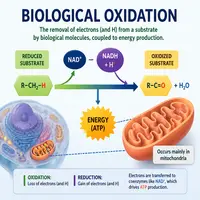
Biological oxidation describes the loss of electrons or hydrogen atoms from a molecule inside living cells. Unlike burning fuel in open air, this process happens slowly and in small, controlled steps. Enzymes guide each step carefully, preventing sudden energy release that could damage cells.
Most of this activity happens inside mitochondria, often called the powerhouse of the cell. During oxidation, electrons move from one molecule to another, eventually reaching oxygen. This movement generates energy that cells store as ATP for later use.
Key Enzymes Involved
Several enzyme groups drive this process forward. The table below lists the major players.
| Enzyme Type | Function |
|---|---|
| Oxidases | Transfer electrons directly to oxygen |
| Dehydrogenases | Remove hydrogen atoms from substrates |
| Hydroperoxidases | Break down harmful peroxides |
| Oxygenases | Add oxygen directly into a substrate |
Each enzyme group plays a distinct role. However, all of them work together to keep the electron transport chain running smoothly.
Types of Biological Oxidation
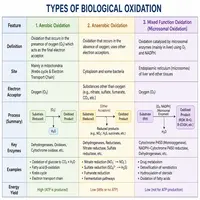
Not all oxidation reactions follow the same path. Cells use different mechanisms depending on the situation. Here is a quick breakdown.
- Direct combination with oxygen: Rare in humans, more common in certain bacteria.
- Removal of hydrogen (dehydrogenation): The most common method in human metabolism.
- Removal of electrons alone: Seen in certain redox reactions involving iron-containing enzymes.
As a result, the body stays flexible, adapting its oxidation strategy based on available nutrients and oxygen levels.
The Electron Transport Chain
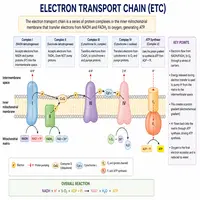
The electron transport chain acts as the final stage of biological oxidation. It sits inside the inner mitochondrial membrane and consists of several protein complexes. Electrons pass through these complexes one after another, releasing small bursts of energy along the way.
Here is a simplified flow of the process:
Nutrient Breakdown (Glucose, Fats, Proteins)
            |
            v
Release of Hydrogen Atoms / Electrons
            |
            v
Electron Transport Chain (Complex I to IV)
            |
            v
Proton Pumping Across Membrane
            |
            v
ATP Synthase Activation
            |
            v
ATP Production
            |
            v
Final Electron Acceptor: Oxygen (forms water)
Therefore, oxygen plays a crucial final role, accepting electrons and combining with hydrogen to form water. Without oxygen, this chain would stop, and energy production would drop sharply.
Why Biological Oxidation Matters
This process supports far more than simple energy production. Consider the following practical roles.
- Energy generation: Nearly all ATP production depends on efficient oxidation steps.
- Detoxification: Certain oxidase enzymes help break down toxins and drugs in the liver.
- Immune defense: White blood cells use oxidation reactions to destroy invading bacteria.
- Metabolic balance: Oxidation reactions help regulate the breakdown of carbohydrates, fats, and proteins.
Consequently, any disruption in this process can affect multiple body systems at once, not just energy levels.
Clinical Relevance
Doctors often link problems in biological oxidation to specific diseases. For instance, mitochondrial disorders reduce ATP output, causing muscle weakness and fatigue. Meanwhile, excessive oxidative stress, caused by uncontrolled electron leakage, contributes to aging and chronic disease.
Antioxidants help balance this system by neutralizing harmful byproducts called free radicals. Vitamin C, vitamin E, and glutathione are common examples that protect cells from oxidative damage.
Quick Comparison Table
| Aspect | Normal Oxidation | Oxidative Stress |
|---|---|---|
| Electron flow | Controlled and stepwise | Uncontrolled leakage |
| ATP output | Efficient | Reduced |
| Byproducts | Water | Free radicals |
| Cell impact | Supports function | Damages cell structures |
| Balance factor | Antioxidant enzymes | Antioxidant depletion |
Fresh Insights Worth Knowing
Recent research highlights how mitochondrial efficiency changes with age, prompting new interest in supplements that support electron transport health. Additionally, updated lab techniques now measure oxidative stress markers faster, helping doctors catch metabolic problems earlier than before. These advances make it easier to link lifestyle choices, like diet and exercise, directly to cellular energy efficiency.
Conclusion
Biological oxidation keeps every cell supplied with usable energy through a carefully controlled electron transfer process. From enzyme activity to the electron transport chain, each step works together to produce ATP safely. When this system runs smoothly, cells function well. When it fails, energy production drops and oxidative damage can follow. With the tables and flowchart above, this once-complex topic becomes much easier to understand and apply.
Frequently Asked Questions
It generates usable energy in the form of ATP for cellular functions.
Most of it takes place inside the mitochondria, particularly during the electron transport chain.
Oxygen serves as the final acceptor, combining with electrons and hydrogen to form water.
Oxidative stress involves uncontrolled electron leakage, producing harmful free radicals instead of stable energy output.
Yes, antioxidants neutralize free radicals and help protect cells from oxidative damage.