Use up and down arrow keys to resize the meta box pane.Toggle panel: Yoast SEO
Our bodies rely on tiny inorganic elements to stay strong, balanced, and functional. These elements, known as minerals, support everything from bone density to nerve signaling. For dental professionals, this topic carries extra weight, since teeth and jawbones depend heavily on proper mineral balance throughout life.
This guide explains the biochemistry behind essential trace and bulk elements. You will find simple tables, a flowchart, and clear explanations designed for students, dental patients, and curious readers alike.
What Are These Inorganic Elements?
Unlike vitamins, these inorganic elements do not break down through digestion or cooking. Instead, they remain stable and get absorbed directly through the intestinal wall. The body cannot manufacture them internally, so diet becomes the only reliable source.
These elements fall into two broad groups: macro elements and trace elements. Macro elements, such as calcium and phosphorus, are needed in larger daily amounts. Trace elements, such as zinc, iron, and fluoride, are required in much smaller quantities but remain equally important.
Because teeth and bones store a significant portion of these elements, dental health often reflects overall nutritional status. Therefore, dentists frequently look for visible signs of deficiency during routine checkups.
Macro vs Trace Overview Table
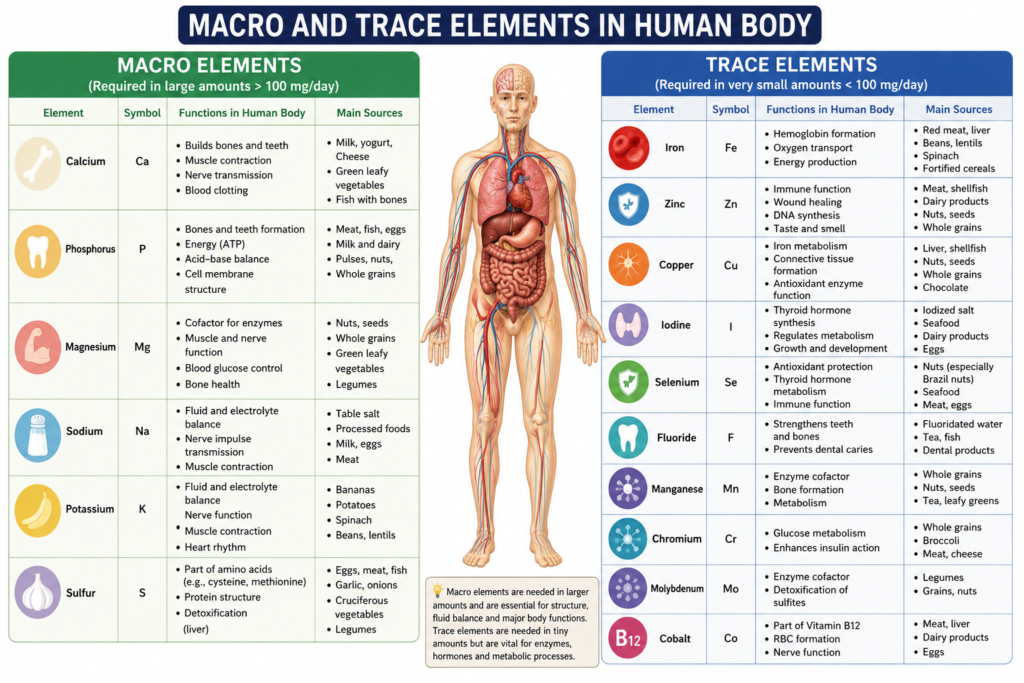
| Category | Examples | Daily Requirement |
|---|---|---|
| Macro elements | Calcium, phosphorus, magnesium | Higher amounts (hundreds of mg) |
| Trace elements | Zinc, iron, fluoride, iodine | Very small amounts (mg or mcg) |
This simple comparison helps explain why some deficiencies appear quickly, while others take years to develop noticeable symptoms.
Calcium: The Bone and Tooth Builder
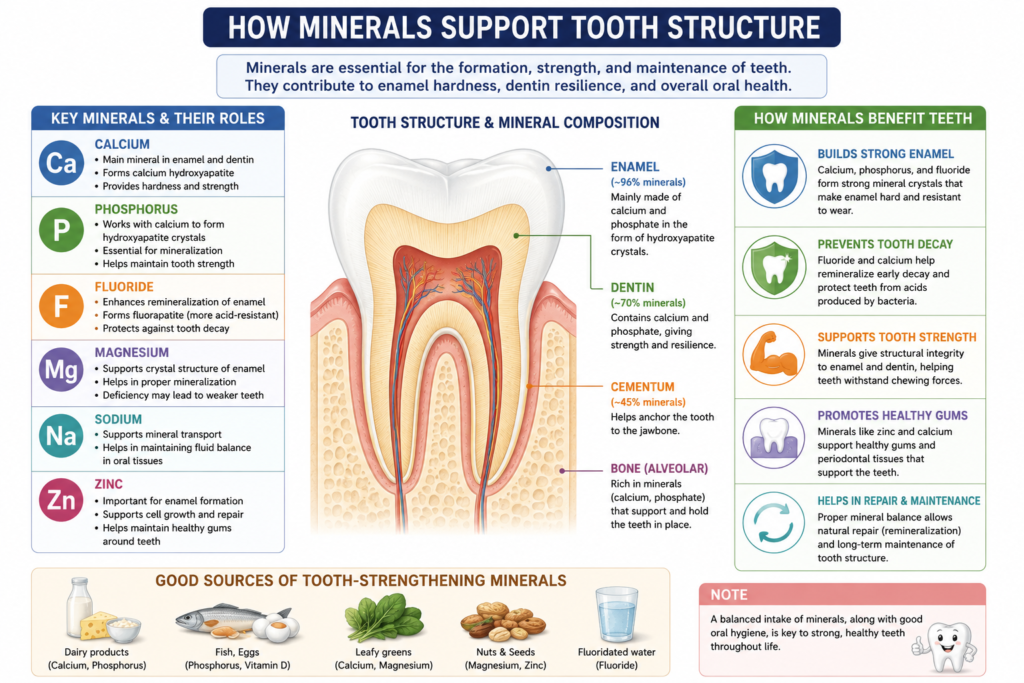
Calcium is arguably the most recognized nutrient tied to dental health. It combines with phosphate to form hydroxyapatite, the crystal structure that gives bones and enamel their strength. Roughly 99 percent of the body’s calcium sits within bones and teeth, while the remaining amount circulates in blood for muscle and nerve function.
Without adequate calcium intake, the body pulls reserves from bones to maintain blood levels. Over time, this process weakens skeletal structure and can affect jawbone density, which matters greatly for denture stability and implant success.
Phosphorus: Calcium’s Partner
Phosphorus works closely alongside calcium, and together they form the backbone of hard tissue structure. Additionally, phosphorus plays a role in energy production within cells, since it forms part of ATP, the molecule that powers nearly every biochemical reaction.
Dairy products, meat, and whole grains provide plentiful phosphorus. However, excessive intake without balanced calcium can disrupt the ideal ratio needed for healthy bone remodeling.
Fluoride: A Dental Favorite
Fluoride deserves special attention on any dental website. This trace element strengthens enamel by forming fluorapatite, a compound more resistant to acid attacks than regular hydroxyapatite. As a result, fluoride significantly reduces cavity risk when used appropriately through toothpaste, varnish, or fluoridated water.
Nevertheless, excessive fluoride exposure during childhood can cause fluorosis, a cosmetic condition that creates white or brown streaks on enamel. Consequently, dentists carefully monitor fluoride exposure in young patients.
Zinc and Iron: Supporting Roles
Zinc supports wound healing, immune function, and taste perception. Meanwhile, iron carries oxygen through hemoglobin and supports energy metabolism. Both trace elements indirectly influence oral health, since deficiencies can slow healing after extractions or contribute to conditions like glossitis, an inflamed, swollen tongue.
Trace Element Function Table
| Element | Primary Function | Dental Relevance |
|---|---|---|
| Fluoride | Strengthens enamel | Reduces cavity risk |
| Zinc | Immune support, healing | Speeds recovery after surgery |
| Iron | Oxygen transport | Deficiency causes pale gums, glossitis |
| Iodine | Thyroid hormone production | Indirectly affects metabolism and growth |
Flowchart: How Minerals Support Tooth Structure
Dietary Intake
        ↓
Absorption in Small Intestine
        ↓
Transport Through Bloodstream
        ↓
Deposition in Bone and Enamel
        ↓
Formation of Hydroxyapatite Crystals
        ↓
Strong, Mineralized Tooth Structure
This flowchart illustrates the journey from a simple meal to a strong, resilient smile.
Signs of Imbalance
Deficiencies or excesses often show visible signs before other symptoms appear. For instance, weak enamel, delayed tooth eruption, or brittle bones may signal low calcium or phosphorus intake. Similarly, unusual white spots on enamel could suggest fluoride excess during early development.
On the other hand, some patients consume excessive amounts through supplements without medical guidance. This imbalance can create its own set of problems, including kidney strain or interference with other nutrient absorption. Therefore, moderation and professional guidance remain essential.
Practical Dietary Sources
Dairy products, leafy greens, nuts, and fortified foods provide reliable calcium and phosphorus. Seafood and iodized salt supply iodine effectively. Lean meats and legumes offer both zinc and iron in absorbable forms. Fluoridated water remains one of the simplest, most effective public health measures for cavity prevention.
Encouraging patients to maintain a balanced, varied diet often supports dental health more effectively than any single supplement ever could.
Conclusion
These inorganic elements quietly shape the strength of our bones, the resilience of our enamel, and the efficiency of countless biochemical reactions happening every day. From calcium’s structural role to fluoride’s protective power, minerals influence dental health far beyond what most patients realize. A balanced diet, paired with regular dental checkups, gives the body everything it needs to maintain strong teeth and a healthy smile for years to come.
Frequently Asked Questions
Minerals, especially calcium, phosphorus, and fluoride, strengthen enamel and support bone density, both essential for long-term dental health.
Fluoride is particularly valued for enamel strength, since it forms fluorapatite, a compound more resistant to acid erosion than regular enamel crystal.
Yes, excessive fluoride exposure during childhood can cause fluorosis, leading to cosmetic white or brown streaks on developing enamel.
Low calcium intake forces the body to draw reserves from bones and teeth, gradually weakening structural strength over time.
Dairy products, leafy greens, seafood, nuts, and fluoridated water offer some of the most reliable sources for supporting strong teeth and bones.