Blood Physiology: Plasma Proteins and Red Cells Explained
Blood is often called the river of life, and for good reason. This fluid connective tissue carries oxygen, nutrients, hormones, and waste products throughout the body every single second. For dental professionals, understanding this fluid matters more than it seems, since gum health, healing after extractions, and even anesthesia response all depend on how well this vital fluid does its job.
In this guide, we will break down two major components of this fluid: plasma proteins and red blood cells. Along the way, you will find simple tables, a flowchart, and answers to common questions about human physiology.
What Makes Up This Vital Fluid?
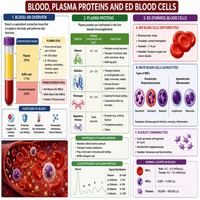
This fluid connective tissue consists of two main parts: plasma and formed elements. Plasma is the liquid portion, making up roughly 55 percent of the total volume. The remaining 45 percent contains red cells, white cells, and platelets.
Plasma itself is mostly water, but it also carries dissolved proteins, salts, hormones, and gases. Meanwhile, the formed elements handle specific jobs like oxygen transport, immune defense, and clotting. Together, these components keep the entire circulatory system running smoothly.
Understanding this basic split helps explain why doctors and dentists order lab tests. A simple panel can reveal a lot about a patient’s overall health, nutritional status, and healing potential before any dental procedure.
Quick Overview Table
| Component | Percentage of Volume | Main Role |
|---|---|---|
| Plasma | ~55% | Carries proteins, nutrients, hormones |
| Red blood cells | ~44% | Transport oxygen and carbon dioxide |
| White blood cells | <1% | Fight infection |
| Platelets | <1% | Help with clotting |
This table gives a quick snapshot. Next, we will look closer at plasma proteins, since they play such a crucial supporting role.
Plasma Proteins: The Silent Workers
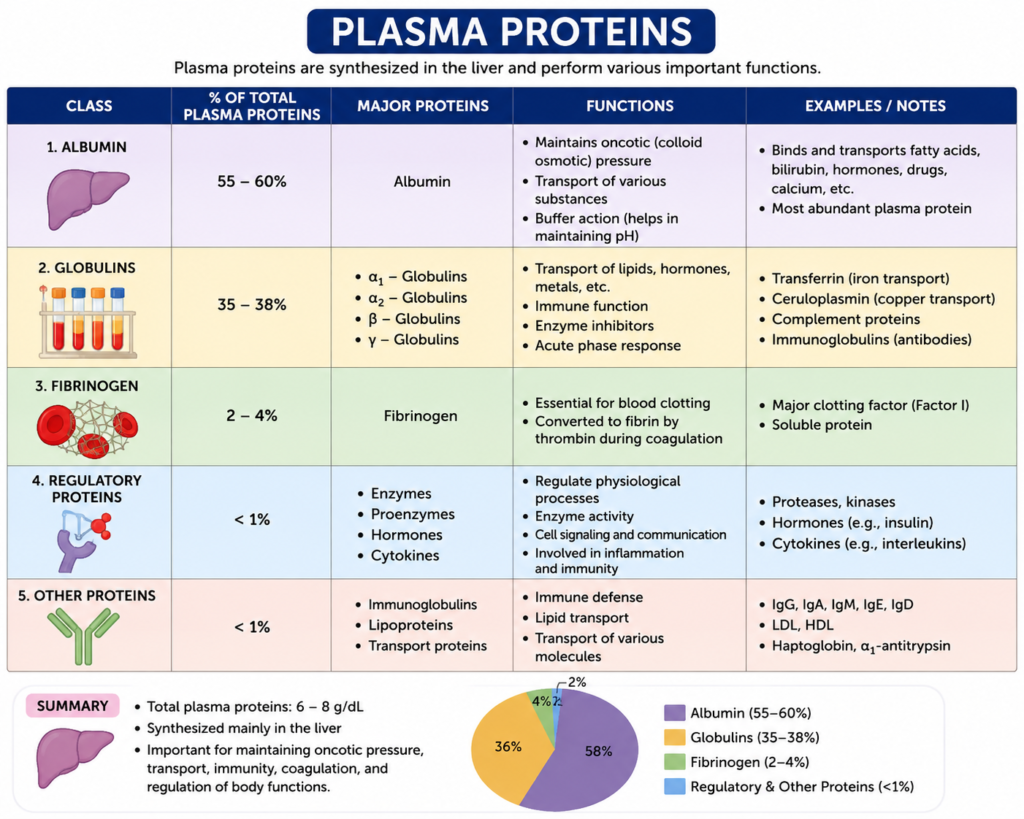
Plasma proteins are dissolved molecules that float within the liquid portion of the fluid. Although they are invisible to the naked eye, they perform essential jobs that keep the body balanced and protected.
There are three major categories of plasma proteins: albumin, globulins, and fibrinogen. Each one has a distinct purpose, and together they maintain pressure balance, immune defense, and clotting ability.
Albumin
Albumin makes up the largest share of plasma proteins, roughly 60 percent. It maintains osmotic pressure, which keeps fluid inside blood vessels instead of leaking into surrounding tissues. Without enough albumin, patients can develop swelling, called edema.
Additionally, albumin acts as a transport molecule. It carries hormones, fatty acids, and even certain medications through the bloodstream. This is why liver disease, which reduces albumin production, often causes noticeable swelling in the legs and abdomen.
Globulins
Globulins are divided into alpha, beta, and gamma types. Gamma globulins, better known as antibodies, defend the body against infection. Therefore, low globulin levels can signal a weakened immune system, something dentists should note before invasive procedures.
Fibrinogen
Fibrinogen is essential for clot formation. When tissue gets injured, fibrinogen converts into fibrin threads that trap cells and form a stable clot. This process is especially relevant after tooth extractions, since proper clotting prevents excessive bleeding and supports faster healing.
Plasma Proteins Summary Table
| Protein Type | Approximate Share | Key Function |
|---|---|---|
| Albumin | 60% | Maintains osmotic pressure |
| Globulins | 35% | Immune defense, transport |
| Fibrinogen | 4% | Clot formation |
Red Blood Cells: Oxygen Carriers
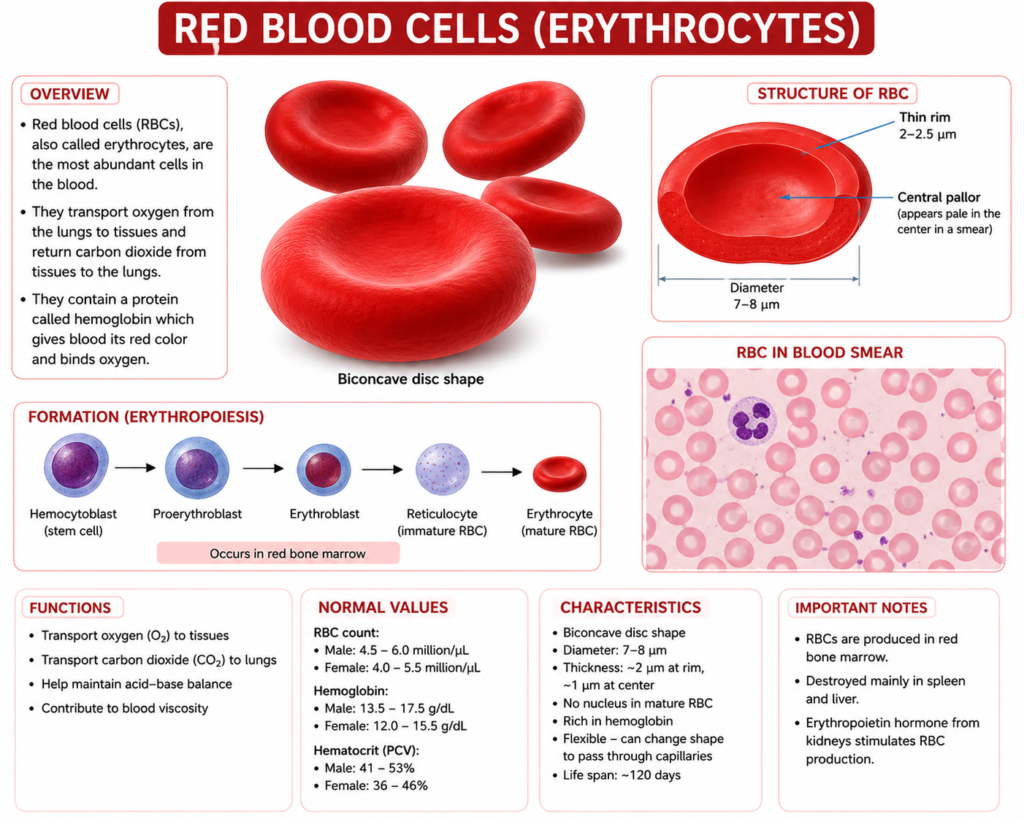
Red blood cells, also called erythrocytes, are the most abundant formed elements. Their primary job is transporting oxygen from the lungs to tissues, and carrying carbon dioxide back for exhalation.
These cells contain hemoglobin, an iron-rich protein that binds oxygen molecules efficiently. Because of their unique disc shape, red cells can squeeze through tiny capillaries without breaking apart. This flexibility ensures oxygen reaches even the smallest tissues.
Interestingly, mature red blood cells lack a nucleus. As a result, they have more internal space for hemoglobin, though this also means they cannot repair themselves and typically last about 120 days before replacement.
Flowchart: Oxygen Journey Through Red Cells
Lungs (oxygen enters)
        ↓
Hemoglobin binds oxygen
        ↓
Red blood cell travels through vessels
        ↓
Oxygen released at tissue level
        ↓
Carbon dioxide picked up
        ↓
Returns to lungs for exhalation
This simple cycle repeats constantly, ensuring every organ receives a steady oxygen supply.
Why Dentists Should Care About This Fluid
Dental treatment often intersects with circulatory health more than people realize. For example, patients with low red cell counts, called anemia, may feel fatigued, dizzy, or short of breath during longer procedures. Similarly, abnormal plasma protein levels can affect wound healing after extractions or implant surgery.
Furthermore, patients on blood thinners rely on a delicate balance between fibrinogen activity and anticoagulant medication. Dentists need to understand this balance before performing any procedure involving soft tissue or bone.
Consequently, a basic grasp of physiology helps dental teams ask better questions, request appropriate lab work, and refer patients to physicians when something seems unusual.
Common Conditions Related to This Fluid
Several conditions arise when plasma proteins or red cells fall outside normal ranges. Iron deficiency anemia reduces hemoglobin levels, leading to pale gums and slower healing. Liver disease lowers albumin, causing swelling and clotting difficulties. Certain infections increase gamma globulins as the immune system responds.
Recognizing these patterns allows healthcare providers, including dentists, to spot warning signs early. Early detection often leads to better outcomes and smoother treatment planning.
Conclusion
This fluid connective tissue does far more than simply flow through our vessels. Plasma proteins maintain pressure balance, support immunity, and enable clotting, while red blood cells deliver the oxygen every cell needs to survive. For dental professionals, understanding blood physiology adds valuable context to patient care, from routine cleanings to complex surgical procedures. A healthy circulatory system supports healthy healing, and that connection matters just as much in the dental chair as anywhere else in medicine.
Frequently Asked Questions
Plasma makes up roughly 55 percent of total blood volume, while formed elements like red cells, white cells, and platelets make up the rest.
The three main plasma proteins are albumin, globulins, and fibrinogen, each responsible for pressure regulation, immune defense, and clotting respectively
Red blood cells lose their nucleus during maturation to make more room for hemoglobin, which improves their oxygen-carrying capacity.
Most red blood cells survive for about 120 days before the body breaks them down and replaces them with new cells.
Understanding blood physiology helps dentists anticipate bleeding risks, healing complications, and underlying health conditions before performing dental procedures