Dental Pulp :Cell, Extracellular Matrix and Neural Elements
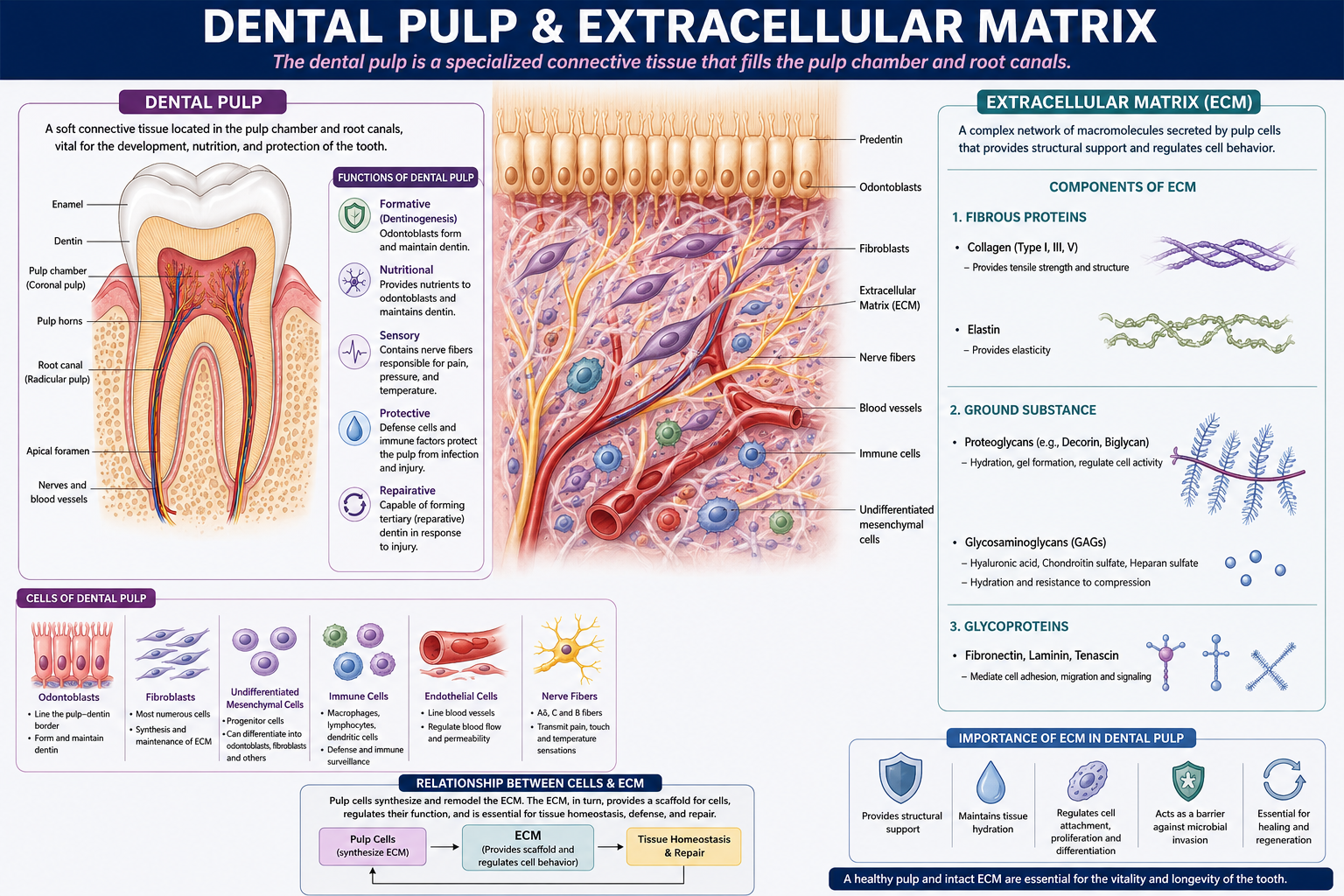
Dental Pulp Biology Your tooth looks like a hard, lifeless block of enamel. However, underneath that tough shell sits a living, breathing tissue called dental pulp. This soft core keeps your tooth alive, alert and able to heal itself.
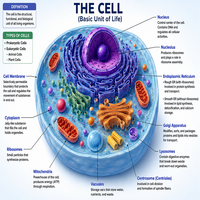
Dentists and researchers study three main building blocks of this tissue: cell, extracellular matrix and neural elements. Together, these three components explain why a tooth can feel hot coffee, repair minor damage and stay firmly rooted in your jaw for decades.
In this article, we will break down each component in simple, everyday language. We will also explore how they interact, why they matter for your dental health, and what happens when this delicate balance gets disrupted.
What Makes Up Dental Pulp?
Dental pulp fills the innermost chamber of your tooth. It connects to the rest of your body through tiny canals in the root, allowing blood vessels and nerves to travel in and out.
This tissue isn’t just filler. Instead, it acts like a control center. It senses temperature, pressure and pain. It also produces dentin, the hard layer just beneath your enamel.
Three main players make this possible. First, specialized cells build and maintain the tissue. Next, a supportive extracellular matrix holds everything together. Finally, neural elements allow your tooth to feel sensations. Let’s look at each one closely.
The Role of Cells in Dental Pulp
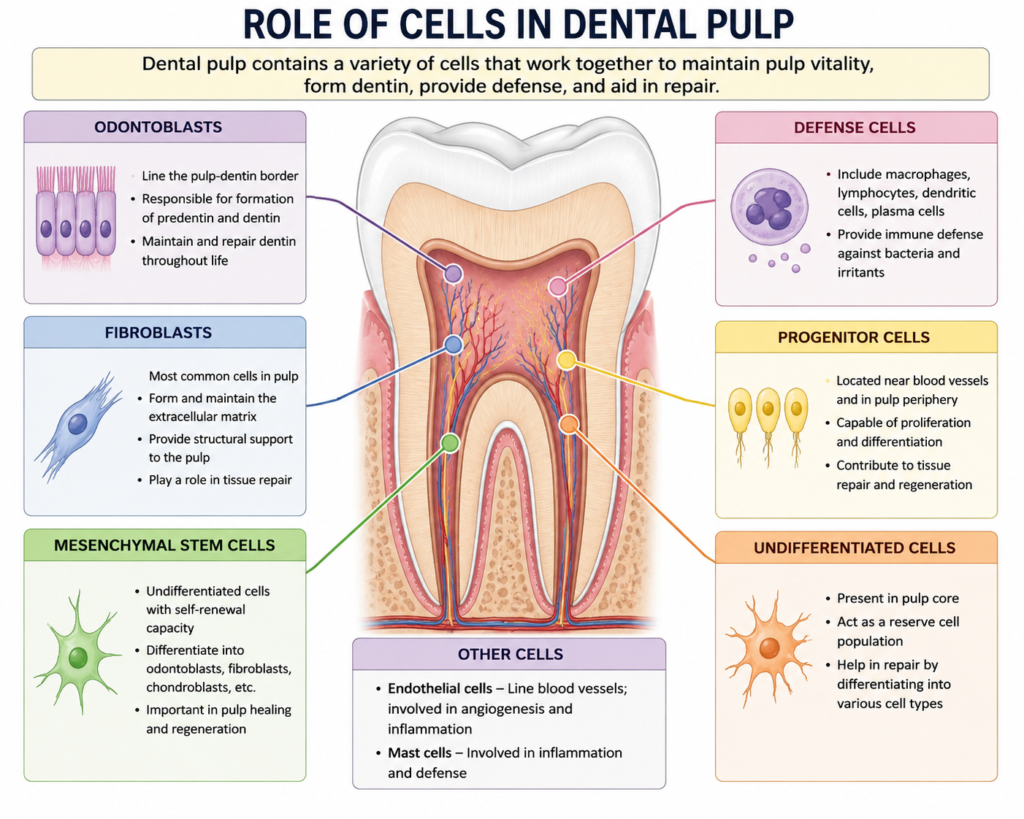
Odontoblasts sit at the edge of the pulp chamber. These specialized cells produce dentin throughout your entire life, not just during tooth development. Whenever your tooth faces minor trauma, odontoblasts respond quickly by laying down extra dentin for protection.
Fibroblasts make up the majority of pulp cells. They produce collagen fibers and other proteins that give the tissue its structure. Meanwhile, undifferentiated mesenchymal cells wait in reserve. If odontoblasts get damaged, these reserve cells can transform into new dentin-producing cells.
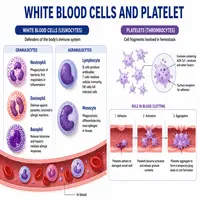
Immune cells also patrol the pulp constantly. Macrophages and dendritic cells watch for bacteria or debris. Consequently, they trigger inflammation whenever a threat appears, which explains why deep cavities often cause noticeable pain.
Every single cell type here plays a distinct role. Yet, they all work together toward one shared goal: keeping the tooth alive and functional.
Understanding the Dental Pulp Extracellular Matrix
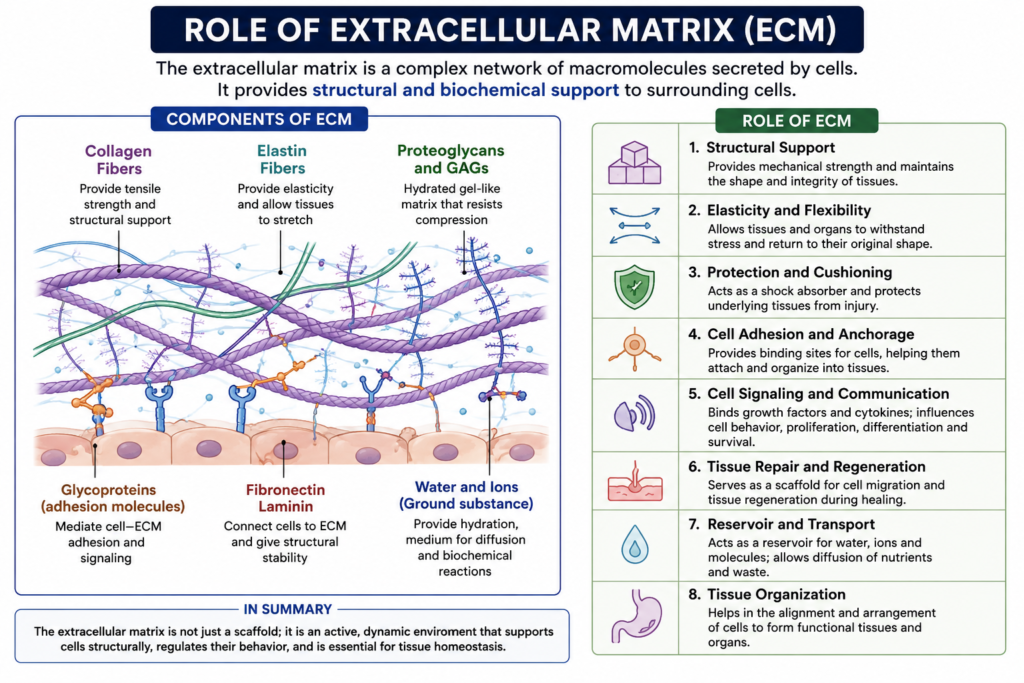
The extracellular matrix, or ECM, forms the scaffolding around all these cells. Think of it as the framework that holds a building together. Without it, cells would have nothing to anchor themselves to.
Collagen fibers, mainly type I and type III, make up the bulk of this matrix. These fibers provide tensile strength and flexibility. Additionally, ground substance fills the spaces between fibers. This gel-like material contains proteoglycans and glycosaminoglycans, which regulate water content and nutrient flow.
The extracellular matrix does more than provide structure, though. It also stores growth factors released during injury. As a result, when your tooth suffers trauma, these stored factors trigger repair processes almost immediately.
Furthermore, the matrix influences how cells behave. Signals passed through the ECM tell odontoblasts when to produce more dentin. Therefore, this network isn’t passive at all. It actively participates in tissue maintenance and healing.
Blood vessels also travel through this matrix, delivering oxygen and nutrients. Without a healthy extracellular matrix, none of this circulation would function properly.
Neural Elements: Why Teeth Feel Pain
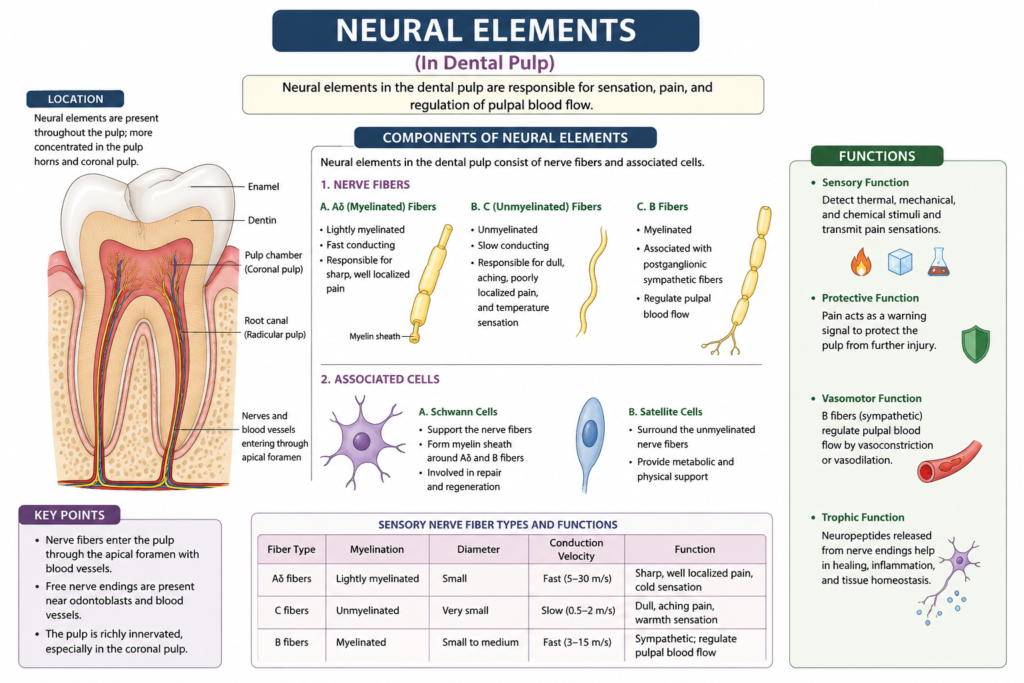
Neural elements explain why biting into ice cream sends a sharp jolt through your tooth. Sensory nerve fibers enter through the root canal alongside blood vessels, then branch extensively near the dentin-pulp border.
Two main fiber types exist here. A-delta fibers transmit sharp, immediate pain, such as the shock you feel from cold water. C-fibers, meanwhile, carry dull, lingering pain that often follows deep decay or infection.
Nerve endings near odontoblasts respond to fluid movement inside dentinal tubules. This movement, known as the hydrodynamic mechanism, explains why hot, cold or sweet stimuli all trigger similar pain responses.
Interestingly, these neural elements don’t just detect danger. They also release neuropeptides that influence blood flow and immune activity. So, nerves and immune cells essentially communicate during injury, coordinating a joint defense response.
This connection between cell, extracellular matrix and neural elements creates a finely tuned alarm system. When any part malfunctions, the entire tooth suffers.
How These Three Components Work Together
None of these systems operates in isolation. Cells produce the extracellular matrix, which then supports and regulates those same cells. Neural elements, meanwhile, rely on this matrix for physical support and nutrient delivery.
Consider what happens during a cavity. Bacteria first breach the enamel and dentin. Consequently, nerve fibers detect the resulting fluid movement and pain, and immune cells rush to the area through matrix pathways. Odontoblasts then attempt to seal off the threat with new dentin.
This coordinated response only works because cell, extracellular matrix and neural elements communicate constantly. If your dentist ever mentions pulp vitality, they’re referring to this exact system functioning correctly.
What Happens When This Dental Pulp System Breaks Down
Deep decay, trauma or repeated dental procedures can overwhelm this delicate balance. Once bacteria reach the pulp chamber, inflammation intensifies rapidly. Pressure builds inside the pulp, since it’s confined within rigid dentin walls.
Eventually, blood vessels become compressed, and oxygen delivery drops. As a result, cells begin dying, and the tissue loses its ability to heal itself. This is precisely why an infected tooth often requires root canal treatment rather than simple observation.
Understanding this breakdown process helps explain why early intervention matters so much. Catching decay before it reaches the pulp preserves your tooth’s natural biology.
Why This Matters for Your Dental Care
You don’t need a biology degree to benefit from this knowledge. Simply understanding that your tooth contains living, responsive tissue changes how you might approach dental visits.
Regular checkups catch problems before they damage the pulp. Fluoride treatments strengthen enamel, protecting the sensitive tissue underneath. Prompt treatment of sensitivity or pain also prevents minor issues from becoming major infections.
Your dentist isn’t just treating a hard structure. They’re managing a living system involving cell, extracellular matrix and neural elements working in constant coordination.
Conclusion
Teeth aren’t lifeless objects sitting in your jaw. Beneath the enamel, a remarkable biological system keeps everything functioning. Cells build and repair tissue. The extracellular matrix provides structure and communication pathways. Neural elements deliver sensation and coordinate defense.
Together, these components explain why teeth can feel, heal and adapt throughout your life. When you understand this biology, dental care starts to feel less mysterious and more like basic self-maintenance. Protecting your pulp means protecting the very system that keeps your teeth alive.
If you’re experiencing tooth sensitivity, pain or notice any changes, don’t wait. Schedule a visit with your dentist so this delicate internal system stays healthy for years to come.
Frequently Asked Questions
Dental pulp contains specialized cells, a supportive extracellular matrix, blood vessels and neural elements. Together, these parts keep the tooth alive and responsive to stimuli.
Neural elements inside the pulp detect fluid movement within tiny dentin tubules. This movement activates nerve fibers, producing the sharp or dull pain you feel.
Mild irritation often heals since odontoblasts can produce extra dentin for protection. However, severe infection usually destroys the tissue permanently, requiring root canal treatment.
It provides structural support for cells, stores growth factors and regulates nutrient flow. It also helps coordinate healing responses after injury or decay.
Regular dental checkups, good oral hygiene and prompt treatment of cavities all help. Catching problems early prevents bacteria from reaching and damaging the pulp tissue.