Blood carries oxygen to every corner of the body, and red blood cells make that possible. Behind this simple fact lies a complex production system running quietly inside your bones. This guide explores that system and explains what happens when it breaks down.
Understanding anemia and erythropoiesis together makes physiology much easier to grasp. One process builds red blood cells; the other describes what happens when that process fails or falls short. Let’s walk through both, step by step.
What Is Erythropoiesis?
Erythropoiesis refers to the formation of red blood cells. This process happens continuously inside the bone marrow, primarily within the red marrow of flat bones like the pelvis, sternum, and vertebrae. Roughly two million red blood cells form every second in a healthy adult.
The process starts with hematopoietic stem cells. These stem cells gradually differentiate into committed progenitor cells. Afterward, several maturation steps follow, each one bringing the cell closer to its final form.
Interestingly, the developing cell loses its nucleus near the final stage. This adaptation increases space for hemoglobin, the protein responsible for carrying oxygen. Consequently, mature red blood cells become highly efficient oxygen carriers, though they lose the ability to divide further.
Stages of Red Blood Cell Formation
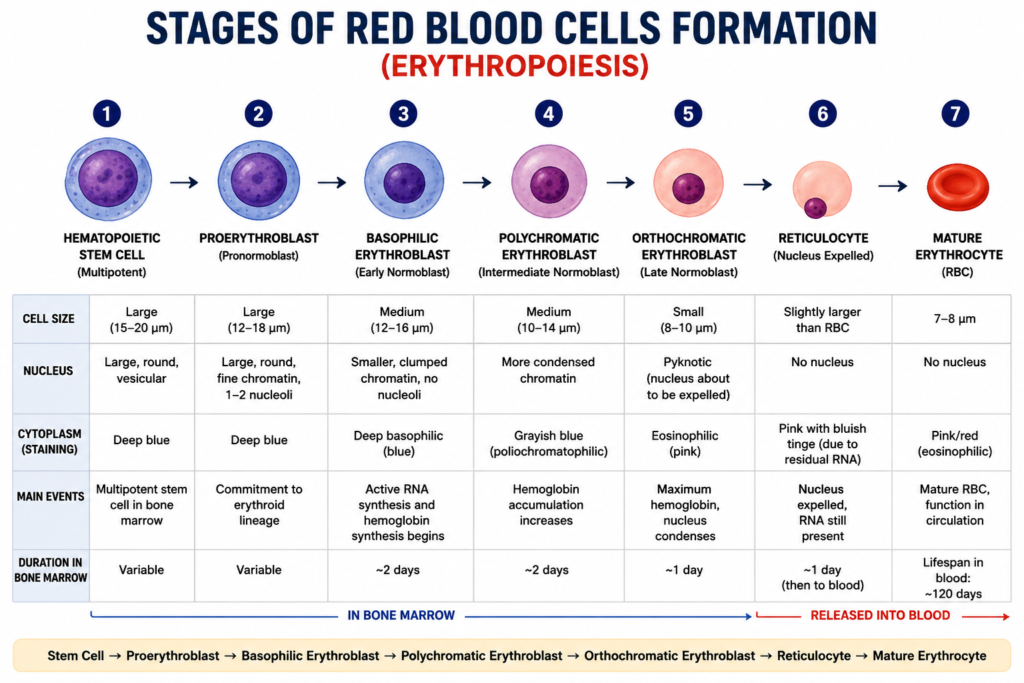
Several distinct stages define this maturation journey. Each stage brings specific structural changes.
| Stage | Key Feature | Nucleus Present? |
|---|---|---|
| Proerythroblast | Large cell, high RNA content | Yes |
| Basophilic erythroblast | Increased cytoplasm basophilia | Yes |
| Polychromatophilic erythroblast | Hemoglobin synthesis begins | Yes |
| Orthochromatic erythroblast | Nucleus shrinks significantly | Yes (small) |
| Reticulocyte | Nucleus expelled, some RNA remains | No |
| Mature erythrocyte | Full hemoglobin content, biconcave shape | No |
This entire sequence usually takes about seven days. Afterward, reticulocytes enter the bloodstream and mature fully within one to two days. Therefore, doctors often check reticulocyte counts to measure how actively the marrow is producing new cells.
Regulation of Erythropoiesis
The kidneys play a starring role in regulating this process. When oxygen levels drop, kidney cells detect the change and respond quickly. As a result, they release erythropoietin (EPO), a hormone that stimulates the bone marrow directly.
Here is a simple flow of this regulatory feedback loop:
Low blood oxygen → Kidneys detect hypoxia → EPO release increases → Bone marrow stimulation rises → More red blood cells produced → Oxygen delivery improves → EPO release decreases
This feedback loop keeps oxygen levels balanced. Meanwhile, other factors also support the process, including adequate iron, vitamin B12, and folate. Without these nutrients, cell division and hemoglobin synthesis slow down considerably.
Additionally, testosterone boosts EPO production slightly, which partly explains why men typically have higher red blood cell counts than women. Altitude also matters significantly; people living at high elevations often develop higher red blood cell counts naturally, since lower oxygen levels trigger constant EPO stimulation.
What Is Anemia?
Anemia describes a condition where red blood cell count, hemoglobin level, or both drop below normal ranges. Consequently, tissues receive less oxygen than they need. This shortage often triggers fatigue, weakness, and paleness.
Multiple mechanisms can cause this condition. Sometimes production simply fails to keep pace with the body’s needs. Other times, blood loss or cell destruction outpaces normal replacement. Either way, the connection between anemia and erythropoiesis becomes clear once you examine the underlying cause.
For instance, iron deficiency directly limits hemoglobin synthesis, disrupting normal maturation. Similarly, chronic kidney disease reduces EPO production, starving the marrow of its main stimulating signal. Nutritional deficiencies, genetic disorders, and chronic illness can all interrupt this finely tuned system.
Common Types of Anemia
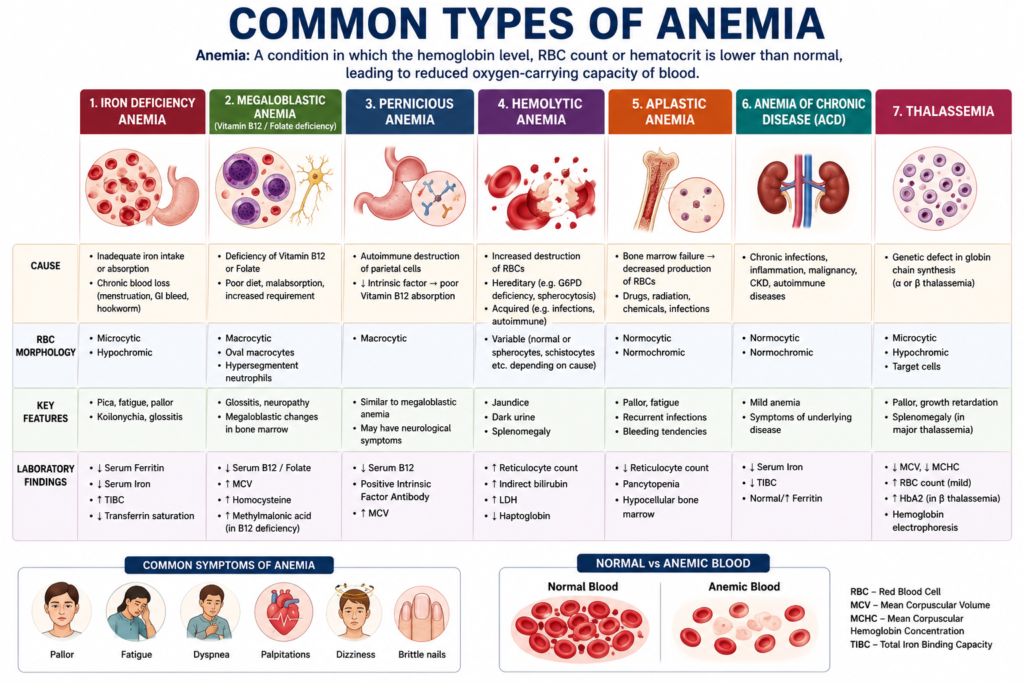
Different underlying causes create distinct anemia categories. Recognizing these categories helps clarify diagnosis and treatment.
| Type | Common Cause | Cell Appearance |
|---|---|---|
| Iron-deficiency anemia | Low iron intake or chronic blood loss | Small, pale cells |
| Megaloblastic anemia | B12 or folate deficiency | Large, immature cells |
| Aplastic anemia | Bone marrow failure | Reduced cells overall |
| Hemolytic anemia | Increased cell destruction | Fragmented or misshapen cells |
| Anemia of chronic disease | Inflammation, reduced EPO response | Normal or slightly small cells |
Each type reflects a different breakdown point within the broader anemia and erythropoiesis relationship. Therefore, treatment strategies vary considerably depending on the root cause.
Symptoms and Diagnosis
Fatigue remains the most common symptom across nearly all anemia types. However, additional signs often appear, including shortness of breath, dizziness, rapid heartbeat, and pale skin.
Doctors typically start diagnosis with a complete blood count (CBC). This test reveals hemoglobin levels, red blood cell count, and cell size. Afterward, reticulocyte counts help determine whether the marrow is responding appropriately.
Furthermore, additional tests often clarify the specific cause. Iron studies, vitamin B12 levels, and kidney function tests provide useful clues. In some cases, doctors examine bone marrow samples directly, especially when aplastic anemia is suspected.
The Anemia and Erythropoiesis Connection
Ultimately, anemia and erythropoiesis represent two sides of the same coin. Healthy erythropoiesis prevents anemia by maintaining adequate red blood cell supply. Meanwhile, any disruption within this production pathway can quickly trigger anemia symptoms.
This relationship also explains why treatment often targets production directly. For instance, synthetic EPO injections help patients with kidney disease boost their red blood cell count. Similarly, iron supplements restore the raw material needed for hemoglobin synthesis, allowing normal maturation to resume.
In short, treating anemia effectively requires understanding exactly where the erythropoiesis pathway has broken down. Without that insight, treatment often fails to address the actual root cause.
Why This Physiology Matters
This knowledge extends far beyond textbooks. Athletes, for example, sometimes train at high altitude specifically to boost natural EPO production and improve oxygen-carrying capacity. Meanwhile, patients with chronic illnesses rely on this same physiology to guide their treatment plans.
Moreover, pregnant women often need increased iron intake since blood volume and red blood cell demand rise significantly during pregnancy. Nutritional awareness, therefore, plays a preventive role long before anemia symptoms ever appear.
Overall, this system demonstrates just how tightly the body regulates oxygen delivery. Small disruptions can create noticeable symptoms, while proper support keeps the entire process running smoothly.
Conclusion
Red blood cell production is a remarkably efficient, tightly regulated process. From stem cells in the bone marrow to fully mature erythrocytes circulating in the bloodstream, every stage matters. Oxygen sensing, hormone signaling, and nutrient availability all work together to keep this system balanced.
When this balance breaks down, anemia often follows. Recognizing the deep connection between anemia and erythropoiesis helps explain why treatment must address root causes rather than just symptoms. Whether the issue involves iron deficiency, kidney disease, or bone marrow failure, understanding this pathway provides the foundation for effective care and better long-term health outcomes.
Frequently Asked Questions
Erythropoietin (EPO), produced mainly by the kidneys, is the main hormone controlling this process. It stimulates bone marrow to produce more red blood cells when oxygen levels drop.
The full maturation process takes about seven days within the bone marrow, followed by one to two additional days for reticulocytes to mature fully in the bloodstream.
Yes, anemia can occur due to other causes, including B12 or folate deficiency, chronic kidney disease, bone marrow disorders, or increased red blood cell destruction.
A reticulocyte count best evaluates how actively the bone marrow is producing new cells, helping doctors determine whether anemia stems from
Yes, lower oxygen levels at high altitude stimulate increased EPO release, which naturally raises red blood cell counts over time as the body adapts