Blood does more than carry oxygen. It also defends the body and stops bleeding after injury. Two tiny components make this possible: white blood cells and platelets. Together, they form a powerful defense and repair system that works every second of the day.
This guide explains how these cells form, function, and protect the body. It also breaks down their differences using simple tables and flowcharts. By the end, you will understand why doctors check these levels during routine blood tests.
What Are White Blood Cells?
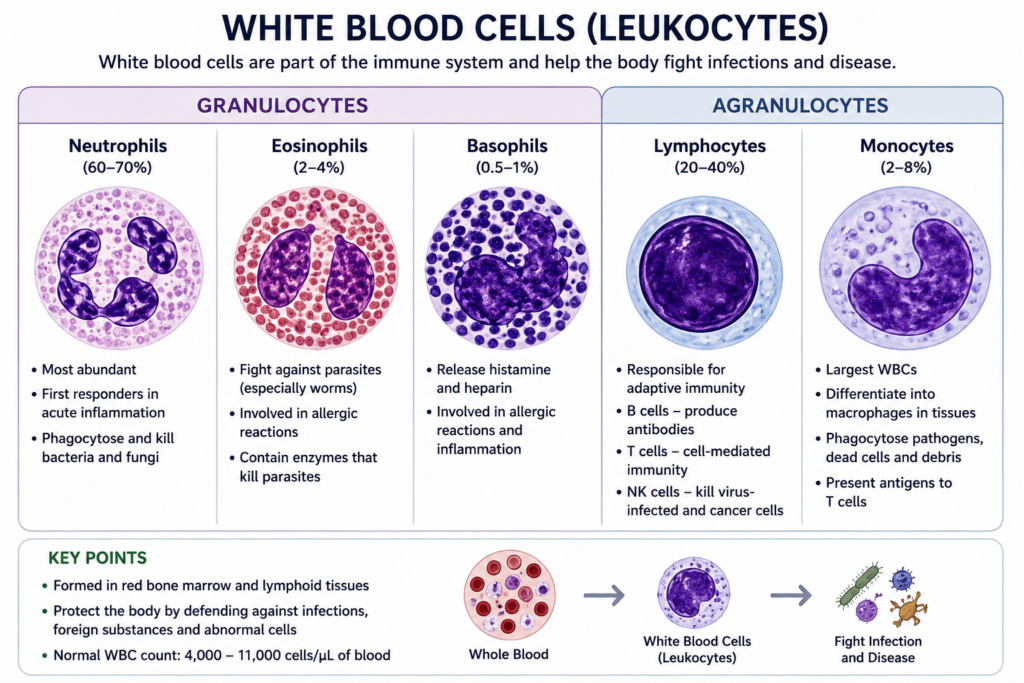
White blood cells, also called leukocytes, act as the body’s soldiers. They travel through blood and tissue, searching for harmful invaders. Unlike red blood cells, they contain a nucleus and can move independently.
These cells originate in the bone marrow through a process called hematopoiesis. Afterward, they mature and enter the bloodstream, ready for duty. Interestingly, some white blood cells live only a few hours, while others survive for years.
There are five main types of white blood cells. Each type plays a unique role in immunity. For instance, neutrophils attack bacteria quickly, while lymphocytes target viruses and produce antibodies. Meanwhile, eosinophils fight parasites, basophils release histamine during allergic reactions, and monocytes clean up dead cells.
Because of this variety, the immune system can respond to almost any threat. Consequently, a balanced white blood cell count reflects a healthy immune response.
Understanding Platelets
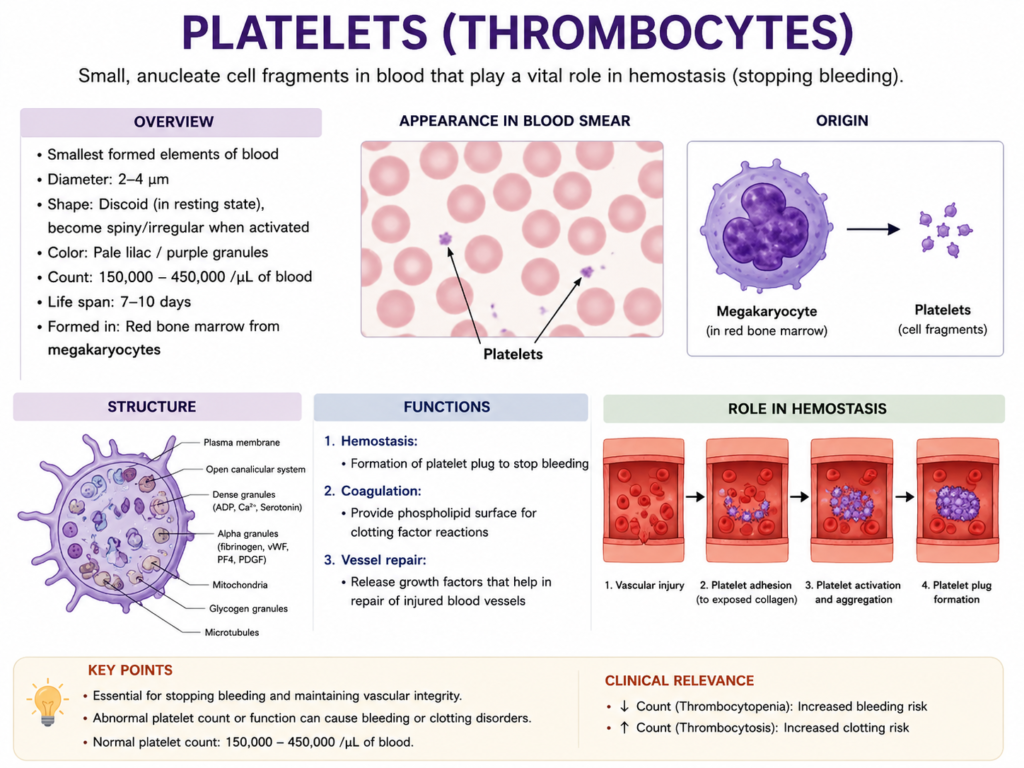
Platelets, or thrombocytes, are tiny cell fragments, not full cells. They also form in the bone marrow, breaking off from large cells called megakaryocytes. Despite their small size, platelets play a massive role in survival.
Whenever a blood vessel breaks, platelets rush to the site. They stick together and form a temporary plug. This process, called primary hemostasis, prevents excessive blood loss within seconds.
Additionally, platelets release chemical signals that activate clotting factors. These factors work together to form a stable fibrin clot. Without platelets, even a small cut could lead to dangerous bleeding.
Notably, platelets survive for only about 7 to 10 days. Therefore, the body constantly produces new ones to maintain proper levels. A normal platelet count usually ranges between 150,000 and 450,000 per microliter of blood.
White Blood Cells and Platelets: Working Together
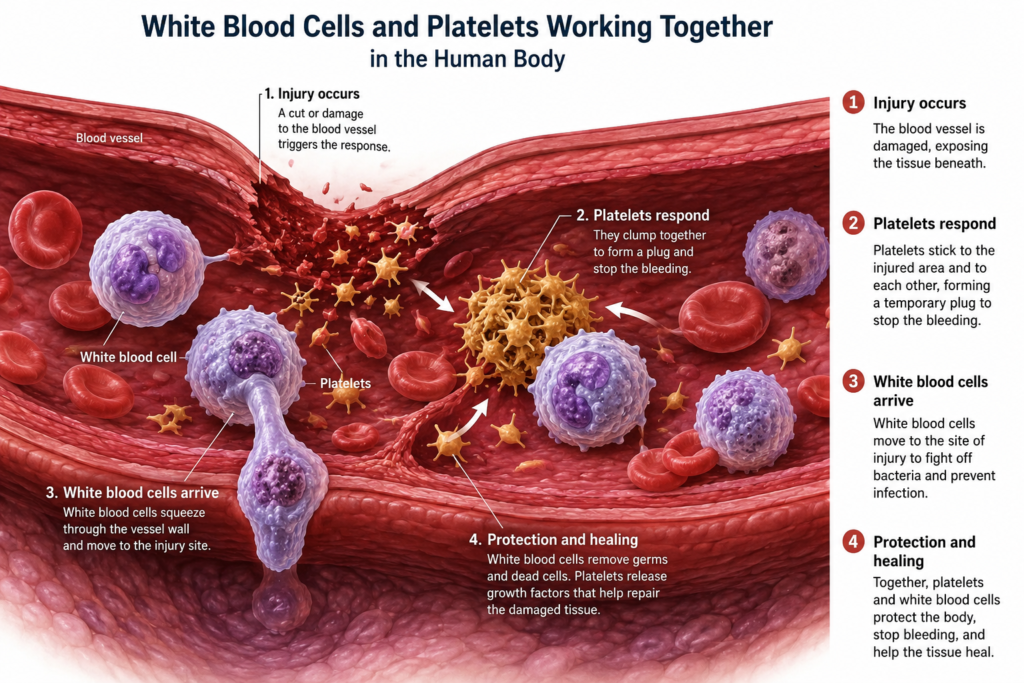
Although they serve different purposes, white blood cells and platelets often interact during injury and infection. For example, when tissue gets damaged, platelets seal the wound while white blood cells clear out bacteria and debris.
This teamwork prevents infection from spreading through open wounds. Moreover, some white blood cells release chemicals that help platelets clot faster in dangerous situations. As a result, the body handles both bleeding and infection risks simultaneously.
The table below compares both components clearly.
| Feature | White Blood Cells | Platelets |
|---|---|---|
| Also known as | Leukocytes | Thrombocytes |
| Main function | Fight infection | Stop bleeding |
| Origin | Bone marrow | Bone marrow (megakaryocytes) |
| Lifespan | Hours to years | 7–10 days |
| Normal count | 4,000–11,000 per µL | 150,000–450,000 per µL |
| Nucleus present | Yes | No |
This comparison shows how differently these two components behave, yet how closely they cooperate.
How the Body Produces These Cells
Both cell types trace back to a single source: hematopoietic stem cells in the bone marrow. The flowchart below simplifies this production pathway.
Hematopoietic Stem Cell
        |
   ------------------------
   |                      |
Myeloid Progenitor    Lymphoid Progenitor
   |                      |
 ------------------      Lymphocytes
 |     |     |    |
Neutrophils Eosinophils Basophils Monocytes
   |
Megakaryocyte
   |
Platelets (fragments)
This chart highlights an important fact. Most white blood cells and platelets share a common origin, despite their different roles. Therefore, bone marrow health directly affects both immunity and clotting ability.
Clinical Importance of These Blood Components
Doctors frequently order a complete blood count to check these levels. A high white blood cell count often signals infection, inflammation, or stress. Conversely, a low count may indicate bone marrow problems or certain infections.
Similarly, abnormal platelet levels raise concern. Low platelets, known as thrombocytopenia, increase bleeding risk. High platelets, called thrombocytosis, may raise clotting risk instead. For this reason, doctors monitor both values together for a complete health picture.
Furthermore, certain diseases affect both components at once. Leukemia, for example, disrupts normal white blood cell production and often lowers platelet counts too. Because of this overlap, blood tests remain essential diagnostic tools.
In addition, nutrition impacts these cells significantly. Vitamin B12, folate, and iron support healthy blood cell production. Consequently, a balanced diet plays a real role in immune strength and clotting efficiency.
Common Disorders Linked to These Blood Cells
| Disorder | Affected Component | Common Cause |
|---|---|---|
| Leukocytosis | White blood cells | Infection, stress, inflammation |
| Leukopenia | White blood cells | Viral infection, chemotherapy |
| Thrombocytopenia | Platelets | Bone marrow disorder, autoimmune disease |
| Thrombocytosis | Platelets | Chronic inflammation, iron deficiency |
| Leukemia | Both | Cancer of blood-forming cells |
Recognizing these conditions early often leads to faster treatment and better outcomes.
Conclusion
White blood cells and platelets may be small, but their impact on health is enormous. One defends the body against infection, while the other prevents dangerous blood loss. Together, they keep the body safe every single day, often without any noticeable effort.
Understanding how these components form, function, and interact helps explain why routine blood tests matter so much. Whether you are a student, healthcare worker, or curious reader, knowing this physiology gives valuable insight into how the body protects itself. Ultimately, healthy bone marrow and proper nutrition keep this defense system running smoothly for years to come.
Frequently Asked Questions
White blood cells fight infection, while platelets help stop bleeding by forming clots.
Both originate from hematopoietic stem cells in the bone marrow.
Low platelet levels, called thrombocytopenia, increase the risk of excessive bleeding and bruising.
Yes, a high white blood cell count often signals an active infection or inflammation in the body.
Eating a balanced diet rich in iron, vitamin B12, and folate supports healthy white blood cell and platelet production.