Life depends on oxygen reaching every cell in the body. This process relies on a remarkable partnership between two molecules: hemoglobin and porphyrin. Without them, blood could not carry oxygen efficiently, and survival would become impossible.
This guide explains how these molecules form, interact, and support vital body functions. It also includes simple tables and flowcharts to make the biochemistry easier to follow. By the end, you will understand why this relationship matters so much in medicine.
What Is Porphyrin?
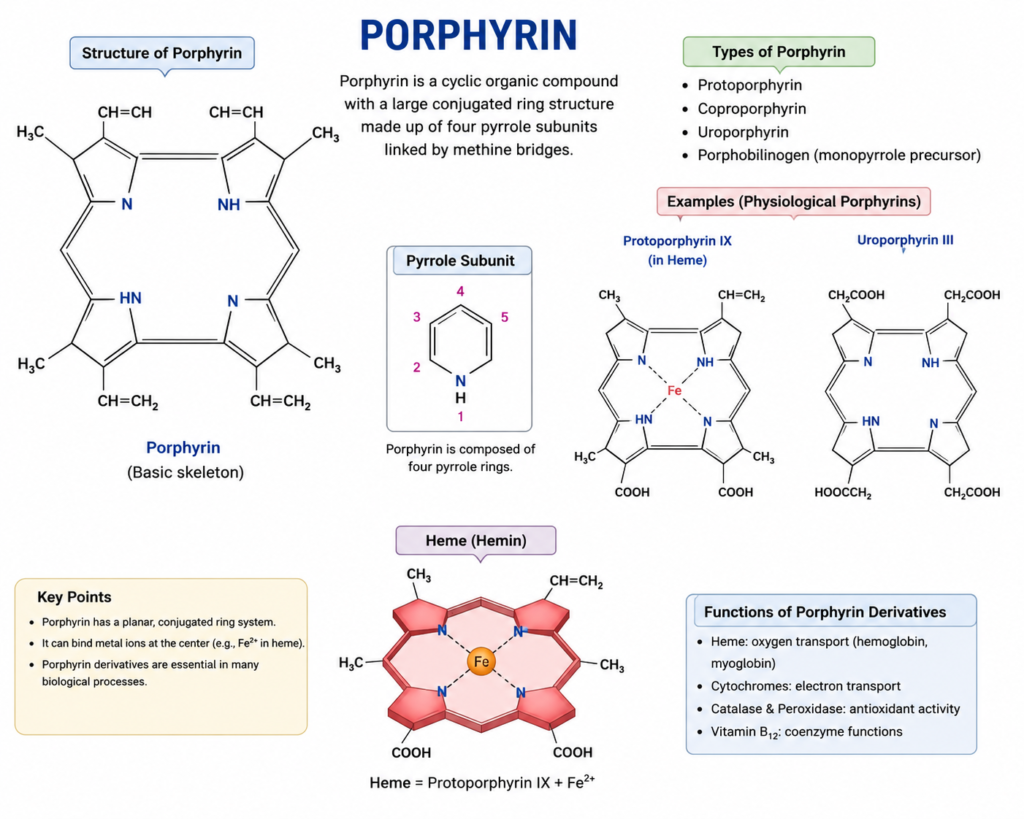
Porphyrin refers to a ring-shaped organic molecule made of four smaller rings called pyrroles. These pyrrole rings link together through carbon bridges, forming a stable circular structure. Interestingly, this shape allows porphyrin to hold a metal ion at its center.
In the human body, porphyrin usually binds with iron. This combination creates heme, a critical component of several proteins. Because of its unique structure, porphyrin can also bind other metals, such as magnesium in chlorophyll found in plants.
The body synthesizes porphyrin through a multi-step pathway inside the liver and bone marrow. This process, known as heme synthesis, involves several enzymes working in sequence. However, any disruption in these steps can lead to a group of disorders called porphyrias.
Notably, porphyrin molecules absorb light strongly, giving them a natural color. This property explains why heme-containing molecules often appear red or brown.
What Is Hemoglobin?
Hemoglobin is a protein found inside red blood cells. It consists of four protein chains, each attached to one heme group. Therefore, each hemoglobin molecule can carry up to four oxygen molecules at once.
This protein forms through a combination of globin chains and heme units. Two alpha chains and two beta chains typically make up adult hemoglobin. Meanwhile, each chain wraps around its own heme group, creating a perfect pocket for oxygen binding.
Once oxygen enters the lungs, hemoglobin binds it quickly. Afterward, blood carries this oxygen throughout the body. When cells need oxygen, hemoglobin releases it smoothly, thanks to changes in its molecular shape.
Additionally, hemoglobin helps transport carbon dioxide back to the lungs for removal. As a result, this single protein manages two essential gases simultaneously.
The Relationship Between Hemoglobin and Porphyrin
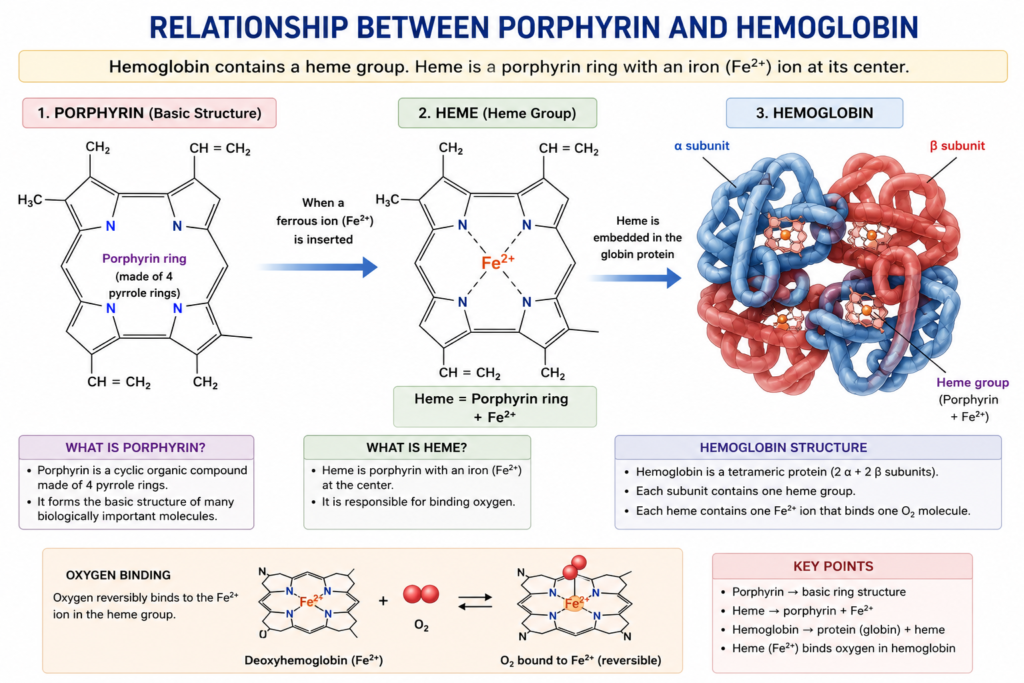
Hemoglobin and porphyrin share a deeply connected relationship. Porphyrin provides the structural ring that binds iron, forming heme. Hemoglobin then uses this heme unit to trap and release oxygen effectively.
Without porphyrin, heme could not form. Without heme, hemoglobin could not carry oxygen. Consequently, this biochemical chain highlights how small molecules support massive physiological functions.
The table below summarizes their relationship clearly.
| Feature | Porphyrin | Hemoglobin |
|---|---|---|
| Type | Organic ring molecule | Protein |
| Main role | Binds iron to form heme | Carries oxygen and carbon dioxide |
| Location | Liver, bone marrow | Red blood cells |
| Structure | Four pyrrole rings | Four globin chains with heme |
| Related disorder | Porphyria | Anemia, thalassemia |
This comparison shows how these two molecules depend on each other for proper function.
Heme Synthesis Pathway
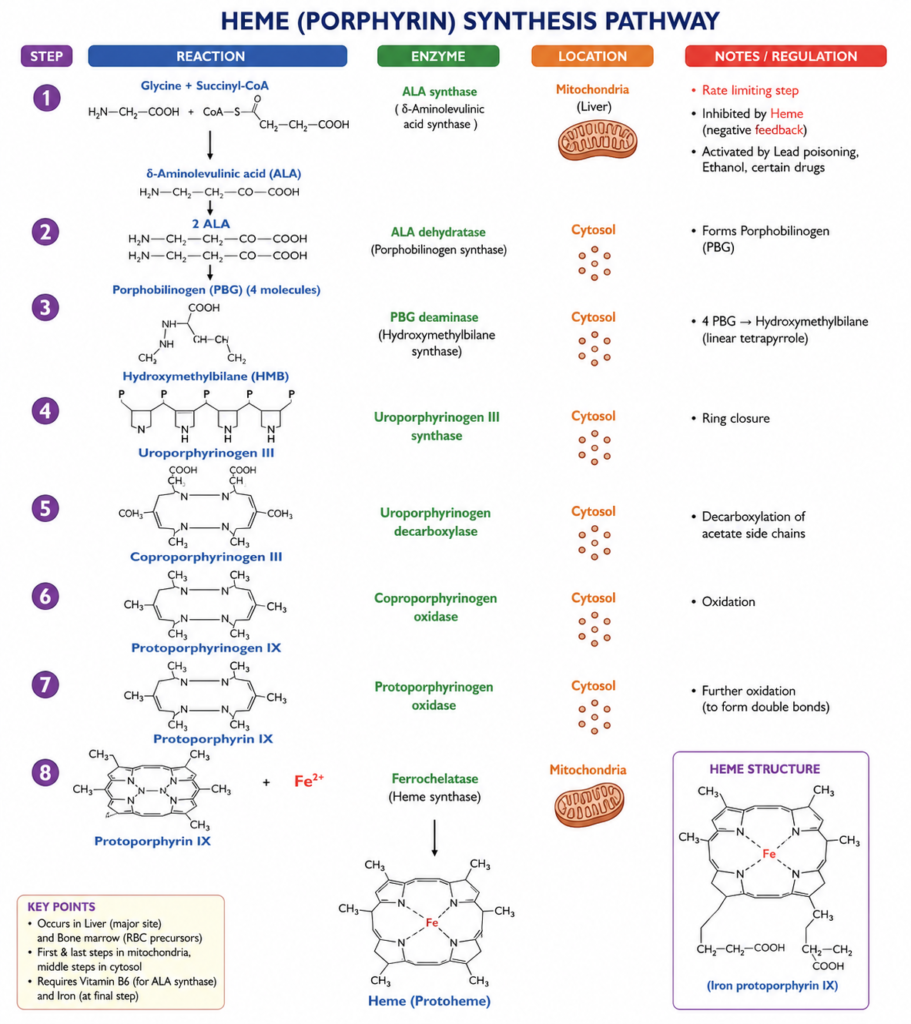
Understanding the production steps helps explain many blood-related disorders. Below is a simplified flowchart of heme synthesis.
Glycine + Succinyl-CoA
        |
   ALA Synthase Enzyme
        |
Aminolevulinic Acid (ALA)
        |
   Several Enzymatic Steps
        |
   Porphyrin Ring Formed
        |
   Iron (Fe2+) Inserted
        |
       Heme
        |
Combines with Globin Chains
        |
     Hemoglobin
This chart shows a clear path from simple building blocks to a fully functional oxygen carrier. Moreover, each enzyme in this chain plays a critical role. If one enzyme malfunctions, porphyrin accumulates abnormally, leading to painful and sometimes dangerous symptoms.
Clinical Relevance of Hemoglobin and Porphyrin
Doctors often test hemoglobin levels during routine checkups. Low hemoglobin usually signals anemia, while high levels may suggest dehydration or lung disease. Therefore, this simple blood test reveals important health information quickly.
Similarly, porphyrin imbalances point toward specific disorders. Acute intermittent porphyria, for example, causes abdominal pain, nerve issues, and skin sensitivity. Genetic mutations affecting heme synthesis enzymes typically cause this condition.
Furthermore, some porphyrias cause extreme sunlight sensitivity. Patients may develop blisters or skin damage after brief sun exposure. Interestingly, historians once linked certain porphyria symptoms to old folklore stories involving unusual physical reactions to light.
In addition, understanding this pathway helps doctors treat lead poisoning. Lead interferes with several enzymes involved in heme synthesis. As a result, porphyrin byproducts build up, offering clues during diagnosis.
Common Disorders Linked to These Molecules
| Disorder | Related Molecule | Common Symptom |
|---|---|---|
| Iron-deficiency anemia | Hemoglobin | Fatigue, pale skin |
| Sickle cell disease | Hemoglobin | Pain crises, organ damage |
| Acute intermittent porphyria | Porphyrin | Abdominal pain, nerve issues |
| Porphyria cutanea tarda | Porphyrin | Skin blistering, sunlight sensitivity |
| Lead poisoning | Both | Fatigue, abdominal pain, anemia |
Recognizing these disorders early often leads to better treatment outcomes and improved quality of life.
Conclusion
Hemoglobin and porphyrin work together in one of biochemistry’s most elegant partnerships. Porphyrin builds the ring that traps iron, while hemoglobin uses this structure to move oxygen throughout the body. Without this teamwork, human survival would look completely different.
Learning how these molecules form and function offers valuable insight into human health. Whether you are studying biochemistry or simply curious about your last blood test, this relationship explains a lot about the body’s inner workings. Ultimately, healthy heme synthesis keeps oxygen flowing and life running smoothly.
Frequently Asked Questions
porphyrin forms the ring structure that binds iron to create heme, which hemoglobin uses to carry oxygen.
Heme synthesis mainly occurs in the liver and bone marrow.
Abnormal porphyrin buildup can cause porphyria, leading to abdominal pain, nerve problems, or skin sensitivity.
Hemoglobin carries oxygen from the lungs to tissues and helps remove carbon dioxide from the body.
Yes, lead interferes with heme synthesis enzymes, disrupting both porphyrin processing and hemoglobin production.