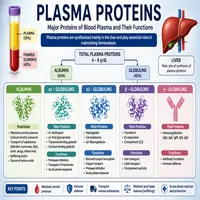
Plasma Proteins: A Complete Biochemistry Guide
Blood carries far more than red cells and oxygen. It also transports a group of essential molecules that keep the body balanced, protected, and functioning smoothly. These molecules float within the liquid part of blood, quietly performing hundreds of vital tasks every second.
This guide breaks down these important biomolecules in simple terms. It covers their types, functions, production process, and clinical relevance. Along the way, tables and a flowchart will make the biochemistry easier to grasp.
What Are Plasma Proteins?
Plasma proteins are a diverse group of molecules dissolved in the liquid portion of blood, known as plasma. The liver produces most of them, while a smaller portion comes from immune cells. Together, they make up nearly seven percent of total plasma volume.
These molecules serve many purposes beyond simple transport. For instance, they maintain fluid balance, support immunity, and assist in blood clotting. Without them, the body could not regulate pressure or fight infection effectively.
Interestingly, scientists first separated these molecules using a technique called electrophoresis. This method sorts molecules based on size and electrical charge. As a result, researchers identified several major categories that remain standard in modern lab testing today.
Because of their variety, doctors often measure these levels to assess liver function, nutrition status, and immune health. A single blood test can reveal a surprising amount of information about overall wellness.
Major Types and Their Roles
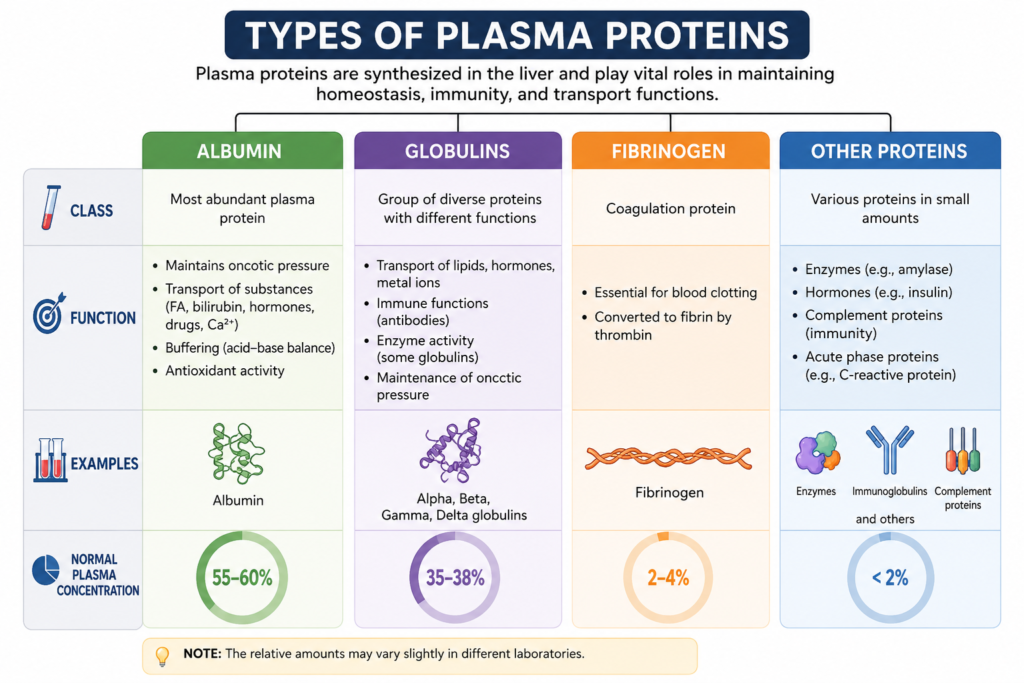
Several distinct categories exist within this group of molecules. The table below highlights the most important ones.
| Type | Main Function | Production Site |
|---|---|---|
| Albumin | Maintains osmotic pressure, transports substances | Liver |
| Globulins | Support immunity, transport hormones and lipids | Liver and immune cells |
| Fibrinogen | Forms blood clots | Liver |
| Transferrin | Transports iron | Liver |
| C-reactive protein | Signals inflammation | Liver |
Albumin makes up the largest portion of these molecules, accounting for roughly sixty percent of the total. Meanwhile, globulins split further into alpha, beta, and gamma subtypes, each with unique responsibilities.
Notably, gamma globulins include antibodies, which play a direct role in fighting infections. Therefore, low levels in this category often signal a weakened immune system.
How the Liver Produces These Molecules
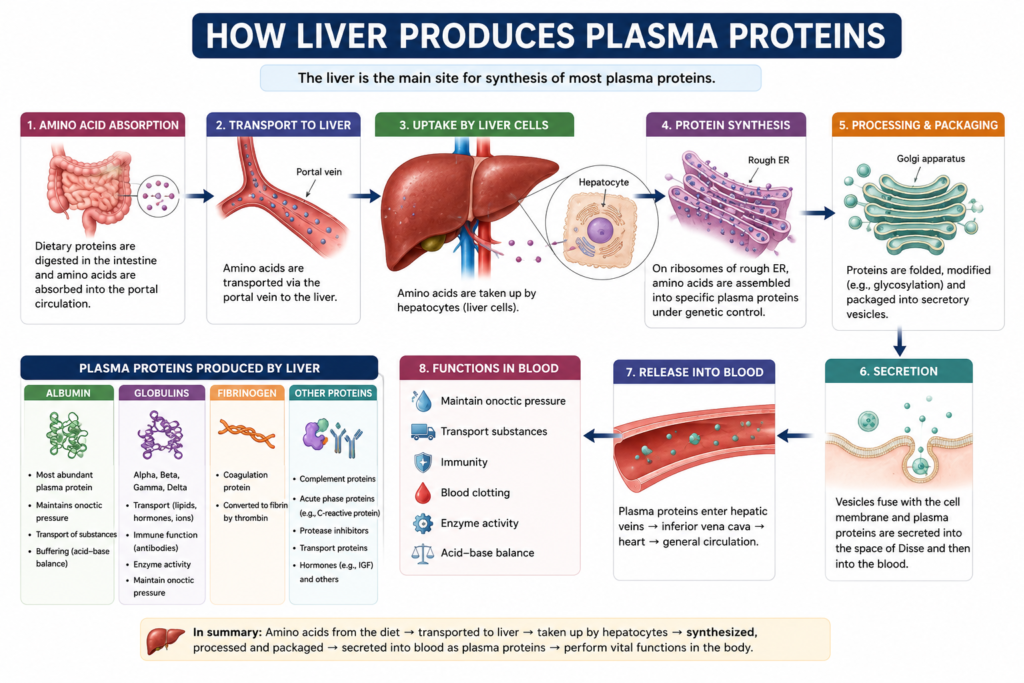
The liver acts as the main factory for most of these essential molecules. This organ constantly synthesizes, releases, and regulates their levels based on the body’s needs. Consequently, liver damage often shows up first through abnormal blood protein levels.
Amino acids from digested food serve as the raw material for this production process. Afterward, liver cells assemble these amino acids into functional molecules. This process requires healthy liver function and adequate nutrition.
Additionally, certain conditions increase production temporarily. For example, infections trigger a rise in specific inflammatory markers. Meanwhile, chronic liver disease often reduces overall production, leading to swelling and fluid retention.
In short, healthy liver function directly determines how well this entire system operates.
Production and Function Flowchart
Visual pathways often simplify complex biochemical processes. Below is a simplified flowchart showing how these molecules form and function.
Dietary Protein Intake
        |
Digestion into Amino Acids
        |
Absorption into Bloodstream
        |
   Liver Synthesis
        |
   -----------------------------
   |         |         |       |
Albumin  Globulins  Fibrinogen  Transferrin
   |         |         |       |
Fluid    Immunity   Clotting  Iron
Balance  Support    Function  Transport
This chart shows how a single starting point branches into multiple critical functions. Furthermore, disruptions anywhere along this pathway can cause noticeable health problems.
Clinical Significance of Plasma Proteins
Doctors frequently test plasma proteins to evaluate liver health, nutrition, and immune status. Low albumin levels, for instance, often indicate malnutrition, liver disease, or kidney problems. Therefore, this single measurement provides valuable diagnostic clues.
Similarly, abnormal globulin levels point toward specific conditions. High gamma globulin levels may suggest chronic infection or certain blood cancers. Meanwhile, low levels often indicate immune deficiency disorders.
Moreover, fibrinogen levels matter greatly in clotting disorders. Elevated levels increase clotting risk, while low levels raise bleeding risk during surgery or injury. For this reason, surgeons often check this value before major procedures.
In addition, doctors use these measurements to monitor chronic diseases. Conditions like cirrhosis, nephrotic syndrome, and multiple myeloma all show distinct protein patterns. Consequently, a simple blood panel often guides further diagnostic testing.
Common Disorders Linked to These Molecules
| Disorder | Affected Protein | Common Symptom |
|---|---|---|
| Cirrhosis | Albumin | Swelling, fluid retention |
| Nephrotic syndrome | Albumin | Protein loss in urine, swelling |
| Multiple myeloma | Globulins | Bone pain, fatigue, kidney damage |
| Hemophilia | Fibrinogen and clotting factors | Excessive bleeding |
| Chronic infection | Globulins | Elevated inflammatory markers |
Recognizing these patterns early often leads to faster diagnosis and more effective treatment planning.
Conclusion
Plasma proteins may float quietly within the bloodstream, but their impact on health runs deep. They maintain fluid balance, support immunity, assist in clotting, and reveal valuable clues about liver and kidney function. Without them, the body could not regulate itself effectively.
Understanding how plasma proteins form and function offers real insight into overall health. Whether reviewing a routine blood test or studying biochemistry in depth, this knowledge explains why these molecules matter so much. Ultimately, a healthy liver and balanced nutrition keep this essential system running smoothly for life.
Frequently Asked Questions
They are made of amino acids, mostly synthesized by the liver from digested dietary protein.
Albumin is the most abundant, making up roughly sixty percent of total plasma protein content.
Doctors test these levels to assess liver function, nutrition status, immune health, and clotting ability.
4
Low albumin often results from liver disease, kidney problems, malnutrition, or chronic inflammation.
Globulins, especially gamma globulins, include antibodies that help the body fight infections effectively.