Hemolysis and ESR of Red Blood Cells
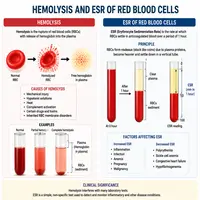
Blood tests reveal a lot about the body, and two values often confuse students: hemolysis and ESR of red blood cells. Both relate to red blood cells, yet they measure completely different processes. Hemolysis describes the destruction of red cells, while ESR measures how fast those cells settle in a test tube. Understanding both terms helps you interpret common lab reports with confidence.
This guide explains each concept step by step. You will find clear tables, a simple flowchart, and answers to frequent exam questions. By the end, the relationship between these two processes should feel much clearer.
What Is Hemolysis?
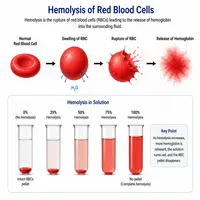
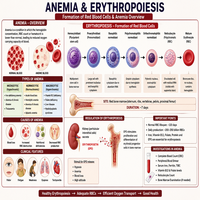
Hemolysis refers to the breakdown of red blood cells before their normal lifespan ends. Normally, red cells live for about 120 days before the spleen removes them. However, certain conditions cause cells to rupture early, releasing hemoglobin into the plasma.
This process can happen inside blood vessels (intravascular hemolysis) or inside organs like the spleen (extravascular hemolysis). Doctors often suspect hemolysis when a patient shows pale skin, fatigue, or dark urine. Lab tests such as elevated bilirubin and low haptoglobin confirm the diagnosis quickly.
Common Causes of Hemolysis
Several factors can trigger early red cell destruction. Below is a simple list of frequent causes.
- Autoimmune disorders attacking red cells
- Genetic conditions like G6PD deficiency
- Infections such as malaria
- Mechanical damage from artificial heart valves
- Certain medications and toxins
- Severe burns or physical trauma
As a result, doctors run multiple tests together instead of relying on one single marker. For instance, a full blood count combined with a peripheral smear often confirms the pattern of destruction.
What Is ESR?
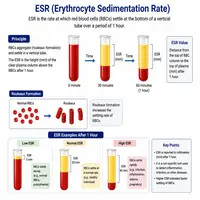
ESR stands for erythrocyte sedimentation rate. This test measures how quickly red blood cells settle at the bottom of a vertical tube over one hour. A faster settling rate usually points toward inflammation somewhere in the body.
Red cells normally repel each other slightly, which keeps them suspended longer. However, inflammation raises certain plasma proteins, especially fibrinogen, causing cells to clump together. These clumps, called rouleaux, fall faster and raise the ESR value.
Factors That Affect ESR
Many factors influence this simple yet useful test. The table below highlights the major ones.
| Factor | Effect on ESR |
|---|---|
| Inflammation or infection | Increases ESR |
| Anemia | Increases ESR |
| Pregnancy | Increases ESR |
| Polycythemia | Decreases ESR |
| Sickle cell disease | Decreases ESR |
| High fibrinogen levels | Increases ESR |
How Hemolysis and ESR of Red Blood Cells Connect
Students often ask how hemolysis and ESR of red blood cells relate to each other. The connection lies in cell shape and number. When hemolysis reduces red cell count, remaining cells sometimes settle differently, altering the ESR reading. Meanwhile, inflammation caused by certain hemolytic conditions can raise ESR independently.
Here is a simple flow showing this relationship:
Red Blood Cell Destruction (Hemolysis)
            |
            v
Release of Hemoglobin + Cell Debris
            |
            v
Immune and Inflammatory Response
            |
            v
Rise in Plasma Proteins (Fibrinogen)
            |
            v
Faster Red Cell Clumping
            |
            v
Increased ESR Reading
Therefore, doctors rarely diagnose hemolysis using ESR alone. Instead, they combine it with bilirubin, reticulocyte count, and haptoglobin levels for an accurate picture.
Clinical Significance
Both markers guide doctors toward faster, safer diagnoses. Consider the following practical examples.
- Autoimmune hemolytic anemia: Patients often show low hemoglobin alongside a raised ESR due to ongoing inflammation.
- Infections: Malaria can cause both hemolysis and a sharp rise in ESR within days.
- Monitoring treatment: Doctors track ESR trends to see whether therapy is reducing inflammation over time.
- Chronic disease screening: A persistently high ESR pushes doctors to investigate hidden hemolytic processes.
Consequently, lab technicians treat these two tests as complementary rather than identical. Each one tells part of a larger story about red blood cell health.
Quick Comparison Table
| Aspect | Hemolysis | ESR |
|---|---|---|
| What it measures | Red cell destruction | Settling speed of red cells |
| Normal cause | Aging cell removal | Baseline plasma protein levels |
| Abnormal trigger | Autoimmune attack, infection, genetic defect | Inflammation, infection, anemia |
| Key related test | Bilirubin, haptoglobin | Fibrinogen, CRP |
| Clinical use | Detects anemia type | Screens for inflammation |
Fresh Insights Worth Knowing
Recent lab guidelines now recommend automated ESR analyzers over the traditional Westergren tube method, since automated systems reduce human error and speed up reporting. Meanwhile, newer hemolysis panels combine multiple markers into a single automated result, cutting diagnosis time significantly. These updates mean patients often receive faster, more reliable results than they did even a few years ago.
Conclusion
Hemolysis and ESR of red blood cells describe two separate but connected physiological events. Hemolysis destroys red cells early, while ESR reflects how inflammation changes the way remaining cells settle. Together, these markers give doctors valuable clues about anemia, infection, and chronic disease. With the tables and flowchart above, this topic becomes far easier to understand and remember for exams or clinical practice.
Frequently Asked Questions
Hemolysis measures red cell destruction, while ESR measures how fast red cells settle in a tube.
Not always. ESR rises mainly due to inflammation, which sometimes accompanies but does not always follow hemolysis.
Normal ranges vary slightly by lab, but adults typically fall between 0 and 20 mm/hr.
Yes, dehydration can concentrate plasma proteins and slightly alter both readings.
Bilirubin and haptoglobin detect hemolysis more directly, while ESR only hints at related inflammation.