Fats do more than store energy. They build cell membranes, support hormones, and fuel the body during rest and exercise. The metabolism of lipids explains how the body processes fats at every stage.
This guide walks through digestion, transport, breakdown, and storage. Additionally, we will explore how the body builds new lipids when needed. So, let’s break this complex topic into simple, clear steps.
What Does Lipid Metabolism Mean?
Lipid metabolism refers to how the body digests, transports, breaks down, and builds fats. This includes triglycerides, cholesterol, and phospholipids. Each of these molecules plays a distinct biological role.
The process involves several organs. The liver, intestines, and adipose tissue all participate. Meanwhile, enzymes and transport proteins move lipids where they’re needed.
Because fats are not water-soluble, the body needs special carriers. Without these carriers, lipids couldn’t travel through the bloodstream. This is where lipoproteins come into play, a topic we’ll cover shortly.
Digestion and Absorption of Dietary Fats
Lipid metabolism begins in the digestive tract. Dietary fats enter the small intestine, where bile salts emulsify them. This process breaks large fat globules into smaller droplets.
Afterward, pancreatic lipase breaks these droplets into fatty acids and monoglycerides. These smaller molecules then form micelles with bile salts. Consequently, they can cross into intestinal cells.
Inside these cells, fats reassemble into triglycerides. They combine with proteins to form chylomicrons. These chylomicrons then enter the lymphatic system before reaching the bloodstream.
| Digestive Step | Location | Key Molecule |
|---|---|---|
| Emulsification | Small intestine | Bile salts |
| Breakdown | Small intestine | Pancreatic lipase |
| Absorption | Intestinal cells | Micelles |
| Packaging | Intestinal cells | Chylomicrons |
Lipoproteins: The Body’s Fat Transporters
Since fats don’t dissolve in blood, the body uses lipoproteins for transport. These particles have a fat core and a protein-rich outer shell.
There are four main types:
- Chylomicrons – carry dietary fat from intestines
- VLDL – transport fats made in the liver
- LDL – deliver cholesterol to tissues
- HDL – return excess cholesterol to the liver
Each lipoprotein has a specific density and function. Notably, LDL is often called “bad cholesterol” because excess amounts contribute to artery blockages. Meanwhile, HDL is considered protective since it removes cholesterol from tissues.
Fatty Acid Oxidation: Breaking Down Fats for Energy
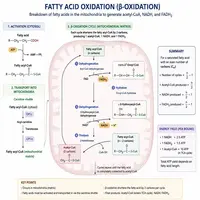
The metabolism of lipids becomes especially important during energy production. When the body needs fuel, it breaks down triglycerides into fatty acids and glycerol.
Fatty acids then undergo a process called beta-oxidation. This happens inside the mitochondria. Each cycle removes two carbon atoms from the fatty acid chain. These two-carbon units become acetyl-CoA.
Here’s a simplified flow of this process:
Triglyceride Breakdown
        │
        ▼
Fatty Acids Released
        │
        ▼
Fatty Acids Enter Mitochondria (via carnitine shuttle)
        │
        ▼
Beta-Oxidation Cycles Repeat
        │
        ▼
Acetyl-CoA Produced
        │
        ▼
Enters Citric Acid Cycle → ATP Generated
This process generates significant energy. In fact, fats provide more energy per gram than carbohydrates or proteins. Therefore, the body relies heavily on fat oxidation during prolonged exercise or fasting.
Ketone Body Formation
Sometimes, the liver produces more acetyl-CoA than the citric acid cycle can handle. This often happens during fasting or low-carbohydrate diets. As a result, the liver converts excess acetyl-CoA into ketone bodies.
Ketone bodies serve as an alternative fuel source. The brain, heart, and muscles can all use them when glucose is scarce. However, excessive ketone production can lead to a dangerous condition called ketoacidosis, especially in diabetes.
This shows how the metabolism of lipids adapts to different physiological states. The body constantly shifts its fuel sources based on availability and demand.
Lipogenesis: Building New Fats
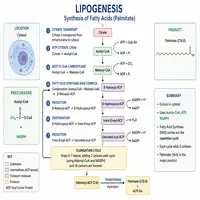
The body doesn’t only break down fats. It also builds them when energy intake exceeds demand. This process is called lipogenesis.
Lipogenesis mainly occurs in the liver and adipose tissue. Excess glucose converts into acetyl-CoA, which then combines to form fatty acids. These fatty acids link together, creating triglycerides for storage.
| Process | Direction | Main Location |
|---|---|---|
| Lipolysis | Breaks down fat | Adipose tissue |
| Beta-oxidation | Breaks down fatty acids | Mitochondria |
| Lipogenesis | Builds new fat | Liver, adipose tissue |
| Ketogenesis | Builds ketone bodies | Liver |
This balance between building and breaking down fat is tightly regulated. Hormones like insulin and glucagon control which direction the body leans toward at any given time.
Hormonal Regulation of Lipid Metabolism
Hormones play a major role in controlling lipid metabolism. Insulin promotes fat storage and inhibits breakdown. Meanwhile, glucagon and epinephrine stimulate fat breakdown during fasting or stress.
Additionally, thyroid hormones influence overall metabolic rate, including how quickly fats are processed. Cortisol also affects fat distribution throughout the body.
Consequently, hormonal imbalances can significantly disrupt lipid metabolism. Conditions like hypothyroidism or insulin resistance often lead to abnormal fat storage patterns.
Clinical Relevance of Lipid Metabolism
Understanding the metabolism of lipids helps explain many common health conditions. For instance:
- Atherosclerosis develops when LDL cholesterol builds up in artery walls.
- Obesity often results from excess lipogenesis and reduced fat oxidation.
- Diabetic ketoacidosis occurs when ketone production becomes excessive.
- Fatty liver disease develops when triglycerides accumulate in liver cells.
Doctors frequently test lipid profiles to assess cardiovascular risk. These tests measure LDL, HDL, and triglyceride levels. Therefore, this biochemistry directly informs everyday medical decisions.
Quick Summary Table
| Pathway | Purpose | Key Product |
|---|---|---|
| Digestion | Break down dietary fat | Chylomicrons |
| Beta-oxidation | Generate energy | Acetyl-CoA |
| Ketogenesis | Alternative fuel production | Ketone bodies |
| Lipogenesis | Store excess energy | Triglycerides |
Conclusion
The metabolism of lipids is a dynamic, well-regulated system. It moves fats through digestion, transport, breakdown, and storage in a coordinated cycle. From chylomicrons in the gut to ketone bodies in the liver, each step serves a distinct purpose.
Moreover, hormones like insulin and glucagon constantly adjust this balance. This flexibility allows the body to respond to fasting, exercise, and dietary changes efficiently.
Understanding lipid metabolism also sheds light on conditions like atherosclerosis, obesity, and fatty liver disease. Ultimately, this biochemical knowledge connects directly to everyday health and long-term disease prevention.
Frequently Asked Questions
It refers to how the body digests, transports, breaks down, and builds fats, including triglycerides, cholesterol, and phospholipids, to meet energy and structural needs.
Beta-oxidation is the process where fatty acids break down inside mitochondria, producing acetyl-CoA. This acetyl-CoA then enters the citric acid cycle to generate energy.
The liver produces ketone bodies when acetyl-CoA exceeds what the citric acid cycle can process, often during fasting or low-carbohydrate diets, providing an alternative fuel source.
LDL delivers cholesterol to tissues and can contribute to artery blockages when elevated. HDL removes excess cholesterol from tissues and returns it to the liver.
Insulin promotes fat storage, while glucagon and epinephrine trigger fat breakdown. Thyroid hormones and cortisol also influence how efficiently the body processes fats.