Carbohydrates Made Simple: A Beginner’s Dental Guide
Carbohydrates are everywhere in our daily food, and they are one of the main reasons dentists talk so much about diet. In simple words, carbohydrates are sugars and starches that give the body energy. However, when these sugars stay in the mouth for too long, they feed bacteria that live on teeth, and this leads to acid attacks on enamel. Because of this close link, understanding carbohydrates is the first step toward understanding tooth decay. This article explains carbohydrates in the simplest way possible, so even a beginner with no science background can follow along easily.
What Are Carbohydrates?
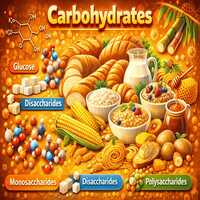
Carbohydrates are nutrients made of carbon, hydrogen, and oxygen. They are found in many everyday foods such as rice, bread, fruits, and sweets. Here are the basic facts every beginner should know:
- Carbohydrates give the body quick energy.
- They are found in both healthy foods (fruits, vegetables) and unhealthy foods (candy, soda).
- Some carbohydrates are simple, and some are very complex.
- Oral bacteria use carbohydrates, especially sugar, as their main food source.
- The acid produced by these bacteria slowly damages tooth enamel.
Types of Carbohydrates
Simple sugars break down fast, while complex carbohydrates take longer to digest. This difference is very important for dental health because faster breakdown usually means faster acid production.
| Type | Example | Effect on Teeth |
|---|---|---|
| Monosaccharides | Glucose, Fructose | Quick acid production |
| Disaccharides | Sucrose, Lactose | High decay risk |
| Polysaccharides | Starch, Cellulose | Slow breakdown, lower risk |
Monosaccharides
Monosaccharides are the smallest and simplest carbohydrates. Glucose is the most common monosaccharide, and it is the main sugar that oral bacteria love to consume.
- Monosaccharides include glucose, fructose, and galactose.
- Glucose is also the building block of starch and cellulose.
- Because they are so simple, bacteria break them down almost instantly in the mouth.
Structure of Glucose
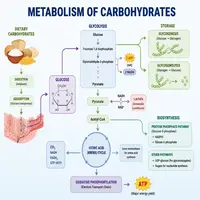
Glucose has the chemical formula C6H12O6, which simply means it has six carbon atoms, twelve hydrogen atoms, and six oxygen atoms. In water and saliva, glucose mostly forms a ring shape rather than a straight chain. This ring shape is easy for bacteria to grab onto and use as food, which is one reason sugary snacks are so harmful to teeth.
Disaccharides
- Sucrose = Glucose + Fructose (found in sugar, candy, soft drinks)
- Lactose = Glucose + Galactose (found in milk)
- Maltose = Glucose + Glucose (found in malt products)
- Sucrose is the most cariogenic, meaning it causes cavities the fastest.
Polysaccharides
Because they are bigger, they take longer to break down, and therefore they release sugar more slowly into the mouth. This slower release usually means less harm to teeth compared to simple sugars.
| Carbohydrate Group | Made From | Dental Impact |
|---|---|---|
| Homopolysaccharides | One type of sugar (e.g., starch, glycogen) | Moderate risk if cooked/processed |
| Heteropolysaccharides | Two or more sugar types (e.g., agar, pectin) | Generally low risk |
Homopolysaccharides
Thus, Homopolysaccharides are made from only one type of sugar unit repeated many times. Although starch is not as sweet as sugar, it still breaks down into glucose inside the mouth, especially when foods are sticky or stay between teeth for a long time.
- Starch: found in rice, bread, potatoes
- Glycogen: stored in the liver and muscles, not found in food directly
- Cellulose: found in plant fiber, cannot be digested by humans, and is actually good for cleaning teeth while chewing
Heteropolysaccharides
But Heteropolysaccharides contain two or more different sugar units, which makes them more complex and often gentler on dental health. Thus,these carbohydrates are common in dental products and natural foods.
- Agar: used in dental impression material and lab gels
- Pectin: found in fruits, used in jams, supports digestion
- Hyaluronic acid: supports healthy gum tissue
- Heparin: not related to food, but is a medical heteropolysaccharide
How Sugars Cause Tooth Decay
When sugar stays on teeth, bacteria in plaque begin a process called fermentation, which produces acid. This acid lowers the pH level around the tooth, and it slowly removes minerals from the enamel.
| Step | What Happens |
|---|---|
| 1 | Sugar sticks to teeth after eating |
| 2 | Bacteria feed on the sugar |
| 3 | Acid is produced as a byproduct |
| 4 | Enamel loses minerals (demineralization) |
| 5 | Cavity forms if left untreated |
Good Carbs vs. Bad Carbs for Teeth
Not every carbohydrate is harmful, and beginners often assume all sugar is equally bad. In reality, the speed of breakdown matters more than just the presence of sugar.
- Bad for teeth: candy, soda, white bread, sticky sweets
- Good for teeth: apples, carrots, whole grains, leafy vegetables
- Saliva-friendly foods help wash sugar away naturally
- Fiber-rich foods like pectin-containing fruits slow down sugar release
Role of Glycoproteins in the Mouth
Glycoproteins are special molecules formed when carbohydrates attach to proteins, and they play a protective role inside the mouth. Saliva contains glycoproteins called mucins, which coat the teeth and gums with a thin protective layer.
- Mucins keep the mouth moist
- Thus, they form a barrier against acid and bacteria
- Low saliva flow means fewer protective glycoproteins, leading to higher cavity risk
- Drinking water and staying hydrated supports healthy mucin levels
Simple Tips to Protect Teeth from Carbohydrates
- Brush twice daily, especially after sugary meals
- Limit frequent snacking on sticky sweets
- Drink water after eating starchy or sugary food
- Choose fiber-rich fruits and vegetables over processed sugar
- Visit your dentist regularly for checkups
Conclusion
Carbohydrates are a normal and necessary part of our diet, but their effect on teeth depends entirely on their type and structure. Thus, By choosing the right carbohydrates and practicing good oral hygiene, beginners and experts alike can protect their teeth for a lifetime. A simple change in diet, paired with regular brushing and dental visits, makes a huge difference in preventing tooth decay caused by everyday carbohydrates.