Biomolecules and the Cell Complete Exam Oriented Guide
Biochemistry is the science that explains the chemical basis of life. Among its most fundamental topics are Biomolecules and Cell, which form the structural and functional foundation of every living organism. The human body is composed of billions of cells, and each cell contains a variety of biomolecules that work together to maintain life. Therefore, understanding Biomolecules and Cell is essential for students of medicine, dentistry, and allied health sciences.
According to Satyanarayana and Chatterjea Biochemistry, biomolecules are chemical compounds produced by living organisms. They participate in metabolism, growth, repair, communication, and energy production. Moreover, the cell acts as the basic structural and functional unit of life. Together, Biomolecules and Cell provide the framework for all physiological processes.
What Are Biomolecules?
Biomolecules are naturally occurring chemical compounds found in living organisms. They are responsible for maintaining cellular structure and supporting biological functions. In addition, biomolecules participate in energy production, signaling pathways, immune responses, and genetic inheritance.
The study of Biomolecules and Cell helps students understand how the body performs complex activities through simple chemical interactions. These molecules are synthesized, utilized, and degraded continuously to maintain homeostasis.
Characteristics of Biomolecules
- Present in all living organisms.
- Essential for life processes.
- Participate in metabolism.
- Possess specific structures and functions.
- Can act as structural or functional molecules.
- Help in growth, repair, and reproduction.
- Store and transfer genetic information.
Classification of Biomolecules
Biomolecules are broadly classified into two categories:
1. Inorganic Biomolecules
These molecules are simple compounds that are essential for life.
Examples include:
- Water
- Minerals
- Electrolytes
- Dissolved gases
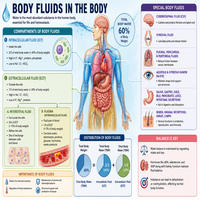
Although simple in structure, these substances play critical physiological roles. For example, water serves as the universal solvent of the body.
2. Organic Biomolecules
Organic biomolecules contain carbon atoms and form the major components of living cells.
These include:
- Carbohydrates
- Lipids
- Proteins
- Nucleic acids
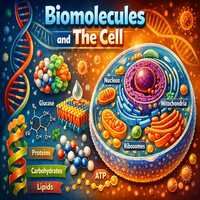
The concept of Biomolecules and Cell mainly revolves around these four major classes because they contribute significantly to cellular function and survival.
Carbohydrates
Carbohydrates are organic compounds composed of carbon, hydrogen, and oxygen. They are the primary source of energy for most cells.
Functions of Carbohydrates
- Provide immediate energy.
- Store energy as glycogen.
- Form structural components.
- Participate in cell recognition.
- Support normal brain function.
Classification of Carbohydrates
Monosaccharides
These are the simplest carbohydrates.
Examples:
- Glucose
- Fructose
- Galactose
Disaccharides
Formed by two monosaccharide units.
Examples:
- Sucrose
- Lactose
- Maltose
Polysaccharides
These consist of multiple monosaccharide units.
Examples:
- Glycogen
- Starch
- Cellulose
Furthermore, glucose remains the most important carbohydrate because it serves as the primary fuel for many tissues.
Lipids
Lipids are hydrophobic organic compounds that are insoluble in water but soluble in organic solvents.
They are a major component of Biomolecules and Cell because they form cell membranes and store energy efficiently.
Functions of Lipids
- Energy storage
- Cell membrane formation
- Thermal insulation
- Hormone synthesis
- Protection of organs
Classification of Lipids
Simple Lipids
- Fats
- Oils
- Waxes
Compound Lipids
- Phospholipids
- Glycolipids
- Lipoproteins
Derived Lipids
- Cholesterol
- Steroid hormones
- Fat-soluble vitamins
Additionally, phospholipids are particularly important because they form the structural framework of cellular membranes.
Proteins
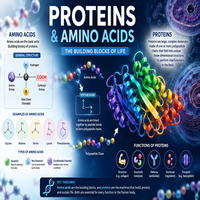
Proteins are complex organic molecules composed of amino acids linked by peptide bonds.
They are considered the most versatile biomolecules because they perform numerous biological functions.
Functions of Proteins
- Structural support
- Enzyme activity
- Hormone production
- Immune defense
- Transport of substances
- Muscle contraction
Levels of Protein Structure
Primary Structure
Linear sequence of amino acids.
Secondary Structure
Formation of alpha-helices and beta-sheets.
Tertiary Structure
Three-dimensional folding.
Quaternary Structure
Association of multiple polypeptide chains.
Consequently, alterations in protein structure can result in various diseases and functional abnormalities.
Nucleic Acids
Nucleic acids are genetic biomolecules responsible for storing and transmitting hereditary information.
Types of Nucleic Acids
DNA (Deoxyribonucleic Acid)
DNA carries genetic information from one generation to another.
Functions include:
- Storage of genetic information
- Regulation of protein synthesis
- Cellular reproduction
RNA (Ribonucleic Acid)
RNA participates in protein synthesis.
Major types include:
- Messenger RNA (mRNA)
- Transfer RNA (tRNA)
- Ribosomal RNA (rRNA)
Therefore, nucleic acids ensure continuity of life through inheritance and gene expression.
The Cell: Basic Unit of Life
The cell is the smallest structural and functional unit capable of performing all life processes.
The study of Biomolecules and Cell becomes meaningful because biomolecules function within the cellular environment. Every physiological activity ultimately occurs at the cellular level.
Cell Theory
Cell theory states that:
- All living organisms are composed of cells.
- The cell is the basic unit of life.
- New cells arise from pre-existing cells.
These principles continue to form the foundation of modern biology.
Structure of the Cell
A typical human cell consists of three major components:
Plasma Membrane
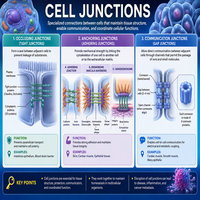
The plasma membrane forms the outer boundary of the cell.
Functions include:
- Protection
- Selective permeability
- Cell communication
- Transport regulation
Moreover, the membrane follows the fluid mosaic model and contains proteins, phospholipids, and cholesterol.
Cytoplasm
The cytoplasm is the semifluid matrix present between the nucleus and cell membrane.
It contains:
- Organelles
- Enzymes
- Nutrients
- Cytoskeletal elements
Most metabolic reactions occur within the cytoplasm.
Nucleus
The nucleus serves as the control center of the cell.
Functions include:
- Regulation of cellular activities
- Storage of DNA
- Control of protein synthesis
- Cell division
As a result, damage to the nucleus can significantly impair cellular function.
Cell Organelles
Cell organelles perform specialized functions that ensure cellular survival.
Mitochondria
Known as the powerhouse of the cell.
Functions:
- ATP production
- Energy metabolism
- Cellular respiration
Endoplasmic Reticulum
Rough Endoplasmic Reticulum
- Protein synthesis
- Protein transport
Smooth Endoplasmic Reticulum
- Lipid synthesis
- Detoxification
Golgi Apparatus
Functions:
- Modification of proteins
- Packaging
- Secretion
Lysosomes
Functions:
- Intracellular digestion
- Removal of damaged organelles
Ribosomes
Functions:
- Protein synthesis
Peroxisomes
Functions:
- Oxidation reactions
- Detoxification of harmful substances
Furthermore, these organelles work together to maintain normal cellular activity.
Cell Membrane Transport
Movement of substances across the membrane occurs through several mechanisms.
Passive Transport
No energy is required.
Examples:
- Diffusion
- Osmosis
- Facilitated diffusion
Active Transport
Energy is required for transport against concentration gradients.
Examples:
- Sodium-potassium pump
- Calcium pump
Therefore, membrane transport maintains cellular homeostasis and proper physiological function.
Clinical Significance of Biomolecules and Cell
The study of Biomolecules and Cell has immense clinical importance.
In Dentistry
- Understanding tooth formation
- Salivary protein analysis
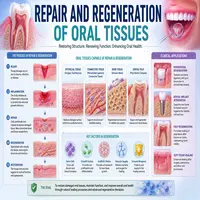
- Oral tissue metabolism
- Bone remodeling mechanisms
In Medicine
- Diagnosis of metabolic disorders
- Genetic disease evaluation
- Cancer research
- Drug development
Moreover, disturbances in biomolecules can lead to diabetes mellitus, hyperlipidemia, protein deficiencies, and genetic abnormalities.
Biomolecules and Cell in Human Health
Proper functioning of biomolecules and cells is necessary for maintaining health. Carbohydrates provide energy, proteins build tissues, lipids form membranes, and nucleic acids regulate genetic activities. Meanwhile, cells coordinate all biological functions through highly organized mechanisms.
Consequently, any imbalance in these components can result in disease. Understanding Biomolecules and Cell allows healthcare professionals to identify pathological changes and develop effective treatment strategies.
Conclusion
In conclusion, Biomolecules and Cell represent the fundamental basis of life and biological organization. Carbohydrates, lipids, proteins, and nucleic acids perform specialized functions that support cellular activities. Meanwhile, the cell serves as the structural and functional unit where these biomolecules interact continuously. Furthermore, knowledge of Biomolecules and Cell is essential for dental and medical students because it forms the foundation for understanding physiology, pathology, genetics, and clinical practice. Therefore, a strong grasp of this topic is indispensable for academic success and professional excellence in healthcare sciences.