Every breath depends on tiny cells working nonstop inside blood vessels. These cells carry oxygen from the lungs to every tissue in the body. Without them, muscles, organs, and the brain would quickly shut down. Below, we explore how this system works and why it matters so much.
What Are Red Blood Cells?
Red blood cells are small, disc-shaped cells that travel through blood vessels. They lack a nucleus, unlike most other cells in the body. This unique shape allows them to squeeze through narrow capillaries easily.
Bone marrow produces these cells constantly. Each cell lives for about 120 days before the body breaks it down. Meanwhile, new cells replace the old ones without interruption. As a result, oxygen delivery never stops completely.
These cells make up nearly half of total blood volume. Therefore, doctors often check red blood cell counts during routine blood tests. Low counts can signal anemia, while high counts may point to other health issues.
What Is Hemoglobin?
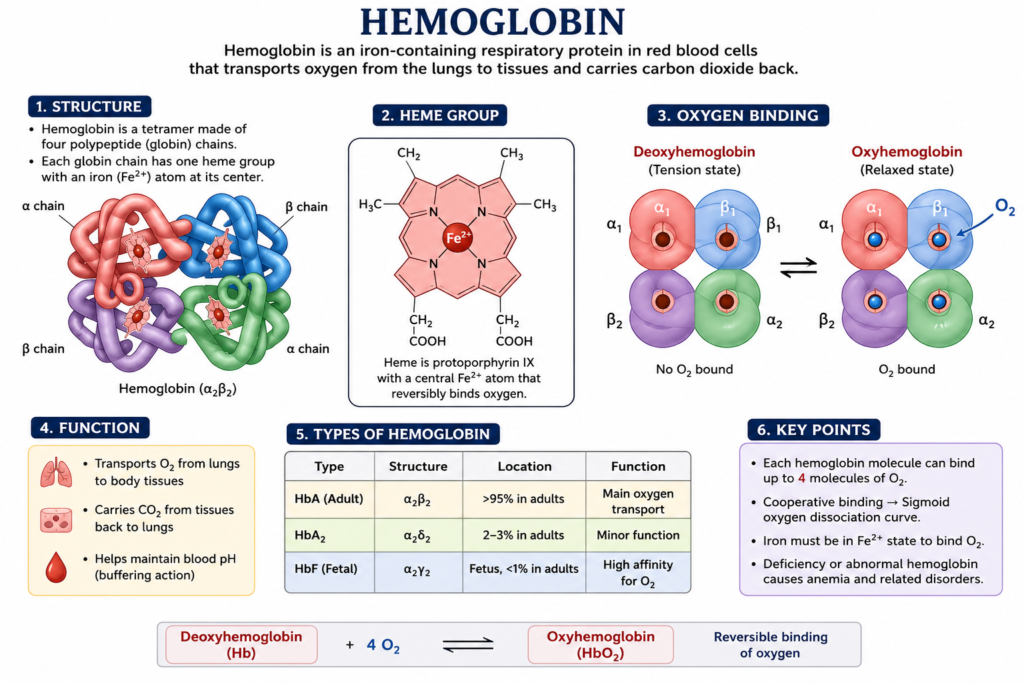
Hemoglobin is a protein found inside red blood cells. It gives blood its red color and carries oxygen throughout the body. Each red blood cell contains millions of hemoglobin molecules packed tightly inside.
This protein contains iron, which binds directly to oxygen molecules. Consequently, oxygen attaches easily as blood passes through the lungs. Then, it releases oxygen once it reaches tissues that need it most.
Hemoglobin also helps transport carbon dioxide back to the lungs. This waste gas gets removed through exhaled breath. Without this dual function, cells would struggle to survive for long.
The Table Below Shows Key Facts About Both
| Feature | Red Blood Cells | Hemoglobin |
|---|---|---|
| Location | Circulate in blood | Found inside red blood cells |
| Lifespan | About 120 days | Recycled with cell breakdown |
| Main Job | Transport oxygen | Bind and carry oxygen |
| Made In | Bone marrow | Bone marrow, during cell formation |
| Key Component | No nucleus | Contains iron |
This comparison shows how closely these two structures depend on each other. Neither one works effectively without the other.
How Oxygen Transport Actually Happens
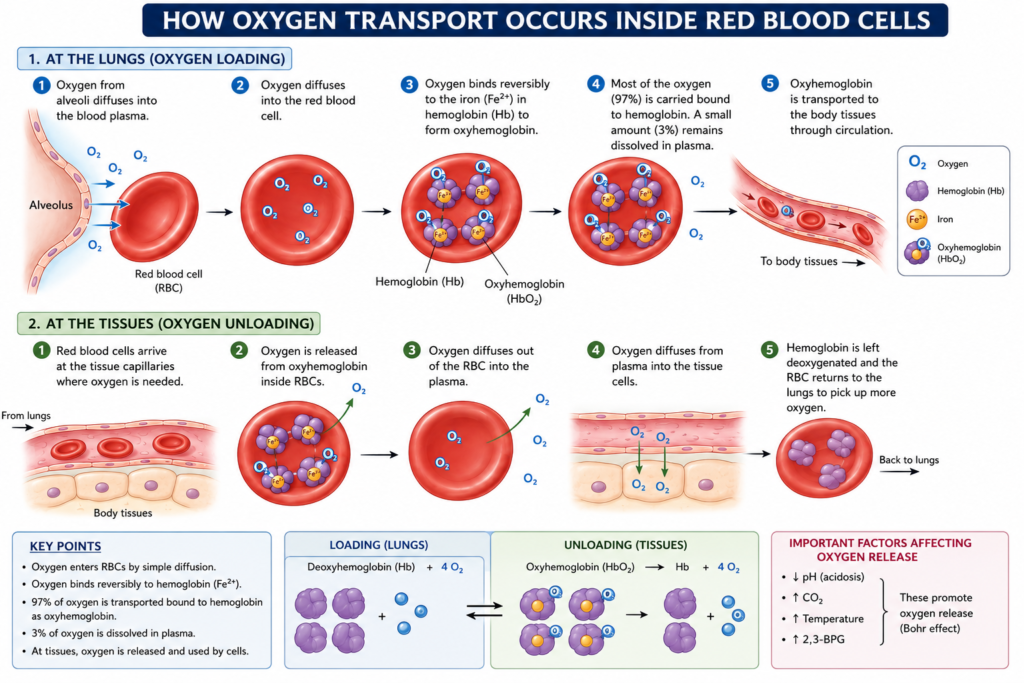
Oxygen transport follows a clear, repeating cycle. First, air enters the lungs during inhalation. Next, oxygen crosses into tiny blood vessels surrounding the lung tissue. Then, hemoglobin binds to this oxygen immediately.
The flowchart below outlines this process step by step.
Inhaled Air Enters Lungs
        ↓
Oxygen Crosses Into Blood Vessels
        ↓
Hemoglobin Binds Oxygen Molecules
        ↓
Red Blood Cells Travel Through Bloodstream
        ↓
Oxygen Releases Into Body Tissues
        ↓
Carbon Dioxide Picked Up for Removal
        ↓
Blood Returns to Lungs to Repeat Cycle
This cycle repeats thousands of times daily. Meanwhile, the body adjusts this process based on activity levels. For example, exercise increases oxygen demand, so breathing and heart rate rise together.
Why This System Matters for Overall Health
Cells throughout the body rely on steady oxygen supply. Muscles need it for movement, while the brain needs it for constant function. Therefore, any disruption to this system creates serious health risks quickly.
Low hemoglobin levels often lead to fatigue, weakness, and dizziness. This condition, known as anemia, affects millions of people worldwide. Iron deficiency remains one of the most common causes.
On the other hand, extremely high red blood cell counts can thicken blood. This thickening increases the risk of clotting and circulation problems. Consequently, doctors monitor both extremes carefully during checkups.
Common Conditions Affecting This System
Several health conditions relate directly to red blood cells and their oxygen-carrying protein. Understanding these conditions highlights why this system deserves attention.
- Iron-deficiency anemia, caused by low iron intake
- Sickle cell disease, which changes cell shape
- Polycythemia, involving excess red blood cell production
- Thalassemia, a genetic blood disorder
- Vitamin B12 deficiency, affecting cell production
Doctors typically diagnose these conditions through blood tests. These tests measure cell counts, hemoglobin levels, and overall blood health. Early detection often leads to simpler, more effective treatment.
How the Body Maintains Balance
The body constantly regulates red blood cell production. A hormone called erythropoietin plays a major role here. Kidneys release this hormone when oxygen levels drop too low.
This hormone then signals bone marrow to produce more cells. As a result, oxygen delivery increases naturally over time. This feedback loop keeps the entire system balanced without outside intervention.
Additionally, proper nutrition supports this process. Iron, vitamin B12, and folate all play essential roles in production. Without these nutrients, the body struggles to keep up with demand.
Lifestyle Factors That Support Healthy Levels
Certain habits help maintain strong hemoglobin and red blood cells naturally. For instance, eating iron-rich foods supports steady production. Leafy greens, lean meats, and legumes all provide helpful nutrients.
Staying hydrated also supports healthy blood flow. Meanwhile, regular exercise encourages efficient oxygen use throughout the body. Avoiding smoking further protects lung function, which directly impacts oxygen absorption.
Sleep matters too. During rest, the body repairs tissues and regulates hormone production. Therefore, consistent sleep supports long-term blood health significantly.
Conclusion
Hemoglobin and red blood cells form one of the body’s most essential teams. Together, they deliver oxygen to every tissue and remove waste gas efficiently. This constant cycle keeps organs functioning and energy levels stable.
Understanding how this system works highlights why balanced nutrition, healthy habits, and routine checkups matter so much. When this system runs smoothly, the entire body benefits. When it falters, even simple tasks can feel exhausting.
Anyone interested in physiology, health, or general wellness can gain real value from understanding this remarkable process.
Frequently Asked Questions
Its main job involves binding oxygen inside red blood cells and carrying it to tissues throughout the body.
They generally live for about 120 days before the body breaks them down and replaces them.
Common causes include iron deficiency, vitamin B12 deficiency, and chronic health conditions affecting production.
Yes, excessively high counts can thicken blood and raise the risk of clotting or circulation issues.
Eating iron-rich foods, staying hydrated, exercising regularly, and getting enough sleep all support healthy levels.