Dental Materials Explained: Basic Nature and Properties
Every filling, crown, and denture starts with a material choice. That choice depends on one core subject dental students learn early: the basic nature and properties of dental materials.
This article walks through the classification, physical traits, mechanical behavior, and biological safety of materials used in dentistry today. It is written in plain language for students, clinicians, and anyone curious about what goes into modern dental work.
What Are Dental Materials?
Dental materials are substances used to restore, replace, or protect oral structures. They range from simple impression materials to advanced ceramics used in permanent restorations.
Dentistry depends on materials that can survive a harsh mouth environment. Saliva, chewing forces, temperature swings, and bacteria all test a material daily. Because of this, every material undergoes strict testing before clinical use.
Broad Categories of Dental Materials
| Category | Examples | Common Use |
|---|---|---|
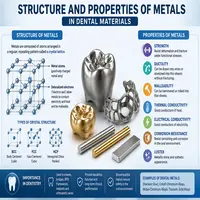
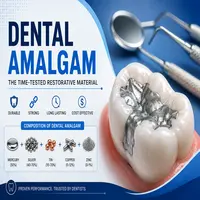
| Metals | Gold alloys, amalgam | Fillings, crowns |
| Ceramics | Porcelain, zirconia | Crowns, veneers |
| Polymers | Composite resin, acrylic | Fillings, dentures |
| Cements | Zinc phosphate, glass ionomer | Luting, base materials |
| Impression materials | Alginate, silicone | Taking dental impressions |
Each category brings its own strengths and limitations. Choosing the right one depends on where it will sit and how much stress it must handle.
Understanding the Basic Nature and Properties of Dental Materials
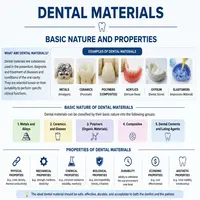
The basic nature and properties of dental materials fall into four main groups: physical, mechanical, chemical, and biological. Together, these properties decide whether a material survives inside the mouth for years or fails within months.
Clinicians rely on these properties daily. A crown that looks perfect but cracks under normal chewing force is a poor choice, no matter how good it appears.
Physical Properties of Dental Materials
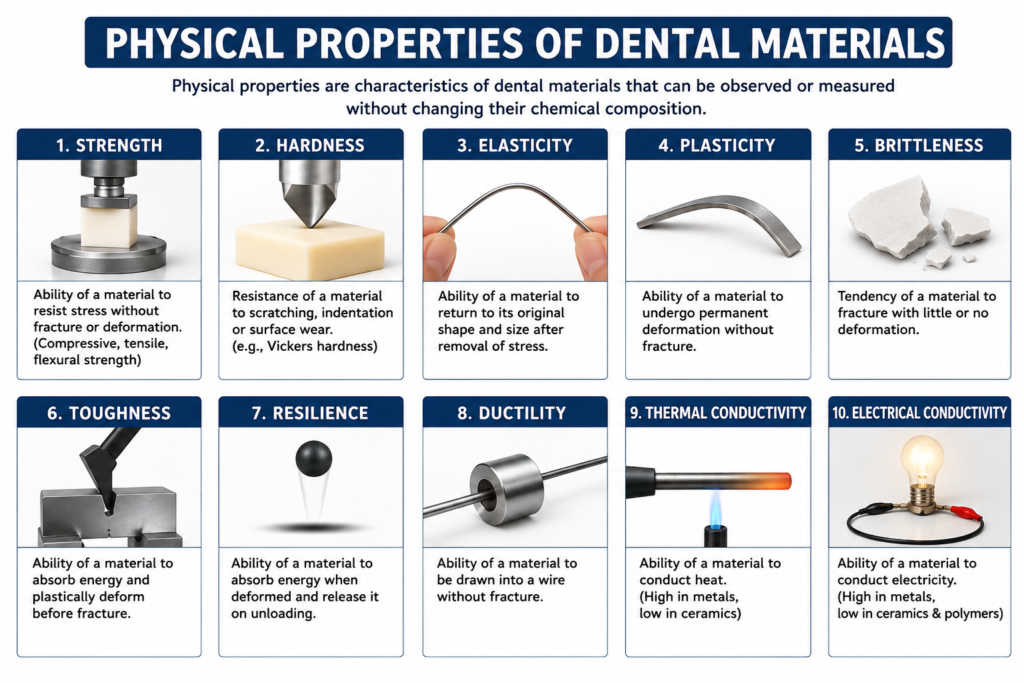
Physical properties describe how a material behaves without changing its chemical makeup.
Key Physical Properties
- Thermal conductivity – how fast heat passes through a material
- Thermal expansion – how much a material expands when heated
- Color and translucency – critical for esthetic restorations
- Density – affects weight and handling
- Solubility – resistance to dissolving in oral fluids
Thermal conductivity matters more than most patients realize. A metal filling conducts heat quickly, which can cause sensitivity to hot or cold foods. Tooth-colored materials usually conduct heat more slowly, offering better comfort.
Dimensional stability also falls under physical properties. A material that shrinks or expands after placement can create gaps, leading to leakage and decay underneath a restoration.
Mechanical Properties of Dental Materials
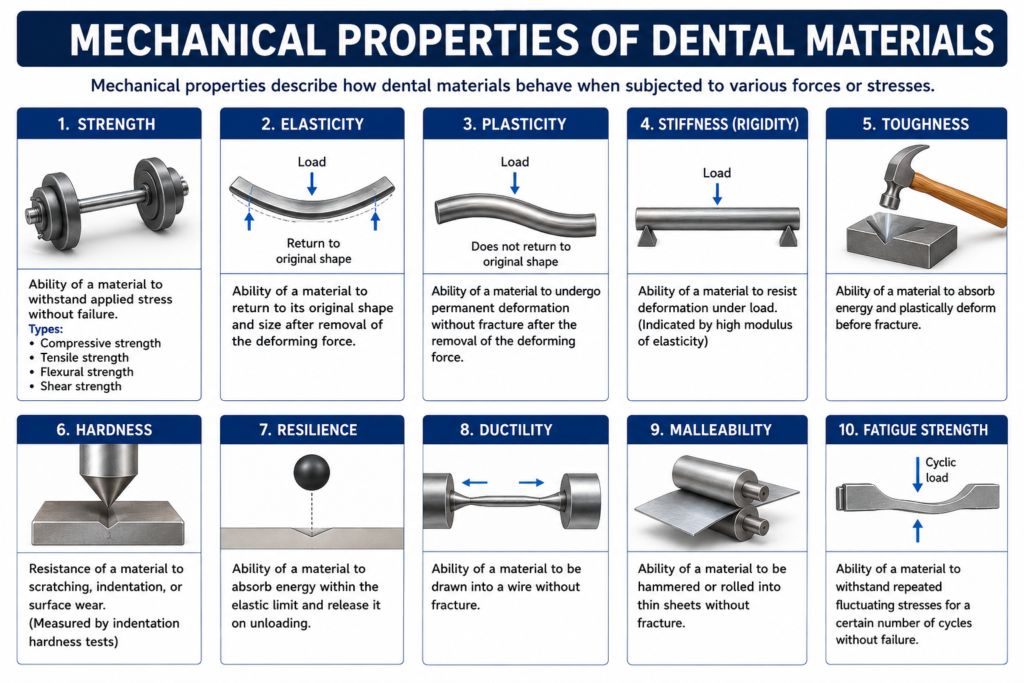
Mechanical properties determine how a material responds to force. Chewing generates repeated stress, so this category carries huge clinical weight.
Common Mechanical Properties
| Property | Definition | Clinical Relevance |
|---|---|---|
| Strength | Resistance to fracture under load | Prevents cracking during chewing |
| Hardness | Resistance to surface scratching | Affects wear resistance |
| Elasticity | Ability to return to original shape | Reduces permanent deformation |
| Fatigue resistance | Ability to survive repeated stress | Prevents long-term failure |
| Toughness | Resistance to crack propagation | Improves durability |
Hardness plays a special role in restorative dentistry. A material harder than natural enamel can wear down opposing teeth over time. Dentists balance strength with a hardness level close to natural tooth structure.
Fatigue resistance often separates a good material from a great one. Chewing applies thousands of stress cycles daily, so even a strong material can fail if it cannot handle repeated loading.
Chemical Properties and Their Role
Chemical stability decides how well a material resists the oral environment over years of use. Saliva, food acids, and bacterial byproducts constantly challenge every restoration.
Important Chemical Properties
- Corrosion resistance – prevents metal breakdown over time
- pH stability – resistance to acidic attack
- Bonding capacity – ability to adhere to tooth structure
- Setting reaction – chemical process that hardens a material
Corrosion resistance matters most for metal-based restorations. Poor corrosion resistance can release metal ions into surrounding tissue, causing discoloration or irritation.
Bonding capacity has transformed modern dentistry. Materials that chemically bond to enamel and dentin allow for smaller, more conservative restorations compared to older mechanical retention methods.
Biological Properties: Safety Inside the Body
Biological properties confirm whether a material is safe for long-term use inside a living body. This category has grown more important as regulations tighten worldwide.
Core Biological Requirements
- Biocompatibility – no harmful reaction with oral tissue
- Non-toxicity – free from substances that damage cells
- Non-carcinogenicity – no cancer-causing potential
- Non-allergenic behavior – minimal risk of allergic reaction
Every material sold for dental use must pass biocompatibility testing before reaching a clinic. Regulatory bodies such as the FDA and ISO set strict standards that manufacturers must meet.
Recent research has pushed the industry toward bio-active materials. These newer options release ions like calcium and fluoride, actively supporting tooth remineralization instead of sitting passively in place.
Material Selection Flowchart
Clinical Need Identified
        │
        ▼
  Location in Mouth Assessed
        │
   ┌────┴────┐
   ▼         ▼
Esthetic Zone   Functional Zone
   │                │
   ▼                ▼
Ceramic/Composite   Metal/Amalgam
   │                │
   └────┬───────────┘
        ▼
 Check Mechanical Strength
        │
        ▼
 Check Biocompatibility
        │
        ▼
  Final Material Selected
This structured approach keeps material selection consistent across clinics and reduces guesswork.
How Properties Influence Real Clinical Decisions
A single restoration often depends on multiple properties working together. Front teeth need strong esthetic properties, while back teeth demand higher strength and wear resistance.
Cost also plays a practical role. Gold alloys offer excellent mechanical properties but come at a higher price than composite resin. Clinics balance patient budget against long-term performance when recommending options.
Longevity studies now guide many material choices too. Newer ceramics and resin composites have closed much of the performance gap that once favored metals exclusively.
Conclusion
The basic nature and properties of dental materials shape nearly every decision made in a dental clinic. Physical traits control comfort and stability. Mechanical properties determine how long a restoration survives daily chewing forces. Chemical stability protects against the harsh oral environment, while biological safety ensures no harm comes to surrounding tissue.
Modern dentistry increasingly blends these properties with new technology, from bio-active cements to advanced ceramics. Understanding this foundation helps students and clinicians choose materials that last, function well, and keep patients safe for years to come.
Frequently Asked Questions
They include physical, mechanical, chemical, and biological traits that determine how well a material performs and survives inside the mouth
Biocompatibility ensures a material does not harm oral tissue, cause toxicity, or trigger allergic reactions during long-term use.
Strength and fatigue resistance matter most, since fillings face repeated chewing forces every day without fracturing.
Materials with high thermal conductivity, like metal, can cause sensitivity to hot or cold foods, while ceramics and composites offer better
Bonding capacity allows materials to adhere directly to enamel and dentin, enabling smaller, more conservative restorations than older methods relying on mechanical retention.