Pharmacokinetics Explained: How the Body Handles Drugs
A pill looks simple on the outside. Inside the body, it triggers a complex journey with several stops along the way. That journey is the heart of pharmacokinetics.
This article explains pharmacokinetics in clear, practical terms. It covers absorption, distribution, metabolism, and excretion, along with the key parameters clinicians use every day. Students, nurses, and healthcare professionals will find a straightforward guide here.
What Is Pharmacokinetics?
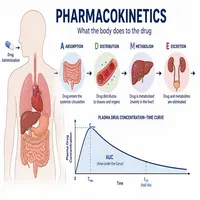
Pharmacokinetics studies how the body moves a drug from entry to exit. It answers a simple question: what does the body do to the drug?
This differs from pharmacodynamics, which studies what the drug does to the body. Both fields work together, but pharmacokinetics focuses purely on movement, breakdown, and elimination.
Four core processes define this field:
- Absorption – drug entry into the bloodstream
- Distribution – drug movement to tissues
- Metabolism – chemical breakdown of the drug
- Excretion – removal of the drug from the body
Together, these processes are often shortened to the acronym ADME. Every drug follows this path, though the speed and pattern vary widely between substances.
Absorption: Getting the Drug Into the Body
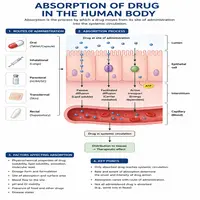
Absorption determines how quickly and how much of a drug reaches systemic circulation. Route of administration plays the biggest role here.
Common Routes and Their Absorption Speed
| Route | Absorption Speed | Bioavailability |
|---|---|---|
| Intravenous | Immediate | 100% |
| Intramuscular | Fast | High |
| Oral | Slow to moderate | Variable |
| Sublingual | Fast | High |
| Transdermal | Very slow | Low to moderate |
Oral drugs face the toughest journey. Stomach acid, food, and liver processing all reduce the amount that finally reaches the bloodstream. This loss is known as the first-pass effect.
Bioavailability measures the fraction of a drug that reaches circulation unchanged. Intravenous drugs bypass absorption barriers entirely, giving them full bioavailability instantly.
Distribution: Where the Drug Travels
Once absorbed, a drug spreads through blood and tissues. Distribution depends on blood flow, tissue permeability, and how well a drug binds to plasma proteins.
Highly perfused organs like the brain, liver, and kidneys receive drugs quickly. Fat and muscle tissue absorb drugs more slowly, sometimes storing them for extended release later.
Factors Affecting Distribution
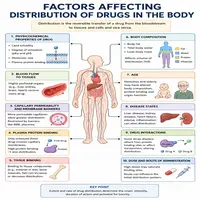
- Blood flow to tissues – faster flow means quicker delivery
- Protein binding – bound drug cannot act on target tissue
- Lipid solubility – fat-soluble drugs cross membranes easily
- Volume of distribution – shows how widely a drug spreads
Volume of distribution helps clinicians estimate dosing. A drug with a high volume of distribution spreads widely into tissues, while one with a low volume stays mostly in the bloodstream.
Metabolism: Breaking the Drug Down
Metabolism transforms a drug into forms the body can remove more easily. The liver handles most of this work, using enzyme systems like cytochrome P450.
Metabolism usually happens in two phases. Phase one reactions modify the drug’s chemical structure. Phase two reactions attach a molecule to make the drug more water-soluble.
Why Metabolism Matters Clinically
Genetic differences change how fast people metabolize drugs. Some patients process medications quickly, needing higher doses for effect. Others metabolize slowly, risking toxicity at standard doses.
Drug interactions often occur at this stage too. One medication can speed up or slow down the enzymes responsible for breaking down another, changing effectiveness or safety.
Excretion: Removing the Drug
Excretion clears a drug and its byproducts from the body. Kidneys handle most excretion, filtering drugs into urine for removal.
Other routes contribute as well, including bile, sweat, and exhaled air. Each route plays a smaller role compared to renal clearance, but some drugs rely heavily on non-renal pathways.
Key Excretion-Related Parameters
| Parameter | Meaning | Clinical Use |
|---|---|---|
| Half-life | Time for drug concentration to drop by half | Guides dosing intervals |
| Clearance | Volume of blood cleared of drug per unit time | Adjusts dosing in organ disease |
| Renal excretion | Drug removal through kidneys | Important in kidney impairment |
| Steady state | Point where drug intake equals elimination | Confirms consistent dosing |
Half-life guides how often a patient takes a medication. A short half-life often needs frequent dosing, while a long half-life allows once-daily treatment.
Pharmacokinetics Flowchart
Drug Administered
        │
        ▼
     Absorption
   (Enters Bloodstream)
        │
        ▼
    Distribution
 (Spreads to Tissues)
        │
        ▼
     Metabolism
  (Liver Breaks It Down)
        │
        ▼
      Excretion
  (Removed via Kidneys)
        │
        ▼
   Drug Cleared From Body
This simple flow shows why timing matters so much in drug therapy. A delay or malfunction at any stage changes how a patient responds to treatment.
Clinical Applications of Pharmacokinetics
Doctors use pharmacokinetic data to personalize treatment. Patients with liver or kidney disease often need adjusted doses, since these organs drive metabolism and excretion.
Age also changes pharmacokinetics significantly. Newborns and elderly patients often process drugs more slowly, requiring careful monitoring to avoid toxicity.
Therapeutic drug monitoring relies entirely on pharmacokinetic principles. Blood tests measure drug levels to confirm they stay within a safe, effective range, especially for medications with narrow safety margins.
Conclusion
Pharmacokinetics explains the full journey a drug takes inside the body, from absorption through excretion. Each stage influences how effective and safe a medication turns out to be for a patient.
Understanding these processes helps clinicians choose the right dose, route, and timing for treatment. As new drugs and personalized medicine continue to grow, pharmacokinetics remains a core subject for anyone working in healthcare or drug development.
Frequently Asked Questions
Pharmacokinetics studies how the body absorbs, distributes, metabolizes, and excretes a drug over time.
Pharmacokinetics focuses on what the body does to a drug, while pharmacodynamics studies what the drug does to the body.
Half-life shows how long a drug stays active in the body, helping determine how often a patient should take a dose.
The liver plays the largest role, using enzyme systems to break drugs down into forms the body can remove.
Kidney disease slows drug excretion, often requiring dose adjustments to prevent toxic buildup in the bloodstream.