The human body constantly works to stay stable. This stable internal state is called homeostasis. Despite constant changes outside the body, internal conditions remain remarkably steady.
Temperature, pH, and blood sugar levels all stay within narrow ranges. Therefore, understanding this balance helps dental and medical professionals recognize normal versus abnormal body responses. This guide breaks down homeostasis into simple, practical sections. Additionally, it includes tables and a flowchart for quick learning.
What Is Homeostasis?
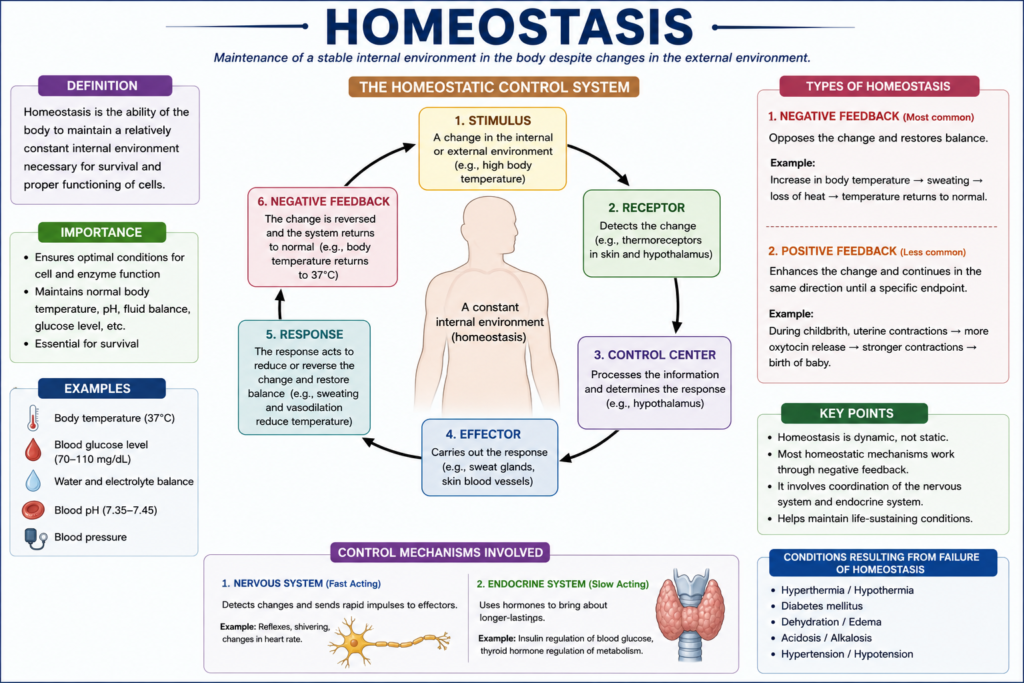
Homeostasis refers to the body’s ability to maintain a stable internal environment. This balance occurs despite changes in the external environment. For example, body temperature stays near 37°C, whether someone sits in a cold room or a hot one.
Several systems work together to achieve this balance. These include the nervous system, endocrine system, and various organs. Consequently, homeostasis depends on constant communication between body parts.
Below is a quick summary table of key homeostatic variables.
| Variable | Normal Range | Main Regulating System |
|---|---|---|
| Body temperature | 36.5–37.5°C | Nervous system |
| Blood glucose | 70–110 mg/dL | Endocrine system |
| Blood pH | 7.35–7.45 | Respiratory and renal system |
| Blood pressure | 120/80 mmHg | Cardiovascular system |
| Fluid balance | Stable plasma volume | Renal system |
Now, let’s explore how the body actually maintains this balance.
The Feedback Loop System
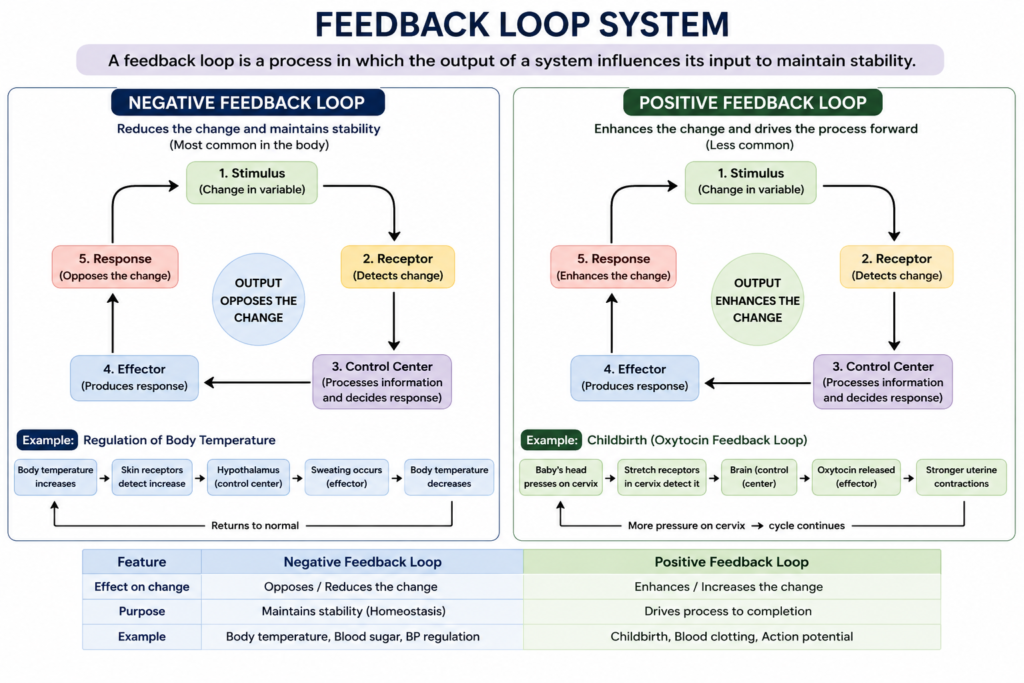
Homeostasis relies heavily on feedback loops. A feedback loop detects change, then triggers a response to correct it. Two main types exist: negative feedback and positive feedback.
Negative feedback is the most common type. It works by reversing a change to bring the body back to normal. For instance, when body temperature rises, sweat glands activate to cool the skin. As a result, temperature drops back toward normal.
Positive feedback, meanwhile, amplifies a change rather than reversing it. Childbirth contractions are a classic example. Each contraction triggers a stronger contraction until delivery occurs.
Here is a simple flowchart showing a negative feedback loop.
Stimulus (Body Temperature Rises)
            |
            v
    Receptor Detects Change
            |
            v
   Control Center (Hypothalamus)
            |
            v
      Effector Responds
   (Sweat Glands Activate)
            |
            v
   Temperature Returns to Normal
Components of a Feedback System
Every feedback system contains three essential parts. Each part plays a specific role in maintaining balance.
- Receptor – Detects changes in the internal environment
- Control Center – Processes information and decides on a response
- Effector – Carries out the corrective action
For example, the hypothalamus often acts as the control center for temperature regulation. Meanwhile, blood vessels and sweat glands act as effectors. Together, these three components form a complete regulatory pathway.
Without any one of these parts, the system fails. Consequently, even minor receptor damage can disrupt the entire balance.
Homeostasis in Daily Body Functions
Several body systems demonstrate homeostasis clearly. Understanding these examples makes the concept easier to apply clinically.
Blood Glucose Regulation After eating, blood sugar rises. In response, the pancreas releases insulin, which lowers glucose levels. Conversely, when blood sugar drops too low, the pancreas releases glucagon to raise it again.
pH Balance Blood pH must stay slightly alkaline. The lungs and kidneys work together to remove excess acid or base. Thus, breathing rate often changes quickly to correct pH imbalances.
Fluid and Electrolyte Balance The kidneys filter blood constantly. They adjust water and salt levels based on the body’s needs. Subsequently, urine concentration changes to conserve or eliminate fluid as required.
These examples show how interconnected body systems truly are. Disruption in one system often affects several others simultaneously.
Why Homeostasis Matters in Dentistry
Dental health connects closely with overall body balance. For instance, oral pH affects tooth enamel health directly. When oral pH drops too low, enamel demineralization begins.
Similarly, blood glucose imbalances affect healing after dental procedures. Patients with poorly controlled diabetes often experience slower wound healing and higher infection risk. Therefore, dentists should always consider a patient’s systemic health before treatment.
Saliva itself plays a major homeostatic role. It buffers acids, clears food debris, and supports remineralization. Without proper saliva flow, oral homeostasis breaks down quickly, leading to decay and gum disease.
What Happens When Homeostasis Fails?
Sometimes, the body cannot restore balance properly. This failure leads to disease or dysfunction. For example, uncontrolled diabetes reflects a long-term failure of glucose homeostasis.
Similarly, fever represents a temporary, intentional shift in temperature homeostasis. The hypothalamus raises the body’s set point to fight infection. Once the infection clears, temperature returns to its normal range.
In contrast, chronic conditions like hypertension show a more permanent disruption. Blood pressure regulation systems struggle to maintain normal ranges over time. Eventually, this strain damages blood vessels and organs.
Quick Comparison Table
| Condition | System Affected | Result of Imbalance |
|---|---|---|
| Diabetes | Endocrine | High blood glucose |
| Fever | Nervous (hypothalamus) | Elevated temperature |
| Acidosis | Respiratory/Renal | Low blood pH |
| Dehydration | Renal | Reduced fluid volume |
| Hypertension | Cardiovascular | High blood pressure |
Conclusion
Homeostasis keeps the body functioning smoothly despite constant external changes. Feedback loops, organ systems, and regulatory centers work together continuously. Without homeostasis, even small disturbances could become life-threatening.
For dental professionals, recognizing signs of homeostatic imbalance supports safer, smarter treatment decisions. Whether managing a diabetic patient or noticing unusual healing patterns, this knowledge proves valuable daily. Ultimately, mastering homeostasis strengthens clinical judgment and improves patient outcomes.
Frequently Asked Questions
Homeostasis is the body’s ability to keep internal conditions stable, such as temperature, pH, and blood sugar, despite changes outside the body.
A feedback loop includes a receptor, a control center, and an effector. Together, they detect and correct changes in the body.
Negative feedback reverses a change to restore balance, while positive feedback strengthens a change until a specific goal is reached, such as childbirth.
Oral pH, saliva flow, and blood glucose levels all affect dental health. Imbalances in these areas can lead to decay, slow healing, or gum disease.
When homeostasis fails, the body may develop conditions like diabetes, fever, or hypertension. These reflect long-term or temporary regulatory imbalances.