Vitamins are organic compounds. The body needs them in small amounts. However, their impact on health is huge.
These nutrients support metabolism, immunity, and tissue repair. Without enough vitamins, the body cannot function properly. So, understanding them matters for everyone, including dental patients.
Vitamins also affect oral health directly. For instance, certain deficiencies cause bleeding gums or delayed healing. Therefore, dentists often consider vitamin status during treatment planning.
This guide explains vitamin classification, biochemical roles, sources, deficiency disorders, and dental relevance. Let’s explore this topic step by step.
Classification of Vitamins
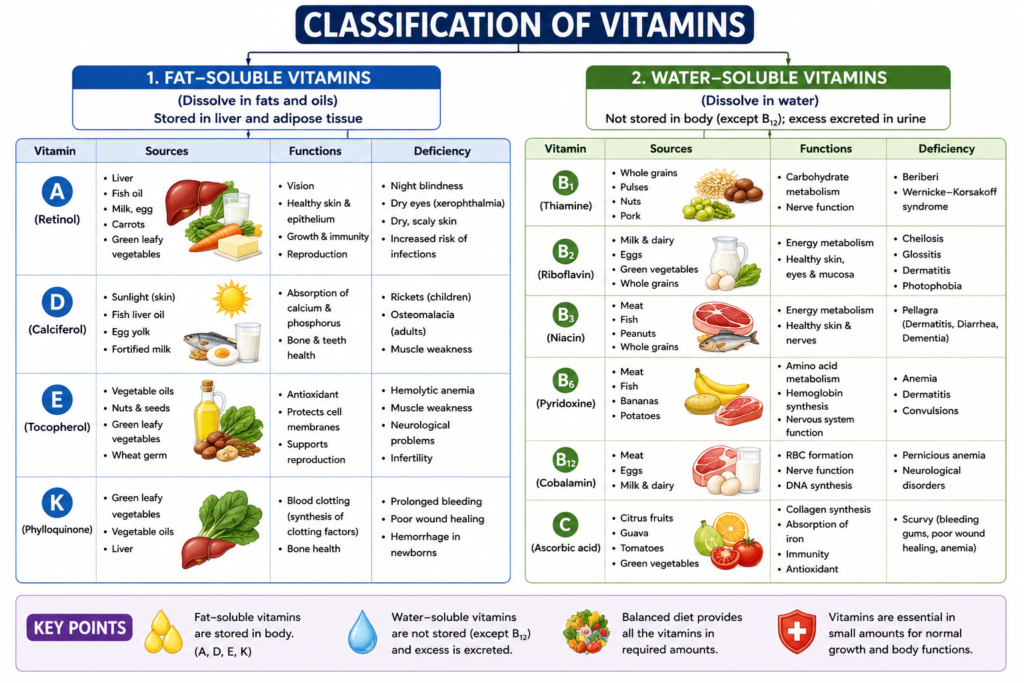
Vitamins fall into two broad categories. This classification depends on solubility.
Fat-Soluble Vitamins
These vitamins dissolve in fat. They get stored in the liver and fatty tissues. This group includes:
- Vitamin A
- Vitamin D
- Vitamin E
- Vitamin K
Water-Soluble Vitamins
These vitamins dissolve in water. The body excretes excess amounts through urine. This group includes:
- Vitamin B Complex (B1, B2, B3, B5, B6, B7, B9, B12)
- Vitamin C
Here’s a quick visual breakdown:
Vitamins
   |
   ├── Fat-Soluble (A, D, E, K)
   |        Stored in liver and fat tissue
   |
   └── Water-Soluble (B Complex, C)
            Excreted via urine, needs regular intake
Notably, fat-soluble vitamins can accumulate to toxic levels. Meanwhile, water-soluble vitamins rarely cause toxicity since the body removes excess quickly.
Biochemical Functions of Vitamins
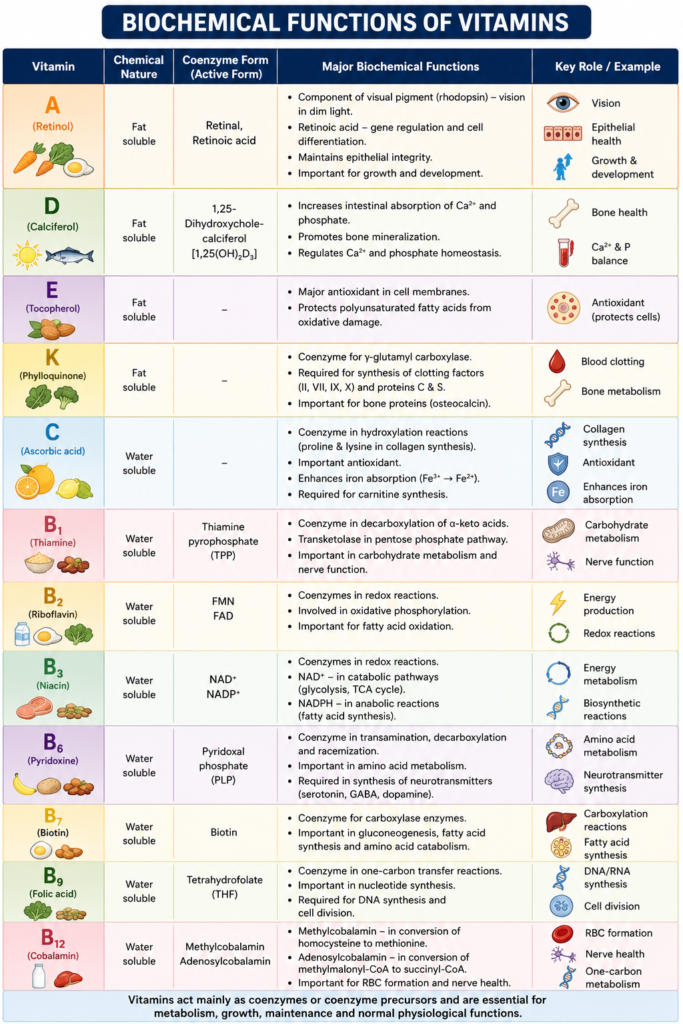
Each vitamin performs specific biochemical roles. These functions support enzymes, immunity, and tissue health.
| Vitamin | Biochemical Role | Dental Relevance |
|---|---|---|
| Vitamin A | Epithelial maintenance, vision | Supports oral mucosa health |
| Vitamin D | Calcium absorption, bone mineralization | Essential for teeth and jawbone |
| Vitamin C | Collagen synthesis, antioxidant | Prevents gum bleeding |
| Vitamin K | Blood clotting factor synthesis | Reduces bleeding risk during surgery |
| Vitamin B12 | Red blood cell formation, nerve function | Prevents glossitis and mouth ulcers |
Vitamin D works closely with calcium and phosphate. Together, they strengthen bones and teeth. Without sufficient vitamin D, enamel formation weakens over time.
Vitamin C, on the other hand, supports collagen production. Collagen holds gum tissue together firmly. Consequently, low vitamin C levels often cause swollen or bleeding gums.
Sources of Vitamins
Vitamins come from various dietary sources. A balanced diet usually provides adequate amounts.
Common Food Sources
| Vitamin | Food Sources |
|---|---|
| Vitamin A | Carrots, liver, eggs, spinach |
| Vitamin D | Sunlight, fortified milk, fish |
| Vitamin C | Citrus fruits, guava, bell peppers |
| Vitamin K | Leafy greens, broccoli |
| Vitamin B12 | Meat, fish, dairy products |
Additionally, some vitamins require special absorption pathways. For example, vitamin B12 needs intrinsic factor from the stomach. Without this factor, absorption fails despite adequate dietary intake.
Deficiency Disorders
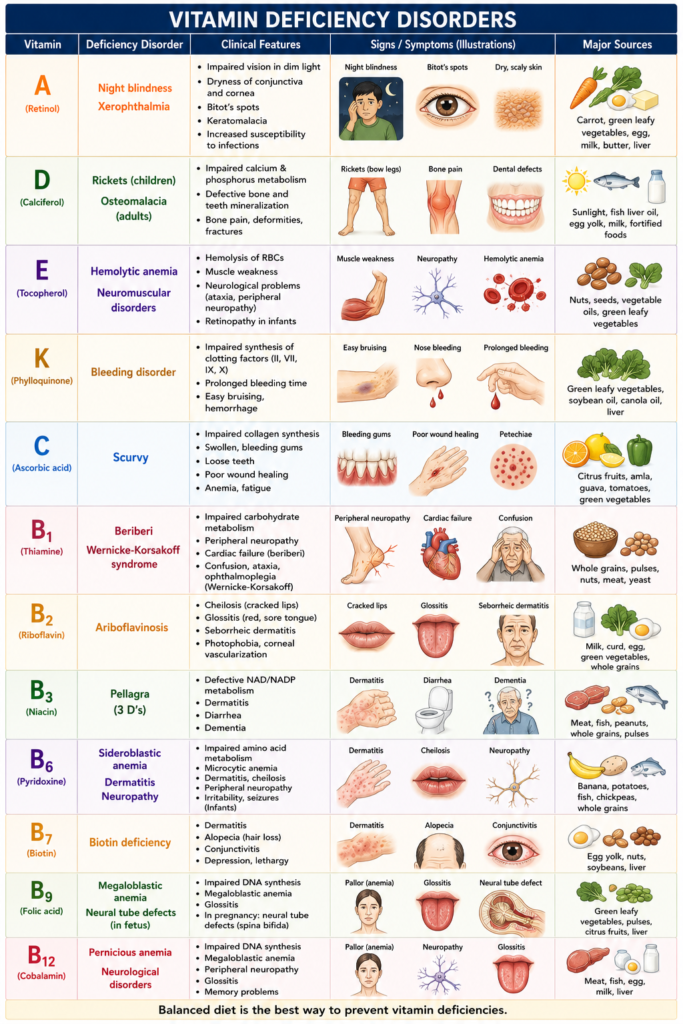
Vitamin deficiencies create specific health problems. Many of these issues affect the oral cavity directly.
Common Deficiency Conditions
- Vitamin A deficiency – Night blindness, dry mucosa
- Vitamin D deficiency – Rickets, weak teeth, delayed eruption
- Vitamin C deficiency – Scurvy, bleeding gums, loose teeth
- Vitamin K deficiency – Excessive bleeding, poor clotting
- Vitamin B12 deficiency – Glossitis, mouth ulcers, anemia
Interestingly, scurvy was historically common among sailors. Limited fruit access caused severe vitamin C deficiency. Today, this condition is rare but still occurs in malnourished individuals.
Below is a simple flowchart showing how deficiency develops:
Inadequate Dietary Intake
            |
            ▼
   Reduced Vitamin Absorption/Storage
            |
            ▼
    Biochemical Pathway Disruption
            |
            ▼
  Clinical Symptoms (Oral & Systemic)
This sequence explains why deficiencies often show oral signs first. The mouth’s tissues turn over quickly. Therefore, they reveal nutritional problems earlier than other organs.
Applied Biochemistry in Dentistry
Dentists frequently observe vitamin-related signs during examinations. This knowledge helps guide better patient care.
Pre-Surgical Considerations
Vitamin K deficiency increases bleeding risk during extractions. So, dentists check clotting history before invasive procedures. Patients on blood thinners need extra caution too.
Wound Healing
Vitamin C supports collagen formation. This process speeds up healing after dental surgery. Patients with poor wound healing might need dietary evaluation.
Pediatric Dental Care
Children with vitamin D deficiency often show delayed tooth eruption. Additionally, enamel hypoplasia can occur. Hence, pediatric dentists monitor growth and nutrition closely.
Geriatric Considerations
Older patients frequently have lower vitamin B12 absorption. This deficiency causes glossitis and burning mouth sensation. Dentists should screen for these signs during routine visits.
Conclusion
Vitamins play essential roles in maintaining overall health and oral wellness. Each vitamin supports specific biochemical pathways, from collagen synthesis to bone mineralization. Deficiencies often appear first in the mouth, making dental checkups valuable for early detection.
A balanced diet rich in vitamins supports strong teeth, healthy gums, and faster healing. Dental professionals, therefore, play an important role in identifying nutritional gaps. Ultimately, good nutrition and good oral health go hand in hand.
Frequently Asked Questions (FAQs)
Vitamins are classified into fat-soluble (A, D, E, K) and water-soluble (B complex and C) categories based on their solubility.
Vitamin C deficiency commonly causes bleeding gums due to weakened collagen production in gum tissue.
Vitamin D supports calcium absorption, which strengthens teeth and jawbone, and prevents delayed tooth eruption in children.
Vitamin K helps produce clotting factors. Adequate levels reduce excessive bleeding during dental extractions or surgery.
Yes, vitamin B12 deficiency can cause glossitis, mouth ulcers, and a burning sensation on the tongue.