Every meal triggers a complex chain of events inside the body. Food gets broken down, nutrients get absorbed, and waste gets removed. This process keeps every cell fueled and functioning properly. Below, we explain how this system works from start to finish.
What Happens During Digestion?
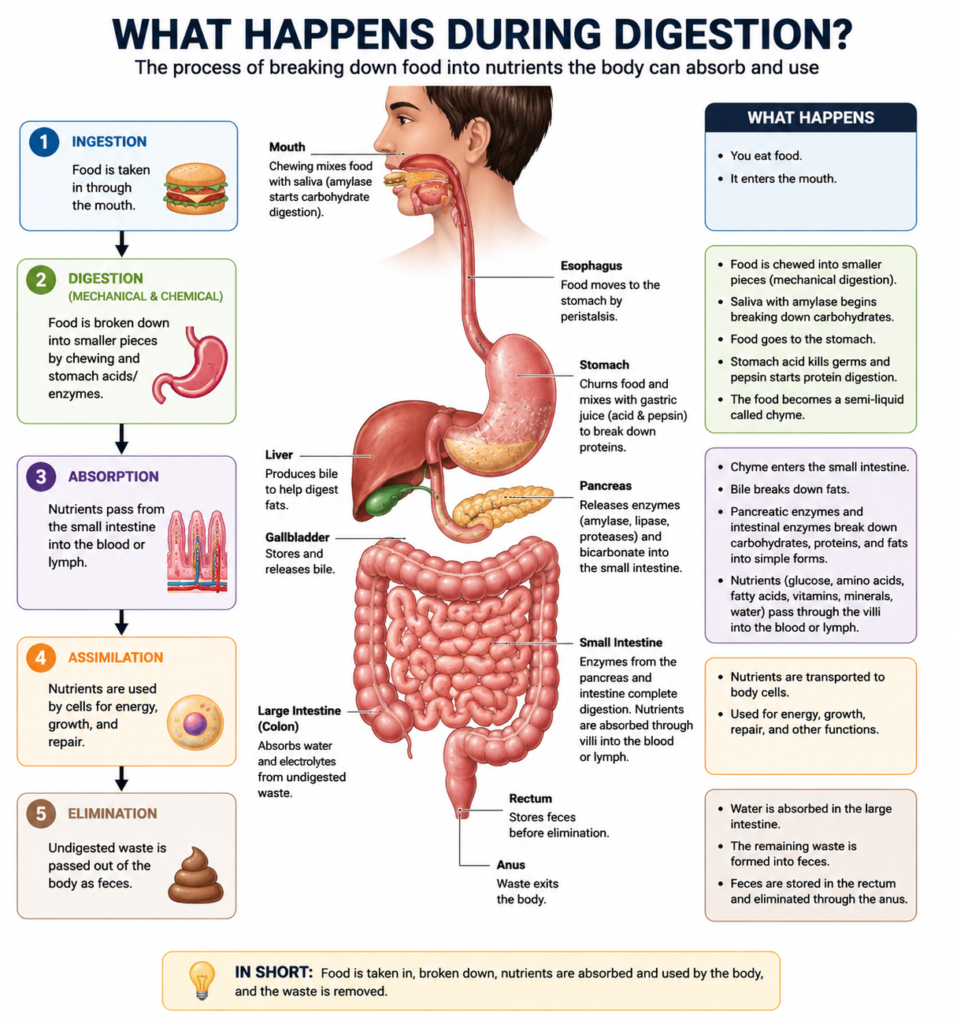
Digestion breaks large food molecules into smaller, usable pieces. This process starts the moment food enters the mouth. Saliva contains enzymes that begin breaking down carbohydrates almost instantly.
Next, food travels down the esophagus into the stomach. Strong acids and enzymes there break down proteins further. Meanwhile, the stomach churns food into a semi-liquid mixture called chyme.
This mixture then moves into the small intestine. Here, most chemical breakdown finishes completely. Enzymes from the pancreas and bile from the liver both play major roles at this stage.
What Happens During Absorption?
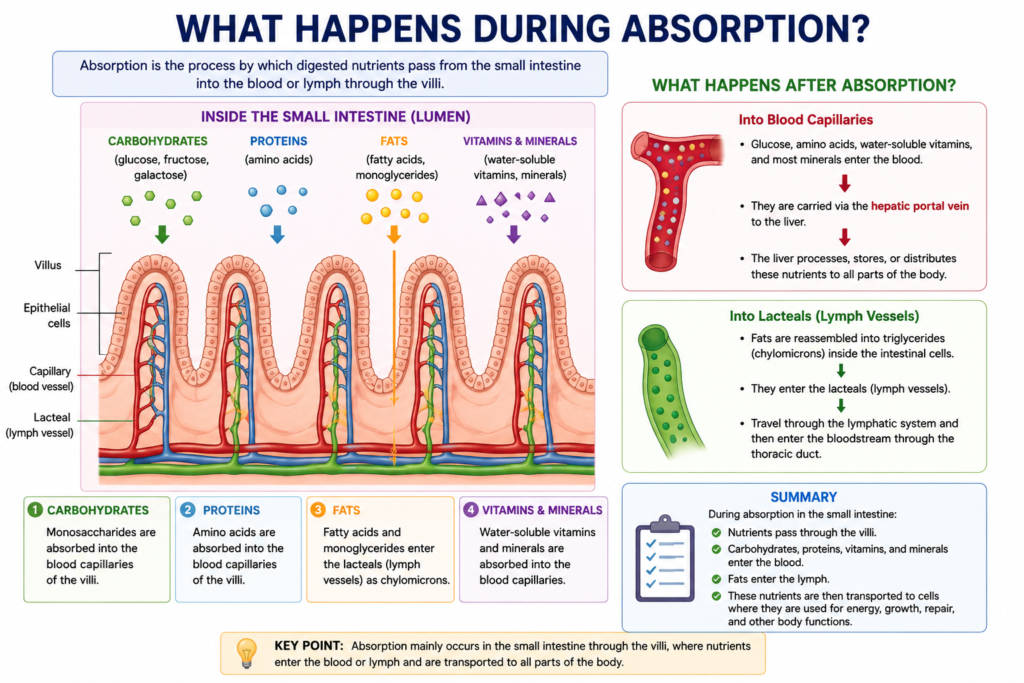
Absorption refers to nutrients moving from the digestive tract into the bloodstream. This mainly happens inside the small intestine. Tiny finger-like structures called villi line its walls, increasing surface area dramatically.
Nutrients pass through these villi into nearby blood vessels. From there, blood carries nutrients to the liver first. Afterward, the liver processes and distributes these nutrients throughout the body.
Water and remaining nutrients get absorbed later in the large intestine. Consequently, very little usable material remains by the time waste reaches the final stages of the digestive tract.
The Table Below Shows Key Digestive Organs
| Organ | Main Function |
|---|---|
| Mouth | Begins carbohydrate breakdown |
| Stomach | Breaks down proteins with acid |
| Small Intestine | Completes digestion, absorbs nutrients |
| Pancreas | Releases digestive enzymes |
| Liver | Produces bile, processes nutrients |
| Large Intestine | Absorbs water, forms waste |
This table highlights how each organ contributes to a single, coordinated system. Every step depends on the one before it.
How the Process Flows From Start to Finish
Understanding this process becomes easier with a clear visual guide. The flowchart below outlines each major stage in order.
Food Enters the Mouth
        ↓
Saliva Begins Carbohydrate Breakdown
        ↓
Food Moves to the Stomach
        ↓
Acids and Enzymes Break Down Proteins
        ↓
Chyme Enters the Small Intestine
        ↓
Enzymes and Bile Complete Digestion
        ↓
Nutrients Absorb Through Villi
        ↓
Blood Carries Nutrients to the Liver
        ↓
Remaining Waste Moves to the Large Intestine
This cycle repeats after every meal. Meanwhile, the body adjusts enzyme output based on food type and quantity.
Why This System Matters So Much
Cells throughout the body depend on steady nutrient supply. Muscles need protein for repair, while the brain needs glucose for energy. Therefore, any disruption to this process affects overall health quickly.
Poor digestion often leads to bloating, discomfort, and nutrient deficiencies. Over time, these issues can cause fatigue and weakened immunity. As a result, doctors often recommend dietary changes to support smoother function.
On the other hand, efficient digestion and absorption in the human body support strong energy levels and better overall wellness. This balance keeps organs working properly without added strain.
Common Conditions Affecting This Process
Several health conditions interfere with normal digestive function. Recognizing these conditions helps explain why this system deserves close attention.
- Lactose intolerance, caused by low enzyme levels
- Celiac disease, triggered by gluten sensitivity
- Irritable bowel syndrome, affecting intestinal function
- Pancreatic insufficiency, reducing enzyme production
- Gastroesophageal reflux disease, affecting the esophagus
Doctors typically diagnose these conditions through blood tests, imaging, or dietary trials. Early diagnosis often leads to simpler, more effective treatment plans.
How Enzymes Support This Entire System
Enzymes act like tiny tools that speed up chemical reactions. Without them, digestion and absorption in the human body would happen far too slowly to sustain life.
Different enzymes target different nutrients. For instance, amylase breaks down carbohydrates, while lipase targets fats. Similarly, protease enzymes focus specifically on breaking down proteins.
The pancreas produces most of these enzymes. Additionally, the small intestine releases its own enzymes to finish the process. Together, these tools ensure nutrients become small enough for absorption.
Lifestyle Factors That Support Healthy Digestion
Certain habits help maintain strong digestive function naturally. For instance, eating fiber-rich foods supports smoother movement through the intestines. Vegetables, fruits, and whole grains all provide helpful support.
Staying hydrated also plays a major role. Meanwhile, regular physical activity encourages healthy intestinal movement. Chewing food thoroughly further supports easier breakdown early in the process.
Stress management matters too. High stress levels can slow digestion and disrupt enzyme release. Therefore, relaxation techniques often support better digestive health overall.
Conclusion
Digestion and absorption in the human body work together as one continuous system. Food breaks down step by step, while nutrients move steadily into the bloodstream. This process keeps every organ supplied with the fuel it needs daily.
Understanding how this system functions highlights why balanced meals, proper hydration, and healthy habits matter so much. When this process runs smoothly, energy levels stay strong. When it struggles, even simple tasks can feel harder than they should.
Anyone interested in biochemistry, nutrition, or general wellness can gain real value from understanding this essential process.
Frequently Asked Questions
Digestion breaks food into smaller pieces, while absorption moves those nutrients into the bloodstream.
Most absorption happens inside the small intestine, thanks to villi lining its walls.
Enzymes speed up chemical breakdown, allowing nutrients to become small enough for absorption.
Conditions like celiac disease, lactose intolerance, and pancreatic insufficiency can all disrupt normal function.
Eating fiber-rich foods, staying hydrated, exercising regularly, and managing stress all support healthy digestion.