Immunity Explained: How the Body Defends Itself
The body faces constant attacks from bacteria, viruses, and other invaders. Most go unnoticed, thanks to a defense system working quietly in the background. That system is immunity.
This article breaks down how the human immune system functions, from first-line barriers to long-term memory responses. It is written for students, healthcare learners, and anyone curious about how the body stays protected every single day.
What Is Immunity?
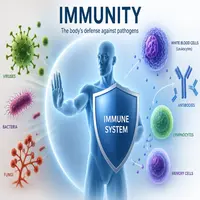
Immunity is the body’s ability to resist harmful pathogens and foreign substances. It relies on a network of cells, tissues, and organs working together in a coordinated response.
Two major branches make up this defense system:
- Innate immunity – fast, general protection present from birth
- Adaptive immunity – slower, highly specific protection built over time
Both branches work together, not separately. it respond first, while adaptive defenses fine-tune the attack against a specific threat.
Innate Immunity: The First Line of Defense
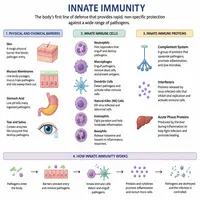
Innate immunity acts immediately, without needing prior exposure to a pathogen. It treats every threat the same way, using broad, non-specific mechanisms.
Physical and Chemical Barriers
Skin forms the first physical wall against invaders. Mucous membranes trap pathogens before they reach deeper tissue. Stomach acid and enzymes in saliva add chemical protection.
Cellular Defenses
Several cell types patrol the body constantly:
| Cell Type | Main Function |
|---|---|
| Neutrophils | Rapid response, engulf pathogens |
| Macrophages | Consume debris and pathogens |
| Natural killer cells | Destroy infected or abnormal cells |
| Dendritic cells | Alert the adaptive immune system |
Inflammation also plays a key role here. Redness, heat, and swelling signal that immune cells are rushing toward an injury or infection site.
Adaptive Immunity: Precision Defense
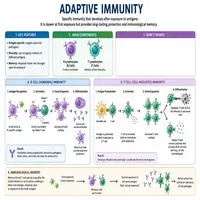
Adaptive immunity develops after exposure to a specific pathogen. Unlike innate defenses, it builds a targeted, long-lasting response.
Two main cell types drive this system:
- B cells – produce antibodies that neutralize pathogens
- T cells – destroy infected cells directly or coordinate other immune cells
Antibodies bind to specific markers on pathogens, called antigens. This binding either neutralizes the threat directly or flags it for destruction by other immune cells.
Memory and Long-Term Protection
Adaptive immunity has a powerful advantage: memory. After an infection, memory B cells and T cells stay in the body for years, sometimes decades.
This memory explains why vaccines work so well. A vaccine trains the immune system safely, so a real infection triggers a faster, stronger response later.
Organs Behind the Immune System
Immunity depends on a network of organs working in coordination, not on one single structure. Each organ contributes a different piece to the overall response.
Primary Lymphoid Organs
- Bone marrow – produces immune cells
- Thymus – matures T cells before release
Secondary Lymphoid Organs
- Spleen – filters blood and removes damaged cells
- Lymph nodes – filter lymph fluid and activate immune responses
- Tonsils – guard entry points in the throat
Lymph nodes often swell during infection. This swelling happens because immune cells multiply rapidly inside them while fighting a threat.
Immune Response Flowchart
Pathogen Enters Body
        │
        ▼
   Physical Barriers
   (Skin, Mucus)
        │
        ▼
    Innate Response
 (Neutrophils, Macrophages)
        │
        ▼
  Dendritic Cells Alert
  Adaptive Immune System
        │
   ┌────┴────┐
   ▼         ▼
 B Cells      T Cells
(Antibodies)  (Direct Attack)
   │              │
   └──────┬───────┘
          ▼
   Pathogen Eliminated
          │
          ▼
    Memory Cells Formed
This flow shows why the body responds faster the second time it meets the same pathogen. Memory cells skip several early steps entirely.
Factors That Influence Immunity
Several everyday factors affect how well this system performs. Sleep quality plays a major role, since poor sleep weakens immune cell activity over time.
Nutrition matters just as much. Vitamins C and D, along with zinc, support healthy immune function. Chronic stress, on the other hand, raises cortisol levels and can suppress immune responses when it lasts too long.
Age also changes immune strength. Children and elderly individuals often show weaker responses, which is why vaccination schedules target these groups carefully.
Lifestyle Factors That Support Strong Immunity
| Factor | Effect |
|---|---|
| Adequate sleep | Boosts cell production and repair |
| Balanced diet | Supplies nutrients for immune cells |
| Regular exercise | Improves circulation of immune cells |
| Stress management | Prevents chronic cortisol suppression |
| Vaccination | Builds targeted, lasting protection |
When the Immune System Malfunctions
Sometimes this defense system attacks the body’s own tissue by mistake. This misfire leads to autoimmune conditions such as rheumatoid arthritis or type 1 diabetes.
Allergies represent another type of malfunction, where the system overreacts to harmless substances like pollen or certain foods. Understanding these malfunctions helps researchers develop better treatments for both autoimmune disease and allergic conditions.
Immunodeficiency represents the opposite problem, where defenses become too weak. This weakness can result from genetic conditions, certain infections, or medical treatments that suppress immune activity.
Conclusion
Immunity protects the body through a layered system built on speed and precision working together. Innate defenses respond within minutes, while adaptive defenses take longer but leave lasting memory behind.
Organs like the bone marrow, thymus, spleen, and lymph nodes support this network daily, often without any noticeable effort from the person they protect. Lifestyle choices such as sleep, nutrition, and stress management directly influence how well this system performs.
Understanding how the immune system works helps explain everything from common colds to vaccine science, giving a clearer picture of how the body stays resilient against constant challenges.
Frequently Asked Questions
Innate immunity responds immediately and non-specifically, while adaptive immunity develops a targeted response after exposure to a specific pathogen.
Vaccines expose the body to a safe form of a pathogen, allowing memory cells to form so future infections trigger a faster, stronger response.
Lymph nodes swell because immune cells multiply rapidly inside them while actively fighting off a pathogen.
Yes, sleep quality, nutrition, exercise, and stress levels all influence how effectively immune cells function.
This misfire causes autoimmune conditions, where the body’s own defenses mistakenly target normal, healthy cells.