Blood carries far more than just oxygen. Tucked among the red cells float two very different but equally important teams: defenders that fight infection and tiny fragments that stop bleeding. Together, white blood cells and platelets keep the body safe from both invaders and injury. In this guide, we break down what each of these components does, how they form, and why doctors check their levels so often during routine blood tests.
Because these two components serve such different purposes, we’ll cover them separately before looking at how they sometimes interact. Along the way, a table and flowchart will help make the classifications easier to remember.
What Are White Blood Cells?
Also called leukocytes, these cells form the body’s main defense system. Unlike red blood cells, they contain a nucleus and can move independently through tissue, chasing down threats wherever they appear.
Doctors typically divide them into five main types, each with a distinct job:
| Cell Type | Percentage of WBCs | Main Function |
|---|---|---|
| Neutrophils | 50-70% | First responders against bacteria |
| Lymphocytes | 20-40% | Target viruses, produce antibodies |
| Monocytes | 2-8% | Become macrophages, clean up debris |
| Eosinophils | 1-4% | Fight parasites, involved in allergies |
| Basophils | 0.5-1% | Release histamine during inflammation |
Neutrophils usually arrive first at a site of infection, since they respond fastest to chemical distress signals. Meanwhile, lymphocytes take a slower but more targeted approach, remembering specific invaders for future encounters. This memory function forms the basis of long-term immunity after illness or vaccination.
Additionally, monocytes transform into macrophages once they settle into tissue, engulfing dead cells and debris left behind after an infection clears. Eosinophils and basophils, though smaller in number, play specialized roles in allergic reactions and parasitic infections.
How White Blood Cells Are Produced
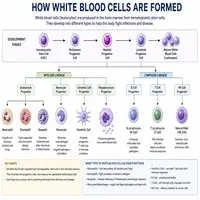
Bone marrow produces nearly all of these cells through a process called hematopoiesis. Stem cells within the marrow divide repeatedly, gradually maturing into specific cell types based on the body’s current needs.
The flowchart below shows a simplified production pathway.
Hematopoietic Stem Cell
        |
        v
Myeloid or Lymphoid Progenitor
        |
   +----+----+
   |         |
   v         v
Myeloid Line          Lymphoid Line
(Neutrophils,          (T cells, B cells,
Monocytes, etc.)       Natural Killer cells)
Interestingly, production speeds up dramatically during infection. Chemical signals released by damaged tissue travel to the bone marrow, essentially placing an urgent order for more defenders. This is why a simple blood test showing elevated white cell counts often points toward an active infection somewhere in the body.
However, certain conditions can disrupt this process. Bone marrow diseases, chemotherapy, and some viral infections can all lower production, leaving the body more vulnerable to illness.
Understanding Platelets
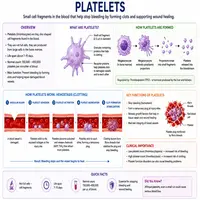
Platelets, unlike white blood cells, are not full cells at all. They’re small fragments that break off from larger cells in the bone marrow called megakaryocytes. Despite their tiny size, they play an outsized role in preventing blood loss.
When a blood vessel gets damaged, platelets rush to the site almost instantly. They stick to the exposed tissue, change shape, and release chemical signals that call even more platelets to the area. This forms what’s known as a platelet plug, the body’s first line of defense against bleeding.
Key steps in this process include:
- Adhesion – platelets attach to the damaged vessel wall.
- Activation – platelets change shape and release clotting signals.
- Aggregation – additional platelets clump together at the site.
- Clot formation – clotting factors reinforce the plug into a stable clot.
Notably, this entire sequence can happen within seconds of an injury. Consequently, even small cuts often stop bleeding relatively quickly under normal circumstances.
How These Two Systems Work Together
Although white blood cells and platelets serve different primary purposes, they don’t operate in complete isolation. Both respond to signals from damaged tissue, and both contribute to inflammation at an injury site.
For instance, platelets release growth factors that attract white blood cells to a wound. In turn, white blood cells help clean up debris and fight off any bacteria that entered through the broken skin. Similarly, inflammation triggered by white blood cells can influence how quickly platelets arrive and clump together nearby.
This overlap explains why blood tests often examine both components together. A complete blood count, or CBC, measures white blood cells and platelets and alongside red blood cells to give doctors a broader picture of overall health. Abnormal levels in either category can signal anything from a minor infection to a more serious underlying condition.
When Levels Go Too High or Too Low
Both components can shift outside their normal ranges for various reasons, and each shift carries different implications.
Common causes include:
- High white blood cell count – often signals infection, inflammation, or stress on the body.
- Low white blood cell count – may result from bone marrow problems, autoimmune disease, or certain medications.
- High platelet count – can occur after surgery, infection, or chronic inflammation.
- Low platelet count – increases bleeding risk and may stem from bone marrow issues or immune destruction.
Ultimately, doctors rarely look at these numbers in isolation. Instead, they consider symptoms, medical history, and other test results together before reaching a conclusion. A single abnormal count rarely tells the whole story on its own.
Conclusion
White blood cells and platelets may look like minor players floating in a sea of red cells, but they carry enormous responsibility. One team fights off invaders, while the other rushes to seal wounds before too much blood is lost. Together, they form a fast, coordinated response system that keeps the body protected around the clock. Understanding how each one forms, functions, and interacts makes routine blood test results far easier to interpret, whether you’re a student, a patient, or simply curious about your own biology.
Frequently Asked Questions
White blood cells are complete cells that fight infection, while platelets are small cell fragments that help stop bleeding.
Both form in the bone marrow, though white blood cells develop from hematopoietic stem cells while platelets break off from larger megakaryocytes.
Abnormal counts can signal infection, inflammation, bleeding disorders, or bone marrow problems, making these numbers useful diagnostic clues.
Yes, a low count increases the risk of excessive bleeding, even from minor injuries, and may require further medical evaluation.
Yes, they often respond to the same injury signals, with platelets sealing wounds while white blood cells clear debris and fight off potential infection.