Dentin Pulp Complex: A Complete Guide
Teeth are far more alive than they appear. Beneath the hard, white enamel lies a living system that senses pain, repairs damage, and keeps the tooth nourished. This system is known as the dentin pulp complex.
Many people think of dentin and pulp as separate parts. In reality, they work as one connected unit. This guide explains how this complex functions, why it matters, and what happens when it gets damaged.
What Is the Dentin Pulp Complex?
The dentin pulp complex refers to the close functional relationship between dentin and the pulp tissue inside a tooth. These two structures develop together and cannot truly be separated in terms of biology.
Dentin forms the bulk of the tooth beneath the enamel. Pulp, meanwhile, sits at the center, containing nerves, blood vessels, and connective tissue. Because these tissues communicate constantly, damage to one usually affects the other.
For example, a cavity reaching the dentin often triggers a response deep within the pulp. This response can include pain, inflammation, or even new dentin formation. Therefore, dentists treat both structures as a single biological unit rather than two isolated parts.
Structure of Dentin
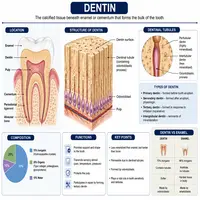
Dentin is a mineralized tissue, though softer than enamel. It contains thousands of tiny tubules that run from the pulp toward the outer surface. These tubules carry fluid and nerve fibers, which explains why dentin exposure often causes sensitivity.
Inside these tubules, odontoblastic processes extend outward. Odontoblasts are specialized cells that line the pulp chamber and produce dentin throughout life. As a result, dentin formation never fully stops, even in adult teeth.
Below is a simple breakdown of dentin’s key features:
| Feature | Description |
|---|---|
| Composition | Mainly hydroxyapatite, collagen, and water |
| Hardness | Softer than enamel, harder than bone |
| Tubules | Thousands per square millimeter |
| Formation | Continues slowly throughout life |
| Sensitivity | High, due to nerve fiber presence |
This structure allows dentin to remain flexible while still offering strong support to the enamel above it.
Structure of the Dental Pulp
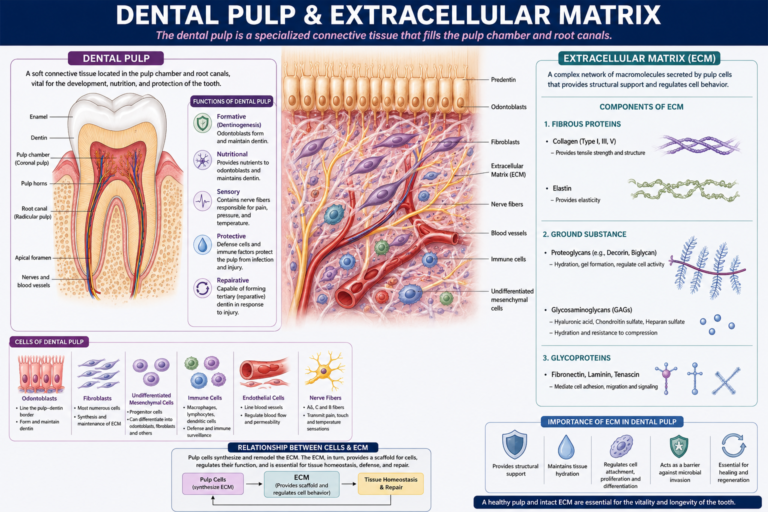
The pulp sits inside the pulp chamber and root canals. It contains blood vessels, nerves, lymphatics, and connective tissue. Unlike dentin, pulp is soft and highly vascular.
Odontoblasts line the outer edge of the pulp, directly touching the dentin. Beneath them lies the cell-free zone, followed by the cell-rich zone. This layered arrangement helps the pulp respond quickly to injury or irritation.
Furthermore, the pulp acts as the tooth’s nutritional highway. It supplies oxygen and nutrients to maintain dentin health. Without healthy pulp, dentin would eventually become brittle and lifeless.
How the Dentin Pulp Complex Works Together
These two tissues do not function independently. Instead, they form a continuous biological system that reacts to external stimuli as one unit.
Here is a simple flowchart showing how this interaction typically occurs:
External Stimulus (heat, cold, decay, pressure)
        ↓
Fluid Movement Inside Dentinal Tubules
        ↓
Stimulation of Nerve Fibers in Pulp
        ↓
Pain Signal or Inflammatory Response
        ↓
Odontoblasts Trigger Reparative Dentin Formation
This chain reaction explains why even minor dentin exposure can cause noticeable sensitivity. Meanwhile, this same process also helps protect the pulp by forming a defensive barrier of new dentin.
Additionally, this interaction becomes more active during dental decay. As bacteria approach the pulp, the tissue reacts by producing tertiary dentin. This defensive dentin attempts to seal off the pulp before infection reaches it.
Functions of the Dentin Pulp Complex
This complex performs several essential roles beyond simple protection. Understanding these functions helps explain why preserving pulp health matters so much.
- Sensory function – detects temperature changes, pressure, and pain.
- Nutritive function – supplies nutrients to maintain dentin vitality.
- Formative function – continues producing dentin throughout life.
- Defensive function – responds to irritation with reparative dentin.
Because of these combined roles, damage to the pulp often affects the entire tooth’s long-term health. Consequently, dentists prioritize pulp preservation whenever possible during treatment.
Clinical Significance in Dentistry
Understanding this complex helps explain several common dental procedures. For instance, deep cavities often require careful treatment to avoid pulp exposure. If exposure occurs, the tooth may need root canal therapy.
Moreover, tooth sensitivity often stems directly from this complex. When enamel wears away, dentin tubules become exposed. Consequently, hot or cold stimuli reach the pulp more easily, triggering discomfort.
The table below summarizes common conditions linked to this complex:
| Condition | Cause | Effect on Complex |
|---|---|---|
| Dentin hypersensitivity | Exposed tubules | Increased fluid movement, pain |
| Pulpitis | Deep decay or trauma | Inflammation of pulp tissue |
| Pulp necrosis | Untreated infection | Loss of pulp vitality |
| Reparative dentin formation | Mild, chronic irritation | Protective dentin buildup |
This table shows how closely dentin and pulp health are linked in everyday dental practice.
Why This System Matters for Long-Term Tooth Health
Many people underestimate how much this internal system affects overall tooth survival. Without a healthy pulp, dentin loses its ability to repair itself. Over time, this can lead to brittle, weakened teeth.
Additionally, early diagnosis of pulp problems often saves teeth from extraction. Dentists frequently rely on sensitivity tests and imaging to assess pulp health before deciding on treatment options.
Therefore, protecting this complex should remain a priority during both preventive and restorative dental care.
Conclusion
The dentin pulp complex is far more than two separate tissues sitting next to each other. It works as a single, responsive system that senses, protects, and repairs the tooth from within. Dentin provides structure and support, while pulp supplies life, sensation, and healing ability.
For dental students, understanding this relationship builds a strong foundation for clinical practice. For patients, recognizing its importance highlights why early treatment of cavities matters so much. Ultimately, protecting this complex means protecting the long-term survival of the tooth itself.
Frequently Asked Questions
It refers to the close, functional relationship between dentin and pulp tissue, which work together rather than separately.
Exposed dentin allows fluid inside tubules to move more easily, which stimulates nerve fibers in the pulp and causes discomfort.
Yes, to some extent. Odontoblasts can produce reparative dentin to help protect the pulp from further damage.
Severe damage can lead to pulp necrosis, often requiring root canal treatment to save the tooth.
Good oral hygiene, regular dental checkups, and prompt treatment of cavities help preserve dentin and pulp health.