Differential Diagnosis of Orofacial Pain
Facial pain rarely comes with a clear label. Sometimes a toothache is not really about the tooth. Other times, jaw pain hides a dental infection instead. That overlap makes the differential diagnosis of orofacial pain one of dentistry’s trickiest skills. In this guide, we walk through how dentists sort through the possibilities. You will find two tables, a simple flowchart, and five common questions answered. Think of this process like solving a puzzle. Each clue narrows the field. Together, they reveal the true source of pain.
Why Orofacial Pain Is So Hard to Pinpoint
Your face and jaw share a dense web of nerves. The trigeminal nerve alone covers most of this region. Because of that, pain can seem to jump from one spot to another. A problem in one area often feels like it started somewhere else entirely.
This overlap creates real diagnostic challenges. Tooth pain can mimic sinus pressure. Jaw joint pain can feel like an earache. Nerve pain can mimic a simple cavity. Consequently, dentists cannot rely on location alone. They need a structured approach instead.
Time also complicates things. Some pain flares briefly, then disappears for weeks. Other pain lingers constantly in the background. Patterns like these carry real diagnostic weight. So do triggers, such as chewing, cold drinks, or stress. Gathering every detail helps your dentist rule conditions in or out with confidence.
Starting With a Thorough History
Every diagnosis begins with careful listening. Your dentist asks when the pain started. They also ask how it feels, sharp, dull, throbbing, or burning. Each description points toward different causes. Sharp, brief pain often suggests a nerve or tooth problem. Constant dull aching may point toward muscle or joint issues.
Location matters too, though it can mislead. Pain near the back teeth sometimes comes from the jaw joint instead. Meanwhile, pain behind the eye can trace back to a lower molar. Your dentist also asks what makes pain better or worse. Chewing, temperature, and head position all offer useful clues.
Medical history rounds out the picture. Migraines, sinus issues, and nerve conditions can all cause facial pain. Recent dental work, trauma, or infections matter as well. Stress and clenching habits deserve mention too. With this background gathered, the exam begins.
The Clinical Examination
Next comes a hands-on look. Your dentist checks each tooth for cracks, decay, and looseness. They tap and press around the gums and jaw. Tenderness here often points toward a dental source. Meanwhile, a completely normal dental exam pushes suspicion elsewhere.
The jaw joint gets close attention too. Your dentist listens for clicking or popping sounds. They check how wide you can open your mouth. Limited movement often signals a joint or muscle problem, not a tooth. Muscles around the jaw, temples, and neck get gentle palpation as well. Tight, tender muscles suggest a muscular cause.
Nerve function testing rounds out the exam. Your dentist may lightly touch different facial areas. Numbness or heightened sensitivity can indicate nerve involvement. Sinus areas get a gentle check too. Pressure over the cheekbones can reproduce the pain. That reaction suggests sinus involvement instead of a dental cause.
The Role of Pulp and Sensitivity Testing
When a dental cause seems likely, testing narrows things further. Cold tests check whether the nerve inside a tooth is alive. A brief, mild reaction usually signals a healthy pulp. Lingering or severe pain suggests deeper inflammation instead.
Bite tests catch a different problem, cracked teeth. A small stick lets you bite down on one tooth at a time. Sharp pain on release often reveals a hidden fracture. Because cracks rarely show up on X-rays, this test carries real weight.
Percussion testing adds another layer. Gentle tapping on a tooth checks for inflammation near the root tip. Tenderness here often confirms a dental source of pain. Combined with your history and exam, these tests build confidence in the diagnosis.
Common Categories of Orofacial Pain
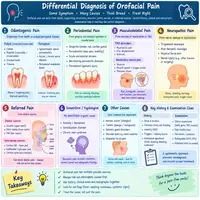
Pain sources generally fall into a few broad groups. Understanding these categories helps organize the diagnostic process. The table below summarizes the main categories dentists consider.
| Category | Typical Source | Common Features |
|---|---|---|
| Dental pain | Tooth decay, cracks, pulp infection | Sharp pain with hot, cold, or biting |
| Periodontal pain | Gum and bone infection | Dull ache, swelling, tenderness to touch |
| Temporomandibular disorders | Jaw joint or chewing muscles | Clicking, limited opening, muscle soreness |
| Neuropathic pain | Nerve damage or dysfunction | Burning, shooting, or electric-shock sensations |
| Sinus-related pain | Sinus infection or inflammation | Pressure worsens when bending forward |
| Referred pain | Distant source, such as the heart or neck | Pain does not match the exam findings |
Notably, more than one category can overlap in a single patient. For example, jaw clenching can worsen an already cracked tooth. Recognizing these overlaps prevents dentists from missing a secondary cause.
Ruling Out Non-Dental Causes
Not every facial pain starts in the mouth. Sinus infections frequently mimic upper tooth pain. Pressure and congestion often worsen when you lean forward. Cold-like symptoms alongside the pain raise suspicion for a sinus source.
Nerve conditions also deserve careful consideration. Trigeminal neuralgia causes sudden, electric-shock-like pain, often triggered by light touch. Unlike a toothache, it rarely responds to dental treatment. Persistent burning pain without a clear cause needs its own workup. Dentists sometimes call this atypical facial pain.
Muscle and joint problems account for a significant share of chronic facial pain. Clenching and grinding strain the jaw muscles over time. Stress often makes these habits worse. Rarely, facial pain signals something more serious. A heart condition or a vascular headache can be the cause. Because of that risk, dentists stay alert. They watch for warning signs outside typical dental patterns.
Red Flags That Need Urgent Attention
Certain symptoms deserve immediate evaluation. Sudden, severe pain paired with facial swelling and fever suggests a spreading dental infection. This combination needs urgent treatment, since infection can spread quickly. Similarly, jaw pain paired with chest discomfort needs emergency care right away. Shortness of breath is another warning sign. Together, they may signal a heart problem rather than a dental one.
Numbness that develops suddenly also warrants prompt evaluation. So does vision change alongside facial pain. Severe, one-sided headaches with eye redness may indicate a rare but serious headache disorder. Dentists trained in orofacial pain know these warning patterns well. When red flags appear, they refer patients quickly to the right specialist.
The Diagnostic Pathway: A Simple Flowchart
Here is how the reasoning above typically unfolds during a visit.
        Patient reports facial or jaw pain
                      |
                      v
         Detailed history and pain pattern
                      |
                      v
           Clinical and dental exam
                      |
                      v
        Any red flag symptoms present?
           /                      \\
         Yes                       No
          |                         |
          v                         v
   Urgent referral            Pulp tests, X-rays,
   (ER or specialist)         jaw and muscle exam
                                    |
                                    v
                     +--------------+--------------+
                     |              |               |
                     v              v               v
              Dental source   Jaw/muscle source   Nerve or sinus
              identified      identified          source suspected
                     |              |               |
                     v              v               v
              Dental treatment   TMD therapy     Refer to specialist
The Impact of Stress and Habits
Stress plays a surprisingly large role in facial pain. Clenching and grinding often increase during stressful periods. Many patients do this unconsciously, especially during sleep. Over time, these habits strain the jaw muscles and joint.
Morning headaches and jaw soreness often point toward nighttime grinding. A custom night guard can protect the teeth and ease strain. Relaxation techniques and stress management also help reduce symptoms. Addressing the underlying habit often matters as much as treating the pain itself.
Posture matters too, particularly for patients who work at a desk all day. Forward head posture strains neck and jaw muscles together. Simple ergonomic changes sometimes relieve pain that seemed purely dental at first. Because of this connection, dentists increasingly ask about daily habits and posture during evaluation.
Working With the Right Specialist
Sometimes a general dentist cannot pinpoint the cause alone. In these cases, referral becomes the safest option. Oral and maxillofacial specialists handle complex jaw and nerve conditions. Ear, nose, and throat doctors manage stubborn sinus issues.
Neurologists step in when nerve pain resists typical treatment. Physical therapists often help with muscle-related jaw pain. A team approach frequently works best for complicated cases. Because pain sources can overlap, collaboration between providers improves outcomes significantly.
Patients benefit from this teamwork too. A clear diagnosis prevents unnecessary dental procedures. It also speeds up relief for the actual underlying cause. Trust the process. It may take more than one visit to find the answer.
Conclusion
Diagnosing orofacial pain takes patience, careful listening, and a structured process. Dentists gather your history first. Next, they examine your mouth and jaw. Then they rule out red flags. From there, they narrow the possibilities between dental, muscular, nerve, and sinus causes. As we have seen, no single clue tells the whole story on its own. Instead, every detail adds another piece to the puzzle. If facial pain lingers or seems unclear, do not guess on your own. A thorough evaluation brings you closer to lasting relief.
Frequently Asked Questions
Details like timing, triggers, and pain quality help narrow down the cause. Small differences often point toward very different diagnoses.
Yes. Upper back teeth sit close to the sinuses. Infection or pressure there can mimic dental pain closely.
It involves the jaw joint or chewing muscles rather than a tooth. Clicking, limited opening, and muscle soreness are common signs.
Seek urgent care if pain comes with fever or spreading swelling. Chest discomfort and sudden numbness are warning signs too. These signs need prompt attention.
Not always. Many cases resolve with standard dental treatment. Specialists get involved mainly for nerve, sinus, or complex joint issues.