Case Selection and Treatment Planning in Endodontics
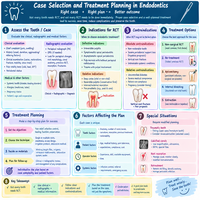
Not every damaged tooth needs the same approach. Some teeth respond beautifully to root canal treatment. Others carry too much risk for a predictable outcome. That difference comes down to careful case selection and treatment planning. In this guide, we explore how dentists weigh these decisions. You will find two tables, a simple flowchart, and five common questions answered. Think of this process as matching the right tool to the right job. Getting it right protects your tooth, your time, and your budget.
Why Careful Planning Matters So Much
Endodontic treatment can save a tooth for decades. However, not every tooth qualifies as a good candidate. Choosing poorly can waste time, money, and tissue. Worse, it can lead to a failed outcome down the road. That is why planning happens before any drilling begins.
Good planning protects your long-term interests. A tooth with a poor prognosis might do better with extraction and replacement instead. Meanwhile, a tooth with strong support may thrive after treatment. Dentists weigh these outcomes carefully before recommending a path forward.
Planning also sets expectations. Patients deserve to know success rates, risks, and alternatives upfront. Therefore, a thorough conversation happens before treatment starts. This step builds trust and helps patients make informed choices about their own care.
Gathering the Full Clinical Picture
Every plan starts with information. Your dentist reviews your symptoms, medical history, and dental history together. They ask about pain patterns, previous treatments, and any recent trauma. Each detail shapes the bigger picture.
Next comes a thorough clinical exam. Your dentist checks the tooth for cracks, decay, and mobility. They probe the surrounding gum tissue for pocket depth. Cold, heat, or electrical tests come next, checking the tooth’s nerve response. These tests reveal whether the nerve is healthy, inflamed, or already dead.
X-rays add another essential layer. A periapical film shows root length and canal shape. It also reveals bone loss near the tip. In complex cases, a cone-beam CT scan reveals hidden canals or fractures. Together, these findings guide your dentist. They help judge whether treatment stands a strong chance of success.
Key Factors in Case Selection
Several factors influence whether a tooth makes a good candidate. Restorability sits at the top of the list. If too much tooth structure is gone, a crown may not hold reliably afterward. Root canal treatment rarely helps a tooth that cannot be restored properly.
Periodontal support matters just as much. A tooth with severe bone loss may not survive long. Even a successful root canal cannot fix that. Similarly, the canal anatomy itself plays a role. Curved, calcified, or unusually shaped canals raise the difficulty and risk.
Patient factors count too. Certain medical conditions can affect healing and infection control. Patient cooperation and the ability to keep the mouth open for treatment also matter. The table below summarizes the main factors dentists weigh during case selection.
| Factor | Favorable Sign | Unfavorable Sign |
|---|---|---|
| Tooth restorability | Enough structure remains for a crown | Extensive decay or fracture below the gumline |
| Periodontal support | Healthy bone and minimal pocketing | Severe bone loss or deep mobility |
| Canal anatomy | Straightforward, accessible canals | Severe curvature or calcification |
| Root fracture | No visible fracture on exam or imaging | Vertical root fracture present |
| Patient health | Well-controlled medical conditions | Uncontrolled conditions affecting healing |
| Strategic value | Tooth plays a key role in the bite | Tooth has limited functional importance |
Classifying Case Difficulty
Not every case carries the same complexity. Many dental associations use a difficulty scale to guide referrals. This scale generally sorts cases into three levels: minimal, moderate, and high difficulty. A straightforward tooth with normal anatomy fits the minimal category. Meanwhile, curved canals or prior treatment might place a tooth in the moderate group.
High-difficulty cases often need a specialist. Severely calcified canals raise complexity. So does unusual anatomy or retreatment after a failed root canal. General dentists frequently refer these cases to an endodontist. That referral protects the patient from unnecessary risk.
Recognizing difficulty early prevents complications mid-treatment. A dentist who understands their own limits refers appropriately. In turn, patients receive care matched to the complexity of their case. This honest self-assessment forms a cornerstone of responsible treatment planning.
The Role of the Restorative Dentist
Root canal treatment rarely works alone. A final restoration protects the tooth afterward. Often, a crown or filling seals the tooth against bacteria and daily chewing forces. Planning this step early avoids surprises later.
Your general dentist and endodontist often coordinate closely here. The endodontist treats the canal system. Meanwhile, the restorative dentist plans and places the final crown or filling. This teamwork ensures the tooth functions well for years to come.
Timing matters too. Delaying the final restoration too long risks reinfection or fracture. Most dentists recommend completing restoration within a few weeks of root canal treatment. Clear communication between providers keeps this timeline on track.
Weighing Treatment Options
Root canal treatment is not the only option on the table. Extraction followed by an implant or bridge sometimes offers better long-term value. Occasionally, monitoring a mildly inflamed tooth without immediate treatment makes sense too. Each option carries its own risks, benefits, and costs.
Dentists compare these paths honestly with patients. Saving a natural tooth usually preserves jawbone and chewing function best. However, a tooth with a poor prognosis may fail again after treatment. In that case, extraction might spare the patient future cost and frustration.
Cost and time also factor into the decision. Root canal treatment plus a crown often costs less than extraction plus an implant. Still, some patients prefer a faster, simpler solution despite higher long-term cost. Respecting patient preferences remains essential throughout this conversation.
The Treatment Planning Process: A Simple Flowchart
Here is how these steps typically flow together during a visit.
        Patient presents with symptoms
                    |
                    v
   History, exam, and diagnostic tests
                    |
                    v
      X-rays and imaging review
                    |
                    v
    Assess restorability and periodontal
              support
                    |
                    v
      Evaluate canal anatomy and
           case difficulty
                    |
             /              \\
     Favorable case      Complex or high-risk case
           |                        |
           v                        v
   Proceed with root          Refer to specialist
   canal treatment            or discuss alternatives
           |                        |
           v                        v
    Restore and monitor      Extraction, implant,
        long term            or specialist referral
Communicating the Plan With Patients
A solid plan means little if patients do not understand it. Clear communication builds trust and improves outcomes. Dentists explain the diagnosis in plain language first. Then they outline the recommended treatment and why it fits.
Alternatives deserve equal attention. Patients should hear about extraction, monitoring, or referral options too. Success rates and realistic risks belong in this conversation as well. Nothing works perfectly every time, and honesty here matters.
Cost and timeline round out the discussion. Patients appreciate knowing how many visits treatment might take. They also want a clear sense of expected expenses. Written consent typically follows this conversation, ensuring everyone agrees on the path forward.
Documentation and Informed Consent
Good planning leaves a paper trail. Dentists document symptoms, exam findings, and X-ray results carefully. This record protects both the patient and the provider. It also supports continuity if another provider becomes involved later.
Informed consent follows naturally from this documentation. Patients sign off after understanding the diagnosis, options, and risks. They also acknowledge realistic success rates for their specific case. This step is not just a formality.
Clear records also help if complications arise later. A well-documented plan shows the reasoning behind each decision. This transparency builds long-term trust between patient and provider.
Conclusion
Thoughtful case selection and treatment planning protect both the tooth and the patient. Dentists review symptoms, imaging, and canal anatomy carefully. This helps them judge whether a tooth is a strong candidate. As we have seen, restorability, periodontal health, and canal complexity all shape that decision. When a case grows too complex, referral to a specialist stays the safest path. Ultimately, careful planning leads to better outcomes, fewer surprises, and teeth that last.
Frequently Asked Questions
Dentists evaluate restorability, periodontal support, canal anatomy, and overall tooth health. X-rays and clinical tests all inform this decision.
Complex cases often need specialized training and equipment. Severely curved canals are one example. Retreatment after a failed root canal is another.
A tooth with a poor long-term prognosis may not be worth saving. Fracture and severe bone loss are common reasons. In these cases, extraction and replacement may offer better value.
Calcified or curved canals increase difficulty. So do unusual anatomy and previous failed treatment. These cases may need specialist care.
Yes. A responsible treatment plan includes a clear discussion. Your diagnosis, options, success rates, and expected costs should all come up.