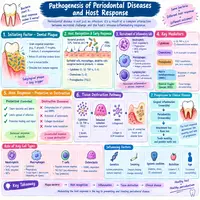
Pathogenesis of Periodontal Diseases and Host Response
Gum disease does not appear overnight. It develops through a series of steps that unfold quietly. Bacteria start the process, but your body shapes how far it goes. Understanding the pathogenesis of periodontal diseases explains something puzzling. Some people lose teeth, while others do not. In this guide, we walk through each stage in plain language. You will find two tables, a simple flowchart, and five common questions answered. Think of it as the full story behind bleeding gums.
Where Gum Disease Begins: The Bacterial Trigger
Every case starts with plaque. Within hours of brushing, bacteria attach to your teeth. They multiply into a sticky community called a biofilm. Left alone, this film grows thicker and more complex each day.
Below the gumline, conditions change. Oxygen drops, and different bacteria begin to thrive. Some of these species release toxins that irritate gum tissue directly. Others produce enzymes that break down proteins in the surrounding area.
However, bacteria alone do not explain the damage. Many people carry the same harmful species without losing bone. That puzzle led researchers to look closer at the body’s own reaction. Today, experts agree that bacteria set the stage. The host response then decides how the story ends.
Gum Tissue Defense: The First Barriers
Your mouth does not rely on immune cells alone. Several natural barriers work together before inflammation even begins. The gum lining forms a tight seal around each tooth. This seal blocks most bacteria from entering deeper tissue.
Saliva adds another layer of protection. This fluid rinses away loose bacteria and food debris. Enzymes and antibodies in saliva also slow bacterial growth. That is why a dry mouth raises the risk of gum disease.
Gum fluid acts as a third defender. It flows continuously through the narrow space beside each tooth. This flow flushes out bacteria and delivers defense proteins to the area. When these barriers fail, the immune system must step in. Strong barriers mean fewer battles overall.
The Early Stage: Gingivitis and Acute Inflammation
Your gums react quickly when bacteria build up. Blood vessels widen, and more blood flows to the area. White blood cells rush in to fight the invaders. This reaction causes the redness, swelling, and bleeding you notice.
Dentists call this stage gingivitis. The immune system stays in control here. Damage remains limited to the soft gum tissue. Bone and ligament stay fully intact. Better yet, this stage is reversible with good brushing and cleaning.
Neutrophils lead the first line of defense. These cells gather in the gum pocket and attack bacteria on contact. Meanwhile, the gum produces fluid that carries defense proteins into the area. Together, these steps keep most infections under control. Most people fight off the early threat without ever noticing a problem.
The Established Lesion: When Defense Becomes Damage
Sometimes the bacteria keep coming. The immune system then calls in reinforcements. Macrophages and lymphocytes join the fight and release chemical signals. These signals, called cytokines, coordinate the wider response.
Here is where the trouble starts. Cytokines also trigger enzymes that break down collagen. Collagen holds your gum fibers together. As it weakens, the gum edge loosens from the tooth. A gap forms, and bacteria slip deeper inside.
Plasma cells appear in large numbers at this point. They make antibodies to target the bacteria. Unfortunately, the battle often stalls without a clear winner. Inflammation settles in and becomes chronic. Many patients stay at this stage for years. Some never progress, while others move on to the next phase.
Progression to Periodontitis: Bone and Attachment Loss
In susceptible people, the balance finally tips. Inflammation spreads from the gum into the supporting bone. Immune signals activate cells called osteoclasts. These cells dissolve bone, much like a natural remodeling process gone too far.
At the same time, the ligament that anchors the tooth breaks down. The pocket around the tooth deepens. Deeper pockets shelter more bacteria, especially those that avoid oxygen. A vicious cycle follows. More bacteria drive more inflammation, which drives more tissue loss.
Importantly, this damage does not heal on its own. Bone that disappears rarely returns without special treatment. Teeth may loosen, drift, or eventually fall out. Still, progression is not automatic. Many factors speed it up or slow it down. The table below summarizes each stage of the process.
| Stage | Main Event | Tissue Affected | Reversible? |
|---|---|---|---|
| Initial lesion | Immune cells arrive at the gum edge | Gum fluid and small vessels | Yes |
| Early lesion | Inflammation builds; gum swells | Gum connective tissue | Yes |
| Established lesion | Chronic inflammation; pocket forms | Gum and fiber attachment | Often |
| Advanced lesion | Bone loss and deep pockets | Bone and ligament | No |
How Bacteria Escape the Immune System
Harmful bacteria are not passive targets. Some actively dodge the body’s defenses. Porphyromonas gingivalis, for example, interferes with immune signaling. It tricks the host into mounting a weaker attack. Meanwhile, the surrounding bacteria benefit from the confusion.
Biofilms add another layer of protection. The sticky matrix shields bacteria from immune cells. It also blocks many antibiotics from reaching the colony. For that reason, mechanical cleaning remains essential. Rinses and medications alone rarely clear a mature biofilm.
Researchers now describe this as a shift in the whole microbial community. A few key species change the environment, and the community becomes more harmful. Experts call this state dysbiosis. The idea matters because it moves focus away from single germs. Instead, it highlights the balance of the entire ecosystem in your mouth.
Why Host Response Varies From Person to Person
Two people can have the same plaque and very different outcomes. Genetics explain part of the gap. Some people produce more inflammatory chemicals than others. Their tissues break down faster as a result.
Lifestyle matters just as much. Smoking restricts blood flow and weakens healing. It also hides early signs, such as bleeding. Diabetes raises inflammation throughout the body, and high blood sugar slows repair. Stress and poor sleep can further disrupt immune balance.
Hormones play a role as well. Pregnancy, for instance, makes gums more reactive to plaque. Certain medicines dry the mouth or cause gum overgrowth. Each factor adds weight to one side of the scale. The table below highlights the most common modifiers.
| Modifying Factor | Effect on Host Response |
|---|---|
| Smoking | Reduces blood flow; masks early signs |
| Diabetes | Raises inflammation; slows healing |
| Genetics | Alters cytokine production |
| Stress | Weakens immune regulation |
| Hormonal changes | Increases gum sensitivity |
| Certain medications | Reduce saliva or cause gum overgrowth |
The Full Pathway: A Simple Flowchart
Next, a simple chart ties these steps together from start to finish.
        Plaque biofilm builds on tooth surfaces
                         |
                         v
        Bacteria and toxins reach the gum margin
                         |
                         v
        Immune cells arrive (acute inflammation)
                         |
                         v
          Is the biofilm removed promptly?
              /                      \\
            Yes                       No
             |                         |
             v                         v
     Gums return to health      Chronic inflammation
                                       |
                                       v
                          Cytokines and enzymes break
                          down collagen and bone
                                       |
                                       v
                          Pockets deepen; bacteria
                          shift toward harmful species
                                       |
                                       v
                          Periodontitis with bone loss
How Dentists Use This Knowledge in the Clinic
Pathogenesis is not just theory. It shapes how dentists examine and treat every patient. Bleeding on probing, for instance, signals active inflammation. Deep pockets point to ongoing tissue breakdown. X-rays reveal how much bone has already disappeared.
Risk assessment follows naturally from this knowledge. Dentists ask about smoking, diabetes, and family history. These answers help predict how your body might respond to plaque. A high-risk patient receives closer monitoring and more frequent visits.
Newer research also explores targeted therapies. Some aim to calm the immune response rather than kill bacteria. Others try to restore a healthy microbial balance. While still developing, these ideas show where the field is heading. For now, plaque control and professional care remain the proven foundation.
What This Means for Prevention and Treatment
Knowing the pathway shows where to step in. Early on, simple plaque control reverses everything. Brushing twice a day and cleaning between teeth work well. Professional cleanings remove hardened deposits that you cannot reach at home.
In later stages, treatment targets both bacteria and inflammation. Scaling and root planing clear the biofilm below the gumline. As bacterial load drops, the immune response calms down. Your dentist may also recommend surgery for deep pockets. Some patients benefit from supportive medications, too.
Risk control completes the plan. Quitting smoking helps your gums heal. Keeping blood sugar in range lowers inflammation. Regular maintenance visits catch early relapse before damage returns. Because the host response never fully disappears, lifelong care pays off.
Conclusion
Gum disease grows from a partnership between bacteria and your own defenses. Plaque starts the process, and inflammation carries it forward. As we have seen, the host response can protect tissue or destroy it. Genetics, smoking, diabetes, and stress all tip the balance. Fortunately, you can act at every stage. Clean teeth, regular checkups, and healthy habits keep inflammation in check. Understanding this pathway turns gum care from a chore into a clear, practical strategy.
Frequently Asked Questions
Not directly. Plaque triggers the process, but your immune response drives most of the tissue damage.
It can in susceptible people. Many cases never progress, especially with good hygiene and regular cleanings.
Genetics and health conditions change how strongly the body reacts. Some people simply inflame more easily.
Gingivitis reverses fully. Lost bone rarely regrows without special procedures, so early care matters.
Smoking weakens blood flow and healing. It also hides bleeding, so damage often goes unnoticed.