Classification of Periodontal Diseases Explained
Gum disease is not one single condition. Dentists recognize many forms, and each one behaves differently. That is why a clear classification of periodontal diseases exists. It gives your dental team a shared language. Better yet, it guides your treatment plan. In this article, we break down the current system in plain words. You will see how experts sort gum problems by type, severity, and speed. Along the way, you will find three tables and a handy flowchart.
Why the Classification of Periodontal Diseases Matters
Imagine two patients with bleeding gums. One has mild inflammation that a good cleaning fixes. The other has deep bone loss that threatens several teeth. Clearly, they need very different care. A solid system separates these cases early. It also protects you from overtreatment. A simple case does not need surgery. Likewise, a severe case should never get a quick fix.
Labels also improve communication. Your general dentist, periodontist, and hygienist all use the same terms. As a result, everyone understands your diagnosis at a glance. Researchers and insurance teams rely on these terms too. Meanwhile, you get a clearer picture of your own health.
Finally, a good label predicts the future. Some gum disease moves slowly over decades. Other forms race ahead within a few years. Knowing which one you have helps your dentist plan visits. Your diagnosis also helps you decide how quickly to act. So, understanding the labels puts you in control.
From 1999 to 2017: How the System Evolved
For many years, dentists used a system from 1999. It sorted gum disease into groups like chronic and aggressive periodontitis. That approach worked, but it had gaps. For example, the line between chronic and aggressive disease often blurred. Two dentists could label the same patient differently.
In 2017, global experts met in Chicago. They built a new framework. The new version replaced the old labels with one term, periodontitis. Then they added stages and grades to describe each case in detail. Now the system answers three questions. First, how severe is the disease? Second, how fast is it moving? Third, what could make it worse?
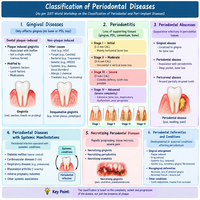
The update also treats health as a diagnosis. Healthy gums, even with reduced support, get their own category. Likewise, implant conditions now sit beside natural tooth conditions. Because of that, the system covers far more real-life situations. The table below shows the main groups at a glance.
| Category | What It Means | Example |
|---|---|---|
| Periodontal health | No inflammation and stable support | Pink gums that do not bleed |
| Gingivitis | Gum inflammation without attachment loss | Puffy gums that bleed when brushing |
| Periodontitis | Inflammation with loss of supporting tissue | Deep pockets and bone loss |
| Necrotizing diseases | Rapid death of gum and bone tissue | Painful, ulcerated gum tips |
| Systemic manifestations | Gum breakdown driven by another illness | Certain genetic or blood disorders |
| Other conditions | Problems that affect the supporting tissues | Gum abscess, recession |
| Peri-implant conditions | Inflammation around dental implants | Bleeding around an implant |
Periodontal Health and Gingivitis
Health comes first. Healthy gums look pink and firm. They do not bleed when you brush or floss. Even so, health has two forms. Some people have full support around their teeth. Others have reduced support after past treatment. Both groups can stay healthy with good care.
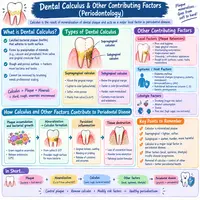
Gingivitis is the next step. Plaque builds up along the gumline. Your gums react with redness, swelling, and bleeding. However, the bone underneath stays safe. Because of that, gingivitis can fully reverse. A thorough cleaning and better home care usually do the trick.
Dentists also sort gingivitis by cause. Plaque-related gingivitis is by far the most common. Other forms come from hormonal shifts, certain medicines, or poor nutrition. For example, pregnancy can make gums swell and bleed easily. Some blood pressure and seizure medicines cause gum overgrowth. Infections and allergic reactions can also inflame the gums. Finding the cause helps your dentist choose the right fix.
Never ignore gingivitis. It is your early warning sign. Left alone, it can progress. Not everyone develops periodontitis, but nobody can predict who will. So treat it early.
Periodontitis: Staging and Grading
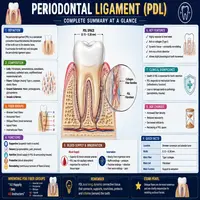
Periodontitis goes deeper than gingivitis. Here, the infection destroys the ligament and bone that hold your teeth. Unlike gingivitis, this damage does not grow back on its own. Therefore, accurate labeling matters even more.
Dentists first assign a stage. The stage describes severity and complexity. It runs from I to IV. They measure attachment loss, bone loss on X-rays, and pocket depth. Beyond that, they count missing teeth and check your bite. Next, they add the extent. Localized means fewer than 30 percent of teeth. Generalized means more. The table below shows how the stages differ.
| Stage | Severity | Attachment Loss | Bone Loss | Teeth Lost to Gum Disease |
|---|---|---|---|---|
| I | Initial | 1–2 mm | Under 15% | None |
| II | Moderate | 3–4 mm | 15–33% | None |
| III | Severe | 5 mm or more | Beyond the coronal third | Up to 4 |
| IV | Advanced | 5 mm or more | Beyond the coronal third | 5 or more |
Then comes the grade. The grade estimates how fast the disease may move. It runs from A to C. Grade A means slow progression. At the other end, Grade C means rapid progression. Dentists look at past bone loss, your age, and risk factors. Smoking and uncontrolled diabetes push the grade higher. Both labels appear in your diagnosis. For instance, you might hear “Stage III, Grade B periodontitis.” Use the next table as a quick guide.
| Grade | Speed | Typical Clues |
|---|---|---|
| A | Slow | No bone loss over five years; no smoking; no diabetes |
| B | Moderate | Some bone loss; light smoking; well-controlled diabetes |
| C | Rapid | Fast bone loss; heavy smoking; poorly controlled diabetes |
Risk Factors That Shape Your Grade
Several factors push a grade upward. Smoking tops the list. Heavy smokers face faster bone loss and poorer healing. Diabetes matters just as much. High blood sugar feeds inflammation and slows repair. Dentists often ask for your recent blood sugar reading.
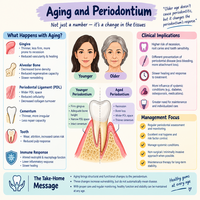
Other factors play a role too. Genetics can make some people more vulnerable. Stress weakens the body’s defenses. Poor sleep and diet do the same. Certain medicines dry the mouth and let plaque thrive. Hormonal changes, such as menopause, may add risk as well.
Fortunately, you can change many of these factors. Quit smoking, and your gums heal better within months. Manage your blood sugar, and inflammation drops. Eat more fruits and vegetables for vitamin C. Sleep well and find healthy ways to handle stress. Each small step lowers your risk and protects your teeth for the long term.
Other Forms of Gum and Implant Disease
Not every case fits the periodontitis mold. Necrotizing diseases, for instance, strike suddenly. Patients notice painful, ulcerated gums and a foul taste. Stress, poor nutrition, smoking, and weak immunity raise the risk. Prompt care is essential.
Some gum breakdown links to whole-body conditions. Certain genetic, blood, and immune disorders fall here. In these cases, the systemic illness drives the damage. So your dentist may coordinate with your physician.
Other conditions affect the supporting tissues too. Gum abscesses cause localized swelling and pain. Combined endodontic-periodontal lesions involve both the nerve and the gums. Recession and thin gum tissue fall under mucogingival conditions. Heavy biting forces and poorly shaped crowns can also harm the gums.
Finally, dental implants have their own labels. Peri-implant mucositis resembles gingivitis, and it can reverse. Peri-implantitis involves bone loss around the implant. Because implants lack a natural ligament, this disease can move fast. Regular checkups protect your investment.
How Dentists Reach a Diagnosis: A Simple Flowchart
Dentists follow a logical path. Each answer leads to the next question. Some steps happen in minutes, while others need X-rays or follow-up visits. The chart below shows the basic route for common cases.
      Full periodontal exam
 (probing, X-rays, health history)
                |
                v
   Any attachment or bone loss?
        /                \
      No                 Yes
       |                  |
       v                  v
 Bleeding on          Periodontitis
  probing?                |
   /     \                v
 No      Yes       Assign STAGE (I-IV)
  |       |                |
  v       v                v
Health  Gingivitis  Assign GRADE (A-C)
                           |
                           v
              Add extent and risk modifiers
                           |
                           v
                  Build treatment plan
What Your Diagnosis Means for Treatment
Your label shapes your plan. Health calls for routine checkups and cleanings. Gingivitis needs a professional cleaning and better home care. Stage I and II periodontitis often respond to non-surgical care. That usually means deep cleaning, called scaling and root planing.
Stage III may need surgery to reach deep pockets. Meanwhile, stage IV often needs a full team. Your periodontist, orthodontist, and restorative dentist may work together. They may replace lost teeth or stabilize loose ones. Grade C cases also need closer monitoring and tighter risk control.
You play a big role as well. Brush twice daily and clean between your teeth. Quit smoking if you smoke. Keep diabetes in check. Above all, attend every maintenance visit. Consistency keeps your label from getting worse.
Maintenance schedules vary. Most patients return every three months after active therapy. Low-risk patients may stretch visits to six months. At each visit, your dentist reviews pocket depths, bleeding, and X-rays. Stable results earn you a stable status.
Conclusion
Gum disease classification may sound technical, but the idea is simple. Dentists sort problems by type, severity, and speed. Health and gingivitis sit at the mild end. Periodontitis sits at the serious end. It uses stages I to IV and grades A to C. Other categories cover rare, sudden, or implant-related problems. Together, these labels guide smart, personal care. If your gums bleed, swell, or feel loose, book an exam soon. Early diagnosis gives you more choices. It also gives you the best chance to keep your teeth. Remember, a label is not a verdict. Think of it as a roadmap. With steady care, many patients keep their natural teeth for life.
Frequently Asked Questions
Dentists use the 2017 framework from American and European periodontal societies. The system covers health, gingivitis, periodontitis, and related conditions. Implant problems fit in too.
Stage shows how severe and complex your disease is. Grade shows how fast it may progress. Together, they paint a full picture.
Yes. Gingivitis does not damage bone, so it can fully reverse. Professional cleaning and daily brushing and flossing make the difference.
It can. Your stage stays on record, but your status can shift. After treatment, your dentist may call your disease stable. If problems return, it may become unstable again.
No. The 2017 update merged chronic and aggressive periodontitis into one category. Grading now captures how quickly the disease move