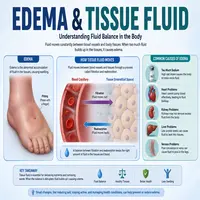
Edema and Tissue Fluid: Why Swelling Happens
Your body constantly moves fluid between blood vessels and surrounding tissues. Most of the time, this process stays perfectly balanced. However, sometimes fluid builds up in places it shouldn’t.
This buildup often shows up as visible swelling, especially in the legs or hands. Doctors call this condition edema, and it relates closely to how fluid moves through tissues. This guide breaks the process down using simple, everyday language.
You will find a helpful table, an easy flowchart, and answers to common questions. So, let’s explore why swelling happens and what it means for your health.
What Is Happening Inside Your Tissues?
Every tissue in your body contains a small amount of fluid between cells. This fluid delivers nutrients and removes waste continuously. Normally, the body reabsorbs most of this fluid back into circulation.
Blood vessels constantly release and reabsorb fluid through their thin walls. Pressure differences control whether fluid moves out or back in. Therefore, a delicate balance keeps tissues moist without becoming waterlogged.
When this balance shifts, extra fluid accumulates in surrounding spaces. Edema and tissue fluid imbalance often go hand in hand, since one affects the other directly. As a result, visible puffiness or swelling appears in affected areas.
Interestingly, gravity influences where swelling shows up first. Standing for long periods often causes fluid to pool in the feet and ankles. Meanwhile, lying down redistributes fluid more evenly throughout the body.
The Main Forces Controlling Fluid Movement
Two main pressures determine whether fluid stays in vessels or leaks out. Hydrostatic pressure pushes fluid outward from blood vessels. Meanwhile, oncotic pressure pulls fluid back inward using proteins in the blood.
When these pressures stay balanced, fluid moves smoothly without causing problems. However, any disruption tips the scale toward excess buildup. This is where noticeable swelling typically begins.
The table below summarizes the key forces involved in this process.
| Force | Direction | Main Driver |
|---|---|---|
| Hydrostatic pressure | Pushes fluid out | Blood pressure within vessels |
| Oncotic pressure | Pulls fluid in | Proteins like albumin |
| Lymphatic drainage | Removes excess fluid | Lymph vessels throughout the body |
Notably, the lymphatic system acts as a backup drainage route. When blood vessels alone cannot manage fluid balance, lymph vessels step in. Consequently, healthy lymphatic function prevents fluid from accumulating excessively.
How Fluid Moves Through the Body
Understanding this process becomes easier with a simple flow. Below is a basic flowchart showing how fluid normally cycles through tissues.
Blood Enters Capillaries
     │
     ▼
Fluid Pushed Into Tissues
     │
     ▼
Nutrients Delivered to Cells
     │
     ▼
Fluid Reabsorbed Back Into Vessels
     │
     ▼
Excess Fluid Drained by Lymphatics
First, blood enters small capillaries throughout the body. Next, pressure pushes fluid outward into surrounding tissue spaces. Then, cells absorb nutrients while releasing waste products.
Afterward, most fluid returns to the bloodstream through reabsorption. Finally, any remaining fluid drains through the lymphatic system. This cycle repeats constantly, keeping tissues properly hydrated without excess buildup.
Why Swelling Sometimes Occurs
Several situations disrupt this normally smooth cycle. Increased blood pressure inside vessels can push too much fluid outward. Similarly, low protein levels reduce the pulling force needed for reabsorption.
Blocked lymphatic vessels also prevent proper drainage from occurring. This often happens after surgery, injury, or certain infections. As a result, fluid accumulates steadily in the affected area.
Heart, kidney, and liver problems frequently contribute to this imbalance too. Each organ plays a role in managing fluid and protein levels. Therefore, doctors often examine these organs when investigating unexplained swelling.
In other words, edema and tissue fluid disruption rarely stem from a single cause. Multiple systems usually interact before visible swelling finally appears.
Common Causes Behind Fluid Buildup
Many everyday factors contribute to mild, temporary swelling. Long flights or car rides often cause fluid to pool in the legs. Excess salt intake also encourages the body to retain more water.
Pregnancy frequently causes swelling too, especially in the later stages. Increased blood volume and pressure on veins both play a role here. Thankfully, this type of swelling often improves after delivery.
More serious causes include heart failure, kidney disease, and liver cirrhosis. These conditions disrupt the normal edema and tissue fluid balance significantly. Consequently, persistent or severe swelling deserves prompt medical attention.
Tips for Managing Mild Swelling
Simple lifestyle habits help reduce everyday fluid buildup. Elevating your legs encourages fluid to drain more effectively. Staying active also improves circulation throughout the body.
Additionally, reducing salt intake helps limit unnecessary water retention. Wearing compression stockings supports healthy blood flow in the legs. Meanwhile, staying hydrated actually helps rather than worsens mild swelling.
Doctors also recommend monitoring sudden or severe swelling closely. Rapid changes often signal an underlying issue needing attention. Overall, small daily adjustments can meaningfully reduce mild fluid buildup.
Conclusion
Edema and tissue fluid balance may seem complicated, yet the core idea remains simple. Fluid constantly moves between blood vessels and tissues, guided by pressure differences and drainage systems. When this balance shifts, visible swelling becomes the body’s clearest warning sign.
Understanding these forces helps explain why swelling sometimes appears and why it usually resolves. Simple habits, like staying active and managing salt intake, support healthy fluid balance daily. Ultimately, recognizing persistent swelling early can prevent more serious health complications later.
Frequently Asked Questions
Increased pressure, low protein levels, or blocked drainage often cause buildup. These factors disrupt the normal balance between vessels and tissues.
No, mild swelling often results from standing, travel, or excess salt. However, sudden or severe swelling should always be checked by a doctor.
It drains excess fluid that blood vessels cannot reabsorb alone. Healthy lymphatic function prevents fluid from accumulating excessively.
Gravity naturally pulls fluid downward during standing or sitting. This is why ankles and feet swell more than other areas.
Yes, reducing salt intake and staying hydrated both help. These simple changes support better fluid balance throughout the day.