Cholinergic Agonists: Mechanism, Types, and Clinical Uses
The human nervous system relies on chemical messengers to function properly. One of these messengers is acetylcholine. It controls muscle movement, glandular secretion, and many organ functions. Certain drugs mimic this natural chemical. These drugs are called cholinergic agonists.
This article explains what cholinergic agonists are. It also covers how they work, their main types, and their clinical uses. Additionally, it highlights their side effects and safety concerns. By the end, you will understand this drug class in simple terms.
What Are Cholinergic Agonists?
Cholinergic agonists are substances that activate acetylcholine receptors. In other words, they copy the action of natural acetylcholine in the body. Consequently, they stimulate the parasympathetic nervous system.
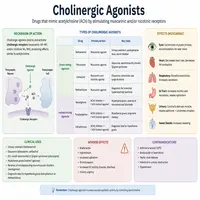
These drugs bind to two main receptor types. The first type is muscarinic receptors. The second type is nicotinic receptors. Therefore, their effects can vary depending on which receptor they target.
Doctors use these medications for several conditions. For instance, they help treat urinary retention and glaucoma. Similarly, they support certain diagnostic tests in medicine. As a result, this drug class holds real clinical importance.
Furthermore, understanding receptor selectivity helps predict a drug’s effect. Some drugs act broadly, while others target one receptor type. This distinction shapes how doctors choose treatment options.
How Do Cholinergic Agonists Work?
The mechanism behind these drugs is fairly straightforward. First, the drug enters the bloodstream. Then, it travels to target tissues containing acetylcholine receptors. After that, it binds to the receptor site directly.
This binding triggers a response similar to natural acetylcholine. For example, it may cause smooth muscle contraction. It may also increase glandular secretions like sweat or saliva. Meanwhile, heart rate can slow down due to receptor activation.
Below is a simple flowchart showing this process:
Drug Administration
        |
        v
Absorption into Bloodstream
        |
        v
Binding to Cholinergic Receptors
        |
        v
   -----------------
   |               |
Muscarinic      Nicotinic
Receptor        Receptor
Activation      Activation
   |               |
   v               v
Smooth Muscle   Skeletal Muscle
Gland Activity  & Ganglion
                Stimulation
This flow shows why effects differ across body systems. Notably, muscarinic activation affects glands and smooth muscle. Nicotinic activation, however, affects skeletal muscle and autonomic ganglia.
Types of Cholinergic Agonists
There are two broad categories of these medications. Each category works through a different pathway. The table below summarizes both groups clearly.
| Category | Mechanism | Common Examples | Main Effect |
|---|---|---|---|
| Direct-Acting Agonists | Bind directly to receptors | Bethanechol, Pilocarpine, Carbachol | Mimic acetylcholine action |
| Indirect-Acting Agonists | Block acetylcholinesterase enzyme | Neostigmine, Physostigmine, Donepezil | Increase natural acetylcholine levels |
Direct-acting drugs act like acetylcholine itself. They attach straight to the receptor. On the other hand, indirect-acting drugs work differently. They stop the enzyme that breaks down acetylcholine. Consequently, natural acetylcholine builds up and stays active longer.
Both categories ultimately increase cholinergic activity. However, their onset, duration, and safety profiles differ. Therefore, doctors select the type based on patient needs.
Clinical Uses in Medicine
Cholinergic agonists serve many important roles in healthcare. First, bethanechol treats urinary retention after surgery. It helps the bladder contract properly again.
Second, pilocarpine treats glaucoma effectively. It reduces pressure inside the eye. Additionally, it treats dry mouth in certain patients. This condition often occurs after radiation therapy.
Third, neostigmine reverses muscle relaxants after surgery. Anesthesiologists use it to restore normal muscle function. Similarly, it helps manage myasthenia gravis symptoms.
Fourth, donepezil supports memory function in Alzheimer’s disease. It increases acetylcholine levels in the brain. As a result, patients may experience improved cognitive function temporarily.
These varied uses show the flexibility of this drug class. Nevertheless, each application requires careful dosing and monitoring.
Side Effects and Safety Concerns
Like all medications, cholinergic agonists carry potential risks. Common side effects include excessive sweating and salivation. Patients may also experience stomach cramps or diarrhea.
Moreover, some people report blurred vision after eye-related treatments. Heart rate changes can also occur, especially slowing. Therefore, doctors monitor cardiac patients closely during treatment.
Severe reactions are less common but still possible. These may include difficulty breathing or severe bradycardia. Consequently, patients with asthma or heart block should avoid these drugs generally.
Doctors also screen for peptic ulcers before prescribing certain agents. Similarly, patients with urinary or intestinal blockage need alternative treatments. Overall, careful patient selection reduces the risk of complications significantly.
Conclusion
Cholinergic agonists play a vital role in modern pharmacology. They mimic or enhance natural acetylcholine activity in the body. Additionally, they treat conditions ranging from glaucoma to urinary retention.
Understanding their mechanism helps explain their diverse clinical uses. Direct-acting and indirect-acting drugs both raise cholinergic activity, though through different paths. However, careful monitoring remains essential due to possible side effects.
Ultimately, this drug class demonstrates how mimicking natural body chemistry can treat real medical problems. With proper use, cholinergic agonists continue to improve patient outcomes across many specialties.
Frequently Asked Questions
They activate acetylcholine receptors in the body. This action stimulates the parasympathetic nervous system and supports functions like glandular secretion and muscle contraction.
Direct agonists bind receptors directly. Indirect agonists block the enzyme that breaks down acetylcholine, allowing natural levels to rise instead.
No, they are not suitable for everyone. Patients with asthma, heart block, or intestinal blockage often need alternative treatments.
They treat glaucoma, urinary retention, myasthenia gravis, and dry mouth. Some also support memory in Alzheimer’s disease patients.
Common effects include sweating, salivation, stomach cramps, and slowed heart rate. Severe reactions can include breathing difficulty in sensitive patients.