The Mastication Apparatus: How Your Jaw Really Chews
Chewing feels automatic. You barely think about it. Yet behind every bite sits a finely tuned system of bones, muscles, teeth, and nerves working together. This system is called the mastication apparatus, and it does far more than just grind food.
In this article, we will break down what makes up this chewing system, how it functions, and why it matters for your overall health. We will also look at common problems that affect it, explore how it changes across a lifetime, and share practical tips to keep it working well.
What Is This Chewing System?
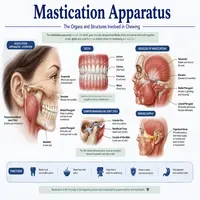
The mastication apparatus is the group of structures responsible for chewing. It includes the jaw bones, chewing muscles, teeth, tongue, and the temporomandibular joint. Together, these parts crush, tear, and grind food into smaller pieces.
This process prepares food for swallowing and digestion. Without a properly working chewing system, your stomach would struggle to break down large food particles. As a result, nutrient absorption would suffer, and digestion would take much longer.
Interestingly, chewing also stimulates saliva production. Saliva contains enzymes that begin breaking down carbohydrates before food even reaches the stomach. So, this chewing structure plays a role in both mechanical and chemical digestion, not just physical grinding.
Beyond digestion, this system also shapes speech, facial structure, and even posture. Strong, balanced chewing muscles support a stable jaw position. Meanwhile, weak or uneven muscles can gradually shift facial symmetry over time.
Key Components of the Chewing System
Several structures combine to make chewing possible. Each one plays a specific role, and none can function well alone.
| Component | Main Role |
|---|---|
| Maxilla (upper jaw) | Anchors upper teeth in place |
| Mandible (lower jaw) | Moves up, down, and sideways during chewing |
| Temporomandibular joint (TMJ) | Connects jaw to skull, allows smooth movement |
| Teeth | Cut, tear, and crush food |
| Tongue | Positions food between teeth and pushes it toward the throat |
| Chewing muscles | Generate the force needed to break down food |
Each part depends on the others. For instance, weak chewing muscles can strain the jaw joint over time. Similarly, missing teeth can shift how the tongue positions food, leading to uneven wear on remaining teeth.
Additionally, nerve signals coordinate every movement. Sensory receptors in the gums and jaw joint detect texture and pressure. Consequently, your brain adjusts bite force within milliseconds, long before you consciously notice a difference.
The Muscles Behind Every Bite
Chewing muscles do the heavy lifting. Four main muscle pairs control jaw movement, and each contributes something different.
| Muscle | Function |
|---|---|
| Masseter | Closes the jaw with strong force |
| Temporalis | Lifts and retracts the jaw |
| Medial pterygoid | Supports side-to-side grinding motion |
| Lateral pterygoid | Opens the jaw and shifts it forward |
These muscles work in coordinated bursts. Meanwhile, the brain sends constant signals to adjust pressure based on food texture. Biting into an apple requires far more force than chewing soft bread, and your muscles adjust instantly.
Over time, regular use keeps these muscles strong. However, a diet of only soft foods can weaken them gradually. Therefore, dentists often recommend including some naturally firm foods, like raw vegetables, in daily meals.
How Chewing Actually Works
Chewing follows a repeatable cycle. Understanding this cycle helps explain why every part of this chewing system needs to function correctly.
Chewing Cycle Flowchart
Food enters mouth
        ↓
Teeth cut and tear food into smaller pieces
        ↓
Tongue repositions food between molars
        ↓
Jaw muscles contract, grinding food further
        ↓
Saliva mixes in, softening the food mass
        ↓
Tongue rolls food into a bolus
        ↓
Bolus is pushed toward the throat for swallowing
This cycle repeats several times before you swallow. Naturally, harder foods require more cycles than softer ones. Consequently, chewing efficiency depends heavily on tooth alignment and muscle strength.
Notably, researchers estimate that people chew each bite between 15 and 40 times, depending on food texture. Softer meals need fewer cycles, while fibrous or tough foods demand many more.
How the Chewing System Changes With Age
This system does not stay static throughout life. Instead, it evolves through several distinct stages.
In infancy, gums and emerging teeth handle soft, mashed foods. During childhood, baby teeth guide early chewing patterns until permanent teeth arrive. Adolescence brings full adult teeth, stronger muscles, and improved coordination.
In adulthood, chewing efficiency typically peaks. However, aging can bring tooth wear, muscle loss, or joint stiffness. As a result, older adults often shift toward softer diets, sometimes without realizing why.
Fortunately, regular dental care and jaw exercises can slow this decline significantly. Staying proactive helps preserve chewing strength well into later years.
Why This System Matters More Than You Think
Chewing structures also shape the human face. Jaw size, muscle strength, and bite force all influence facial proportions during growth. Consequently, children who chew mostly soft, processed foods may develop narrower jaws and crowded teeth.
Anthropologists have noted this pattern across generations. Modern diets, rich in soft and pre-processed foods, require far less chewing effort than traditional diets once did. As a result, many researchers believe jaw size has gradually decreased over recent centuries.
This shift also affects orthodontic health. Smaller jaws often leave insufficient room for all teeth, leading to crowding or impacted wisdom teeth. Encouraging children to chew firmer, age-appropriate foods early may support healthier jaw development later in life.
Beyond appearance, jaw strength also supports airway health. A well-developed jaw creates more space for the tongue and airway, which can reduce breathing difficulties during sleep. Therefore, healthy chewing habits in childhood may carry benefits far beyond the dinner table.
The Link Between Chewing and Nutrition
Food texture influences far more than comfort. It also shapes how well your body absorbs nutrients from a meal.
Thorough chewing increases the surface area of food particles. Subsequently, digestive enzymes can act more efficiently once food reaches the stomach and intestines. In short, better chewing often means better nutrient extraction.
Interestingly, some studies link faster, less thorough chewing with higher calorie intake. When you chew quickly, you may eat more before feeling full. On the other hand, slower chewing allows fullness signals to reach the brain in time, which can support healthier portion control.
Furthermore, people with weakened chewing ability often avoid nutrient-dense foods like raw vegetables, nuts, and lean meats. Instead, they may lean toward softer, processed options. Over time, this shift can affect fiber intake, protein levels, and overall diet quality.
Dentists and nutritionists increasingly view chewing ability as a bridge between oral health and whole-body wellness. Addressing dental problems early, therefore, supports far more than a comfortable bite.
Common Problems Affecting the Chewing System
Various conditions can disrupt normal chewing function. Recognizing early symptoms often prevents bigger issues later.
Jaw pain and clicking sounds often signal TMJ disorders. Tooth loss changes how force gets distributed during chewing. Additionally, teeth grinding, known as bruxism, wears down enamel and strains jaw muscles.
Poor bite alignment, called malocclusion, can also cause uneven wear. Over time, this leads to headaches, jaw fatigue, or even neck pain. Therefore, addressing small issues early often prevents long-term damage.
Furthermore, chronic stress frequently worsens these problems. Clenching during sleep places extra pressure on muscles and joints. Consequently, many dentists now ask about stress levels during routine checkups.
Tips to Keep Your Chewing System Healthy
Simple habits protect this vital system over time. Here are practical steps worth following:
- Chew slowly and on both sides of your mouth.
- Avoid biting extremely hard objects like ice or pens.
- Replace missing teeth promptly to maintain even bite force.
- Manage stress, since it often triggers teeth grinding.
- Visit a dentist regularly for jaw and bite checkups.
- Include some firm, fibrous foods to keep muscles active.
These habits sound small. However, they add up significantly over years of daily chewing. Building them into a routine now pays off later, especially as natural wear increases with age.
Conclusion
The mastication apparatus works quietly behind every meal you eat. It combines bones, muscles, teeth, and nerves into one coordinated system. When it functions well, digestion improves, speech stays clear, and daily comfort increases.
However, small problems like clenching, misalignment, or tooth loss can disrupt this balance. Paying attention to jaw health today protects comfort and function for years ahead. Simple habits, regular checkups, and early treatment make a lasting difference, no matter your age.
Frequently Asked Questions
It refers to the jaw bones, muscles, teeth, and joint that work together to chew food.
Chewing breaks food into smaller pieces, making it easier for your stomach to process and absorb nutrients.
Common causes include TMJ disorders, teeth grinding, misaligned bites, or muscle strain.
Yes, weak muscles can lead to uneven bite force, jaw fatigue, and digestive strain over time.
Regular dental visits, stress management, and avoiding hard foods all help maintain healthy function.