Inflammation and Repair: How the Body Heals Itself
Every cut, burn, or infection triggers a response inside your body. That response is inflammation. Right after it, your body starts a second job: repair. Together, inflammation and repair form one of the most important survival mechanisms in human biology.
This guide breaks down both processes in plain language. You will learn what happens at the cellular level, why chronic inflammation can lead to disease, and how tissue actually rebuilds itself after damage. You will also discover the factors that speed up or slow down healing, along with answers to common questions patients and students often ask.
Let’s start with the basics.
What Is Inflammation?
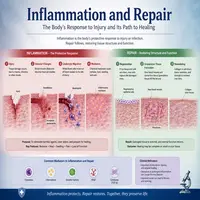
Inflammation is the body’s natural defense reaction to injury, infection, or irritation. It brings blood, immune cells, and nutrients to the damaged area. Doctors often describe it using five classic signs: redness, heat, swelling, pain, and loss of function.
So, why does this reaction happen at all? Essentially, your immune system detects a threat and reacts fast. Blood vessels widen. Fluid leaks into surrounding tissues. White blood cells rush toward the site of damage. This entire sequence protects your body from further harm and clears away dead cells or invading microbes.
Meanwhile, chemical messengers called cytokines coordinate the whole event. They signal nearby cells to join the fight, recruit more immune cells from the bloodstream, and eventually tell the body when the danger has passed.
However, this reaction is not always short-lived. Sometimes it lingers for weeks or months. When that happens, it becomes chronic and can contribute to long-term diseases such as arthritis, heart disease, or diabetes.
Acute vs Chronic Inflammation
The table below compares the two main types.
| Feature | Acute Response | Chronic Response |
|---|---|---|
| Onset | Fast, within minutes | Slow, over weeks or months |
| Duration | Days | Months to years |
| Main cells involved | Neutrophils | Macrophages, lymphocytes |
| Outcome | Usually full recovery | Tissue damage, scarring |
| Common triggers | Cuts, burns, infections | Autoimmune disease, obesity, smoking |
Clearly, the acute form is protective, while the chronic form often becomes harmful. Understanding this difference explains why doctors treat sudden injuries differently from long-standing conditions, and why lifestyle habits matter so much for long-term health.
The Process of Repair
Once the initial defense calms down, tissue repair begins. This second phase replaces damaged cells and restores structure. Two main paths exist here: regeneration and fibrosis.
Regeneration happens when the body replaces damaged cells with the same type of healthy cells. Skin, liver, and gut lining are good examples of tissues that regenerate well. Fibrosis, on the other hand, occurs when the body forms scar tissue instead. This usually happens when damage is severe, or when the tissue simply cannot regenerate on its own, such as heart muscle after a heart attack.
Interestingly, both regeneration and fibrosis depend on similar building blocks: new blood vessels, collagen fibers, and specialized cells called fibroblasts. These fibroblasts migrate into the wound, lay down new collagen, and slowly reshape the tissue over time.
Stages of Tissue Repair
Repair generally follows four connected stages:
- Hemostasis – blood clotting stops further bleeding.
- Inflammatory phase – immune cells clear debris and pathogens.
- Proliferation – new tissue and blood vessels form.
- Remodeling – the new tissue matures and strengthens over months.
Below is a simple flowchart showing how injury leads to full recovery.
Injury or Infection
        │
        ▼
   Hemostasis (clot forms)
        │
        ▼
   Inflammatory Phase (immune cells act)
        │
        ▼
   Proliferation (new tissue grows)
        │
        ▼
   Remodeling (tissue matures)
        │
        ▼
   Healed or Scarred Tissue
This flow explains why healing takes time. Skipping any stage, or disrupting it through infection or poor nutrition, can delay recovery significantly. Each stage builds on the one before it, so problems early on tend to echo through the rest of the timeline.
Factors That Affect Healing
Many factors influence how fast and how well a wound heals. Age matters, since younger patients typically heal faster than older adults because their cells divide and rebuild more efficiently. Nutrition also plays a huge role; protein, vitamin C, and zinc all support collagen formation and immune strength.
Additionally, blood supply affects outcomes directly. Tissues with poor circulation, such as the lower legs in diabetic patients, often heal slowly because oxygen and nutrients cannot reach the site efficiently. Infection is another major obstacle, since bacteria compete with the body’s own repair cells for resources and can trigger prolonged swelling.
Meanwhile, certain medications can interfere with healing too. Steroids, for example, calm down swelling but can also slow tissue regeneration. Therefore, doctors must balance symptom control with the body’s natural repair timeline, especially in patients recovering from surgery.
Quick Reference Table
| Factor | Effect on Healing |
|---|---|
| Good blood supply | Speeds up recovery |
| Poor nutrition | Slows down recovery |
| Infection | Delays healing, increases scarring |
| Diabetes | Impairs circulation and tissue repair |
| Smoking | Reduces oxygen delivery to tissues |
| Steroid use | May suppress the healing response |
Why This Matters in Clinical Practice
Doctors rely on this science every single day. Surgeons consider healing time before scheduling follow-up procedures. Physical therapists design rehabilitation plans around tissue remodeling timelines. Even dermatologists use this knowledge when treating chronic wounds or burns.
Furthermore, researchers continue studying these processes to develop better treatments for conditions like fibrosis, chronic wounds, and autoimmune disorders. New therapies now target specific repair pathways instead of simply calming down swelling, offering more precise healing outcomes with fewer side effects.
Patients benefit too. Knowing how the body naturally heals helps people make smarter lifestyle choices, such as eating well, avoiding smoking, and managing blood sugar levels, all of which support faster recovery. A well-informed patient often heals better simply because they avoid habits that interfere with the process.
Nurses and wound-care specialists also apply this knowledge daily. They choose dressings based on the wound’s current stage, keep the area moist enough for cell migration, and watch closely for early signs of infection.
Signs a Wound Is Healing Properly
Knowing what normal healing looks like helps you spot trouble early. A healthy wound usually shows mild redness and warmth for the first few days, followed by gradual fading. Swelling should decrease steadily rather than increase. Pain typically peaks early, then eases day by day.
New pink tissue, called granulation tissue, often appears within a week in surface wounds. This tissue looks slightly bumpy and moist, which is completely normal. Eventually, a thin layer of skin closes over the area, and the surrounding redness disappears entirely.
On the other hand, certain signs suggest something is wrong. Increasing pain after the first few days, spreading redness, warmth that will not fade, or pus formation all point toward infection. Fever alongside a wound is another red flag. In any of these cases, prompt medical attention prevents small problems from becoming serious complications.
Home care also matters here. Keeping a wound clean, changing dressings as instructed, and avoiding unnecessary pressure on the area all support smoother recovery. Simple habits often make a bigger difference than people expect.
Conclusion
Inflammation and repair are two sides of the same healing coin. The first stage clears out damage and prepares the tissue for rebuilding. The second stage then restores structure, either through regeneration or scar formation. Both stages depend on timing, nutrition, blood supply, and overall health.
Understanding these mechanisms is not just useful for medical students. It also helps everyday people care for wounds, manage chronic conditions, and make smarter health decisions. The next time you get a cut or bruise, remember: your body is already running a well-organized repair project behind the scenes, coordinating cells and chemicals toward one shared goal, complete healing.
Frequently Asked Questions
The first stage is the body’s immediate response to injury or infection, where immune cells clear away damage. The second stage follows, rebuilding tissue through regeneration or scar formation.
Yes, in many cases. Lifestyle changes such as a better diet, regular exercise, and quitting smoking can reduce it significantly. Medical treatment may also be necessary depending on the underlying cause.
Scarring depends on the severity of damage and the tissue type involved. Tissues that regenerate easily, like skin, often heal without heavy scarring. Tissues that cannot regenerate well, like heart muscle, usually form scar tissue instead
It varies widely. Minor wounds may heal within one to two weeks, while deeper injuries or tissue remodeling can take several months to fully complete.
Absolutely. Protein, vitamin C, and zinc all support collagen production and immune function, both of which are essential throughout inflammation and repair.