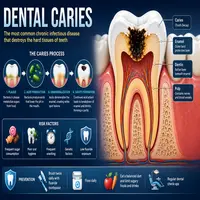
Dental Caries: Causes, Stages, and Prevention Tips
A small white spot on a tooth rarely worries anyone. Yet that tiny spot often marks the beginning of a much bigger problem. Dentists call this problem dental caries, and it remains one of the most common diseases worldwide.
In this article, we explain how this condition develops, what causes it, and how people can prevent it. We also include tables, a flowchart, and five frequently asked questions.
What Is Dental Caries?
Dental caries is the destruction of tooth structure caused by acid-producing bacteria. These bacteria feed on sugars left behind after eating. As they digest sugar, they release acid that slowly dissolves the enamel.
Over time, this acid attack creates a hole, commonly known as a cavity. Left untreated, the damage spreads deeper into the tooth. Eventually, it can reach the nerve and cause severe pain.
What Causes This Condition?
Several factors work together to cause tooth decay. Bacteria alone rarely cause damage without the right conditions. Sugar, time, and poor oral hygiene all play a role.
The table below outlines the main contributing factors.
| Factor | Role in Tooth Decay |
|---|---|
| Bacteria (Streptococcus mutans) | Produces acid from sugar breakdown |
| Dietary sugars | Fuel bacterial acid production |
| Saliva flow | Neutralizes acid and remineralizes enamel |
| Plaque buildup | Traps acid against the tooth surface |
| Fluoride exposure | Strengthens enamel against acid attack |
| Tooth structure | Deep grooves trap food and bacteria easily |
Each factor influences how quickly decay develops. Consequently, a person with low saliva flow and high sugar intake faces greater risk than someone with strong saliva production and a balanced diet.
Stages of Dental Caries
Tooth decay does not appear overnight. Instead, it develops gradually through distinct stages. The flowchart below shows this progression.
Healthy Enamel
      |
      v
Acid Attack Begins (Bacteria + Sugar)
      |
      v
White Spot Lesion Forms (Early Demineralization)
      |
      v
Enamel Breakdown (Visible Cavity Begins)
      |
      v
Dentin Involvement (Increased Sensitivity)
      |
      v
Pulp Infection (Pain and Swelling)
      |
      v
Abscess or Tooth Loss (If Untreated)
Stage 1: Initial Demineralization
The earliest sign appears as a white spot on the enamel surface. At this stage, the damage remains reversible. Fluoride treatment and better hygiene can often restore the enamel.
Stage 2: Enamel Decay
If acid attacks continue, the enamel starts to break down physically. A small cavity forms, though it may still cause no pain. Regular dental checkups usually catch decay at this point.
Stage 3: Dentin Decay
Once decay reaches the dentin layer, sensitivity increases. Hot, cold, or sweet foods may trigger discomfort. Additionally, decay spreads faster through dentin than through enamel because dentin is softer.
Stage 4: Pulp Involvement
Eventually, decay reaches the pulp, where nerves and blood vessels sit. This stage often brings sharp, persistent pain. Root canal treatment frequently becomes necessary at this point.
Stage 5: Abscess Formation
Without treatment, bacteria can infect the pulp fully and spread to surrounding tissue. This leads to a painful abscess. In severe cases, the tooth cannot be saved and must be extracted.
Who Is Most at Risk?
Certain groups face higher risk than others. Children often develop cavities due to frequent snacking and inconsistent brushing habits. Meanwhile, older adults face risk from dry mouth caused by medications or reduced saliva production.
People with high sugar diets also face elevated risk regardless of age. Furthermore, individuals who skip regular dental visits often miss early warning signs. Early detection remains one of the best defenses against serious damage.
Prevention Strategies That Work
Prevention relies on consistent daily habits rather than occasional effort. The following approaches significantly reduce risk.
| Prevention Method | How It Helps |
|---|---|
| Brushing twice daily | Removes plaque and food debris |
| Flossing daily | Cleans between teeth where brushes can’t reach |
| Fluoride toothpaste | Strengthens enamel and reverses early lesions |
| Reduced sugar intake | Limits fuel for acid-producing bacteria |
| Regular dental visits | Catches decay before it worsens |
| Dental sealants | Protect grooves on molars from trapped food |
Small, consistent choices add up over time. Therefore, brushing correctly matters just as much as brushing regularly.
Treatment Options
Treatment depends heavily on how far the decay has progressed. Early lesions often respond to fluoride varnish or improved hygiene alone. Moderate decay usually requires a filling to restore the tooth’s shape and function.
Advanced decay, however, may need a root canal or crown. In the most severe cases, extraction becomes the only remaining option. Because of this range, early intervention almost always leads to simpler and cheaper treatment.
Why Early Detection Matters
Many people ignore early symptoms because pain has not yet appeared. Unfortunately, waiting for pain often means the decay has already reached deeper layers. Routine dental exams catch problems long before symptoms develop.
Dentists use visual exams, X-rays, and specialized tools to detect hidden decay. As a result, regular checkups remain essential even for people who feel no discomfort. Prevention truly costs less than treatment, both financially and physically.
Conclusion
Dental caries develops slowly, but its effects can become serious without proper care. Bacteria, sugar, and time work together to break down tooth structure step by step. Fortunately, this process is highly preventable through daily hygiene, balanced diet choices, and regular dental visits.
Understanding how this condition progresses helps people take action before pain forces the issue. Simple habits, such as brushing, flossing, and reducing sugar intake, protect teeth for years to come. A little consistency today prevents a much bigger problem tomorrow.
Frequently Asked Questions
Acid-producing bacteria cause the condition by breaking down sugars in the mouth. This acid slowly dissolves tooth enamel, leading to decay over time.
Yes, early white spot lesions can often be reversed. Fluoride treatment and improved oral hygiene help restore minerals to weakened enamel before a cavity forms.
Most dentists recommend checkups every six months. However, people at higher risk may need more frequent visits for closer monitoring.
Sugar itself does not damage teeth directly. Instead, bacteria use sugar to produce acid, and that acid causes the actual damage to enamel.
Untreated decay spreads deeper into the tooth, eventually reaching the nerve. This can cause severe pain, infection, and, in serious cases, tooth loss.