Anxiolytics and Hypnotic Drugs: A Complete Pharmacology Guide
Sleep problems and anxiety disorders affect millions of people worldwide. Doctors often prescribe specific medications to manage these conditions. Anxiolytics and hypnotic drugs form one of the most widely used drug classes in modern medicine. This guide explains their classification, mechanisms, uses, and safety profile in simple terms.
What Do These Drug Classes Actually Do?
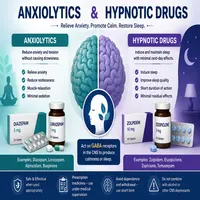
Anxiolytics reduce anxiety symptoms without causing excessive sedation. Hypnotics, on the other hand, induce and maintain sleep. Many drugs actually serve both purposes, since the difference often comes down to dosage rather than mechanism. For instance, a benzodiazepine given in a low dose may calm anxiety, while a higher dose of the same drug induces sleep.
Consequently, pharmacologists frequently group these medications together. Additionally, most anxiolytic and hypnotic agents act on the central nervous system. They typically enhance inhibitory neurotransmission, particularly through the GABA system. As a result, brain activity slows down, and patients feel calmer or drowsier.
This overlap explains why prescribing decisions depend heavily on patient history. A young, otherwise healthy patient with occasional insomnia needs a very different approach than an elderly patient with chronic generalized anxiety. Clinicians therefore weigh onset speed, duration of action, and metabolic pathway before choosing an agent. Genetic factors, liver function, and concurrent medications can all alter how a person responds to treatment.
Classification of These Medications
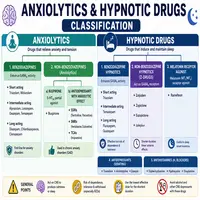
Several drug categories fall under this broad heading. Below is a simple classification table for quick reference.
| Category | Examples | Primary Use |
|---|---|---|
| Benzodiazepines | Diazepam, Alprazolam, Lorazepam | Anxiety, insomnia, seizures |
| Non-benzodiazepine hypnotics (Z-drugs) | Zolpidem, Zaleplon, Eszopiclone | Short-term insomnia |
| Barbiturates | Phenobarbital, Thiopental | Seizures, anesthesia (rarely for anxiety now) |
| Azapirones | Buspirone | Generalized anxiety disorder |
| Antihistamines (sedating) | Diphenhydramine, Hydroxyzine | Mild anxiety, sleep aid |
| Melatonin receptor agonists | Ramelteon | Sleep onset insomnia |
Furthermore, newer agents continue to enter clinical practice. Meanwhile, older barbiturates have largely fallen out of favor due to their narrow safety margin.
Mechanism of Action
Understanding how these drugs work helps clarify their clinical value. Most agents in this class target the GABA-A receptor complex. This receptor controls chloride ion flow into neurons. Therefore, when a drug binds to this receptor, it increases chloride influx. Consequently, neurons become less excitable, and overall brain activity decreases.
Below is a simplified flowchart showing this pathway.
Drug binds to GABA-A receptor
        ↓
Chloride channel opens wider
        ↓
More chloride ions enter the neuron
        ↓
Neuron becomes hyperpolarized
        ↓
Neuronal excitability decreases
        ↓
Anxiety reduces / Sleep is induced
Buspirone works differently. It acts on serotonin 5-HT1A receptors instead of GABA receptors. Therefore, it causes less sedation and carries a lower dependence risk. Similarly, melatonin receptor agonists work through circadian rhythm regulation rather than direct CNS depression.
Common Clinical Uses
Physicians prescribe these medications for several conditions. Generalized anxiety disorder remains a top indication. Insomnia, both acute and chronic, represents another major use. Additionally, doctors use certain agents for panic disorder, muscle spasm, seizure control, and pre-operative sedation.
However, treatment duration matters greatly. Short-term use generally proves safer and more effective. Long-term use, in contrast, raises concerns about tolerance and dependence. Therefore, most guidelines recommend the lowest effective dose for the shortest necessary period.
Hospitals also rely on anxiolytics and hypnotic drugs before surgical procedures. A calm, well-rested patient tends to recover faster and reports less post-operative distress. Emergency departments similarly use fast-acting agents to manage acute panic episodes or severe agitation. In each setting, dosing decisions depend on the patient’s age, weight, kidney function, and any existing respiratory conditions.
Outside hospitals, primary care physicians prescribe these drugs for everyday stress-related insomnia and mild-to-moderate anxiety. Psychiatrists, meanwhile, often reserve stronger agents for treatment-resistant cases or for bridging therapy while an antidepressant takes effect. This staged approach limits unnecessary long-term exposure.
Side Effects and Safety Concerns
Every medication carries risks alongside benefits. Common side effects include drowsiness, dizziness, and impaired coordination. Some patients also experience memory problems or confusion, especially older adults. Moreover, combining these drugs with alcohol significantly increases sedation and respiratory depression risk.
Withdrawal symptoms can appear after abrupt discontinuation. These may include rebound anxiety, tremors, and, in severe cases, seizures. Consequently, doctors usually taper doses gradually rather than stopping treatment suddenly.
The table below compares safety profiles across major categories.
| Drug Class | Dependence Risk | Sedation Level | Withdrawal Risk |
|---|---|---|---|
| Benzodiazepines | High | Moderate-High | High |
| Z-drugs | Moderate | Moderate | Moderate |
| Barbiturates | Very High | High | Very High |
| Buspirone | Low | Low | Low |
| Melatonin agonists | Very Low | Low | Very Low |
Anxiolytics vs Hypnotics: Key Differences
Although these terms overlap, distinct differences exist. Anxiolytics primarily target daytime anxiety symptoms. Hypnotics primarily target nighttime sleep initiation and maintenance. Nevertheless, many agents in both categories share the same chemical backbone, differing mainly in half-life and dosing schedule.
Short-acting agents suit sleep induction better, since they clear quickly and reduce next-day grogginess. Long-acting agents suit anxiety management better, since they provide steadier symptom control throughout the day. Patients switching between formulations should discuss timing carefully with their prescriber, since abrupt changes in half-life can alter both efficacy and side-effect profile.
Non-Drug Alternatives Worth Considering
Medication is not the only path to relief. Cognitive behavioral therapy for insomnia (CBT-I) shows strong evidence for treating chronic sleep problems. Similarly, relaxation training, mindfulness practice, and regular exercise help reduce anxiety symptoms naturally. Sleep hygiene measures, such as consistent bedtimes and reduced screen exposure, also improve outcomes significantly.
Many clinicians now recommend combining these approaches with medication rather than relying on drugs alone. This combined strategy often allows lower doses and shorter treatment courses, which in turn lowers dependence risk.
Guidelines for Safe Use
Patients should follow several precautions when using these medications. First, never combine them with alcohol or other sedatives without medical advice. Second, avoid driving or operating machinery until the drug’s effects become predictable. Third, report any unusual mood changes to a healthcare provider immediately.
Older adults require special caution. Their bodies metabolize these drugs more slowly, which raises fall and fracture risk. Therefore, doctors often start with lower doses in elderly patients. Pregnant women, too, should avoid most agents in this category unless absolutely necessary, since some cross the placenta and affect fetal development.
Regular follow-up appointments matter as well. Prescribers typically review symptom control, side effects, and dosage every few weeks during early treatment. Afterward, review intervals often extend to every few months once a stable dose is reached. Meanwhile, patients should keep a simple symptom diary, noting sleep quality, anxiety levels, and any adverse effects. This record helps doctors adjust treatment more precisely.
Drug interactions deserve equal attention. Opioids, muscle relaxants, and certain antidepressants can amplify sedative effects when combined with these medications. Consequently, a full medication review before starting treatment reduces the chance of dangerous interactions. Pharmacists play a valuable role here, since they can flag interactions that a busy prescriber might miss.
Conclusion
Anxiolytics and hypnotic drugs remain essential tools in managing anxiety and sleep disorders. They work mainly by enhancing GABA-mediated inhibition, though some newer agents use alternative pathways. While effective, these medications carry real risks, including dependence and withdrawal. Consequently, short-term, carefully monitored use offers the best balance between benefit and risk. Patients and prescribers alike should weigh non-drug therapies, such as cognitive behavioral therapy, alongside medication whenever possible. Ultimately, informed, cautious use ensures these drugs remain a helpful, rather than harmful, part of patient care.
Patient education also plays a critical role in successful treatment. When patients understand why gradual tapering matters, they tend to follow discontinuation plans more closely. Similarly, clear explanations about expected drowsiness or dizziness reduce anxiety about side effects and improve adherence. Open communication between patient and prescriber, therefore, remains just as important as the pharmacology itself.
Frequently Asked Questions
Anxiolytics primarily reduce anxiety during the day, while hypnotics primarily induce sleep at night. Many drugs, however, serve both purposes depending on dosage.
Generally, no. Long-term use raises the risk of tolerance, dependence, and withdrawal symptoms. Most guidelines recommend short-term use only.
No. Sudden discontinuation can trigger rebound anxiety, tremors, or seizures. Always taper the dose under medical supervision.
Buspirone carries a notably lower dependence risk compared to benzodiazepines, since it works through serotonin receptors rather than GABA receptors.
No. Alcohol significantly increases sedation and can cause dangerous respiratory depression when combined with these medications.