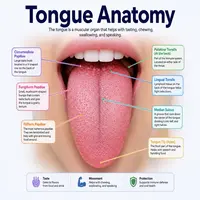
Tongue Anatomy Explained: Structure, Function, and Care
Most people rarely think about the tongue sitting inside their mouth. Yet this structure does more work than almost any other part of the body. It shapes speech, helps you chew, and lets you taste your favorite meal. It also plays a quiet role in swallowing and even breathing.
This muscular organ works constantly, even during sleep. It shifts position to keep the airway clear and helps clear food particles left in the mouth. Most people never notice this activity because the brain manages it automatically, freeing conscious attention for other tasks.
This organ is not just muscle. It contains nerves, blood vessels, and thousands of tiny sensory receptors. Together, these parts create a complex system that works every single day without much notice. Understanding this anatomy helps explain why small changes in this area can signal bigger health issues.
In this guide, we break down the structure, function, and care of this fascinating body part. We use simple language, real examples, and easy-to-follow tables. By the end, you will understand exactly how this organ works and why it deserves more attention.
What Is This Organ and Why Does It Matter?
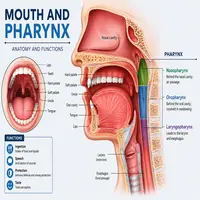
This structure is a muscular organ located in the mouth. It sits on the floor of the oral cavity and connects to the jaw and throat area. Unlike most muscles, it has no bones to support it. Instead, it relies on eight separate muscles working together.
Because of this design, the organ can move in almost any direction. It can stretch, curl, flatten, and twist. This flexibility allows humans to form thousands of different speech sounds. Additionally, it helps position food during chewing and swallowing.
Beyond movement, this body part carries out sensory duties too. Taste buds cover its surface, allowing detection of sweet, salty, sour, bitter, and savory flavors. Meanwhile, nerve endings sense temperature and texture. As a result, this organ acts as both a movement tool and a sensory detector at the same time.
Doctors also use this area for health checks. A coating, color change, or unusual texture can point toward dehydration, infection, or vitamin deficiency. Therefore, this small organ offers a surprising window into overall health.
Key Parts of the Structure
The organ is divided into distinct sections, each with a specific job. Understanding these regions makes the entire system easier to picture.
| Part | Location | Main Function |
|---|---|---|
| Tip (Apex) | Front, touches teeth | Speech and taste |
| Body | Middle section | Chewing, mixing food |
| Root | Back, near throat | Swallowing, connects to throat |
| Dorsum | Top surface | Contains taste buds |
| Frenulum | Underside | Anchors structure to mouth floor |
Each section connects smoothly to the next. For example, the tip handles fine movements needed for pronouncing letters like “T” and “L.” Meanwhile, the root helps push food toward the throat. This action supports safe swallowing.
Small bumps called papillae cover the top surface. These bumps give the surface its rough texture and house most taste receptors. Interestingly, not all papillae detect taste. Some only sense touch and temperature, adding another sensory layer.
Muscles: Intrinsic vs Extrinsic
Eight muscles control this organ, and they fall into two groups. This division helps explain both fine and broad movements.
| Muscle Type | Count | Role | Example Movement |
|---|---|---|---|
| Intrinsic | 4 muscles | Change shape | Curling, flattening |
| Extrinsic | 4 muscles | Change position | Sticking out, side movement |
Intrinsic muscles start and end within the organ itself. Consequently, they control shape without changing overall position. Extrinsic muscles, on the other hand, attach to nearby bones. As a result, they move the entire structure forward, backward, or sideways.
This muscle teamwork explains why speech sounds so smooth. First, extrinsic muscles position the organ correctly. Then, intrinsic muscles fine-tune its shape for each specific sound. Without this coordination, clear speech would become nearly impossible.
Taste Buds and Sensory Function
Roughly 2,000 to 8,000 taste buds sit across the surface, though this number varies by person. Each bud contains sensory cells that detect five basic tastes: sweet, sour, salty, bitter, and umami.
Contrary to old textbook diagrams, no single area handles only one flavor. Instead, taste buds across the entire surface can detect all five tastes, though sensitivity may vary slightly by region. Additionally, smell heavily influences taste perception, which is why food often feels bland during a cold.
Sensory nerves also detect texture, temperature, and even pain. This combination allows quick reactions, such as pulling back from something too hot. Furthermore, this sensory input helps regulate how much saliva gets produced during meals.
As people age, taste bud sensitivity naturally decreases. Therefore, older adults sometimes prefer stronger flavors or more seasoning in meals.
Blood Supply and Nerve Connections
This organ needs constant blood flow to function properly. The lingual artery supplies most of this blood, branching into smaller vessels throughout the tissue. Meanwhile, veins carry blood away, completing the circulation loop.
Nerve control comes from multiple cranial nerves, each handling a different job. The flowchart below simplifies this network.
Simplified Nerve Pathway Flowchart:
Brain (Cranial Nerves)
        |
        ├── Hypoglossal Nerve (CN XII) → Controls Movement
        |
        ├── Lingual Nerve (Branch of CN V) → General Sensation (front 2/3)
        |
        ├── Chorda Tympani (Branch of CN VII) → Taste (front 2/3)
        |
        └── Glossopharyngeal Nerve (CN IX) → Taste & Sensation (back 1/3)
This division explains why nerve damage in one area may affect movement but not taste, or vice versa. For instance, an injury to the hypoglossal nerve can cause weakness without affecting flavor perception. Similarly, damage to the chorda tympani may reduce taste without limiting movement.
Interestingly, the tongue receives sensation from two different nerve systems working side by side. The front two-thirds and back one-third rely on separate pathways, which is why doctors test each region independently during a neurological exam. This split design also explains certain rare conditions where taste loss occurs on only one side of the mouth.
Common Problems Affecting This Area
Several conditions can affect this part of the mouth. Recognizing early signs helps prevent bigger complications.
- Geographic pattern: Irregular, map-like patches appear on the surface. Usually harmless.
- Glossitis: Swelling and color change, often linked to vitamin deficiency or infection.
- Thrush: White patches caused by fungal overgrowth, common after antibiotic use.
- Burning sensation: Persistent discomfort without a clear cause, sometimes linked to hormonal changes.
- Ankyloglossia: Restricted movement due to a short frenulum, often diagnosed in infants.
Consequently, any unusual color, texture, or persistent pain deserves medical attention. Early diagnosis often leads to simple, effective treatment.
Stress and allergies can also trigger temporary swelling or discomfort in this region. Additionally, certain medications list dryness or altered taste as side effects. Therefore, reviewing new symptoms alongside recent lifestyle or medication changes often reveals a clear cause.
Tips for Keeping This Area Healthy
Simple daily habits protect long-term health in this region. Below are practical steps anyone can follow.
- Brush gently with a soft-bristled brush or scraper daily.
- Stay hydrated to prevent dryness and bacterial buildup.
- Limit sugary and acidic foods that encourage bacterial growth.
- Avoid tobacco products, which increase infection and disease risk.
- Schedule regular dental checkups for early problem detection.
Moreover, a balanced diet rich in vitamins B12 and iron supports healthy tissue repair. Meanwhile, reducing alcohol intake helps maintain natural moisture levels.
Sleep quality also plays a surprising role. Poor sleep and mouth breathing can dry out the surface overnight, leading to a coated appearance each morning. Consequently, treating conditions like snoring or nasal congestion may indirectly improve comfort in this area. Small lifestyle adjustments, over time, add up to noticeably better oral health.
Conclusion
This small but powerful organ does far more than most people realize. It shapes how we speak, taste, chew, and swallow every single day. Its complex network of muscles, nerves, and blood vessels works together seamlessly, often without any conscious effort.
Paying attention to this area matters. Unusual colors, persistent pain, or sudden texture changes can signal underlying health issues. Simple daily care, including proper hydration and gentle cleaning, goes a long way toward long-term wellness.
Ultimately, understanding this anatomy helps you appreciate a body part that works constantly behind the scenes. A little awareness today can prevent bigger problems tomorrow.
Frequently Asked Questions
Eight muscles control movement and shape, split evenly between intrinsic and extrinsic groups.
Color changes often indicate dehydration, infection, or nutritional deficiencies, so persistent changes should be checked by a doctor.
Yes, taste buds regenerate approximately every one to two weeks, though this process slows with age.
Possible causes include hormonal shifts, nerve issues, dry mouth, or nutritional deficiencies. A healthcare provider can identify the exact cause.
Not always. Mild cases may cause no issues, but severe restriction can affect feeding in infants or speech later in life, often requiring a simple procedure.