Mouth and Pharynx: Anatomy, Function, and Structures Explained
The mouth and pharynx form the starting point of two vital systems: digestion and respiration. Every bite of food and every breath of air passes through these structures first. Together, they handle chewing, tasting, swallowing, and speech.
Most people rarely think about this part of the body. However, understanding the mouth and pharynx helps explain how the body processes food, fights infection, and keeps airways clear. This guide breaks down the anatomy in simple terms, with tables and a flowchart to make the process easy to follow.
What Is the Mouth?
The mouth, also called the oral cavity, is the entry point for food and air. It sits between the lips and the throat. Additionally, it plays a major role in speech and facial expression.
The mouth is lined with mucous membrane. This lining stays moist thanks to saliva, which is produced by three major salivary glands. Saliva softens food and starts the digestion of starches through an enzyme called amylase.
Meanwhile, the tongue sits at the floor of the mouth. It moves food around during chewing and pushes it toward the throat when swallowing begins. The tongue also holds taste buds, which detect sweet, salty, sour, bitter, and umami flavors.
Key Structures Inside the Mouth
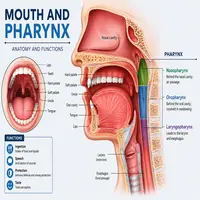
The oral cavity contains several important parts. Each one has a specific job. The table below summarizes the main structures and their functions.
| Structure | Location | Main Function |
|---|---|---|
| Lips | Front opening of the mouth | Seal the mouth, aid speech |
| Teeth | Upper and lower jaw | Chew and break down food |
| Tongue | Floor of the mouth | Taste, move food, aid speech |
| Hard palate | Front roof of the mouth | Separates mouth from nasal cavity |
| Soft palate | Back roof of the mouth | Closes off nasal passage during swallowing |
| Salivary glands | Around the mouth | Produce saliva for digestion |
| Uvula | Back of soft palate | Helps prevent food from entering the nose |
These structures work together every time a person eats, drinks, or speaks. Therefore, even small changes, like dry mouth or missing teeth, can affect daily comfort and nutrition.
What Is the Pharynx?
The pharynx is a muscular tube behind the mouth and nasal cavity. It connects to the esophagus and the larynx. In simple terms, it acts as a shared pathway for both food and air.
This tube is roughly five inches long in adults. It stretches from the base of the skull down to the top of the esophagus. The pharynx also contains lymphatic tissue, including the tonsils, which help defend the body against germs entering through the nose or mouth.
Because the pharynx serves two systems, its design is unique. A small flap called the epiglottis covers the airway during swallowing. This prevents food or liquid from entering the lungs.
Regions of the Pharynx
The pharynx is divided into three main sections. Each region connects to different parts of the head and neck.
| Region | Location | Connects To |
|---|---|---|
| Nasopharynx | Behind the nose | Nasal cavity and Eustachian tubes |
| Oropharynx | Behind the mouth | Oral cavity and tonsils |
| Laryngopharynx | Behind the larynx | Esophagus and voice box |
The nasopharynx handles airflow only. The oropharynx handles both air and food. The laryngopharynx directs food into the esophagus and air into the trachea. This layered design keeps breathing and swallowing separate, even though they share space.
How the Mouth and Pharynx Work Together
Swallowing is a coordinated process. It involves both voluntary and involuntary muscle movement. The flowchart below shows the basic steps.
Food enters the mouth
        ↓
Teeth chew, saliva softens the food
        ↓
Tongue pushes food to the back of the mouth
        ↓
Soft palate rises to block the nasal passage
        ↓
Food moves into the oropharynx
        ↓
Epiglottis covers the airway
        ↓
Pharyngeal muscles push food downward
        ↓
Food enters the esophagus
This entire sequence happens in about one second. Consequently, the coordination between the mouth and pharynx must stay precise. Any disruption, such as muscle weakness or nerve damage, can lead to choking or difficulty swallowing.
Common Conditions Affecting the Mouth and Pharynx
Several conditions can affect this region. Dry mouth, often caused by medication or dehydration, reduces saliva production and makes chewing harder. Tonsillitis, an infection of the tonsils, causes swelling and sore throat. Pharyngitis, commonly known as a sore throat, often results from viral infections.
In addition, structural issues like a deviated soft palate can affect speech and swallowing. Acid reflux may also irritate the pharynx over time, leading to a chronic cough or hoarseness.
Fortunately, most of these conditions are manageable. Staying hydrated, practicing good oral hygiene, and avoiding irritants like smoking can lower the risk significantly.
Tips to Keep the Mouth and Pharynx Healthy
Good habits protect this part of the body every day. Brushing twice daily removes food particles and bacteria. Drinking enough water keeps the mucous membranes moist. Avoiding tobacco reduces the risk of throat irritation and cancer.
Furthermore, regular dental checkups catch problems early. Warm salt water gargles can soothe minor throat irritation. Eating a balanced diet supports salivary gland function and tissue repair.
Simple daily choices make a real difference. Over time, these habits reduce infections, improve digestion, and support clear speech.
Conclusion
The mouth and pharynx do far more than most people realize. They break down food, protect the airway, support speech, and defend against infection. Each structure, from the tongue to the epiglottis, plays a specific role in keeping the body functioning smoothly.
Understanding this anatomy helps explain common symptoms like sore throats or swallowing trouble. It also highlights why simple habits, such as hydration and oral hygiene, matter so much. The mouth and pharynx work as a team, and taking care of both supports overall health for years to come.
Frequently Asked Questions
The pharynx directs food toward the esophagus and air toward the trachea. It also protects the airway during swallowing using the epiglottis.
The pharynx sits behind the nasal cavity, mouth, and larynx. It stretches from the base of the skull to the top of the esophagus.
The three parts are the nasopharynx, oropharynx, and laryngopharynx. Each section handles a different combination of air and food passage.
Saliva softens food, starts starch digestion, and keeps the mouth moist. It also helps protect teeth from bacteria.
Food or liquid can enter the airway instead of the esophagus. This often causes coughing or choking as the body tries to clear the airway.