Pharmacodynamics Explained: How Drugs Really Work in the Body
Have you ever wondered why a small pill can change how your whole body feels? The answer lies in a fascinating branch of science. It studies what drugs do once they enter the body. This field explains the link between drug dose and effect. Understanding it helps doctors, nurses, and even patients make smarter choices about medicine.
In this article, we will break down the topic in plain language. No confusing jargon. Just clear explanations, useful tables, and real examples. By the end, you will understand this subject well enough to explain it to a friend.
What Is Pharmacodynamics?
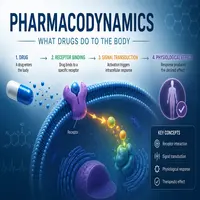
Pharmacodynamics is the study of how a drug affects the body. It looks at the biochemical and physical effects of medicines. It also examines the mechanisms behind those effects. Simply put, it answers one question: what does the drug do to you?
This differs from pharmacokinetics, which studies what the body does to a drug. Together, these two fields form the backbone of clinical pharmacology. However, our focus today stays on the former.
Drugs work by interacting with specific targets in the body. These targets are usually proteins. Common targets include receptors, enzymes, ion channels, and transporters. Once a drug binds to its target, a chain of events begins. This chain leads to a measurable effect, such as lower blood pressure or pain relief.
Why Pharmacodynamics Matters in Medicine
Doctors rely on this knowledge every single day. It helps them choose the right drug and the right dose. Without it, treatment would become guesswork. Therefore, understanding this science saves lives.
Consider a simple example. A patient takes a blood pressure medication. The drug binds to receptors in blood vessel walls. As a result, the vessels relax. Blood pressure then drops to a safer level. This entire process is a textbook example of drug action in the body.
Additionally, this field explains why some drugs cause side effects. When a drug binds to unintended targets, unwanted reactions can occur. Knowing this helps researchers design safer medications. Consequently, patients experience fewer complications.
Key Concepts You Should Know
Let’s explore some core ideas. These concepts appear in every pharmacology course, so they are worth learning well.
1. Receptors and Binding
Receptors are proteins located on or inside cells. Drugs bind to these receptors like a key fits a lock. Once bound, the receptor changes shape. This shape change triggers a biological response.
2. Agonists and Antagonists
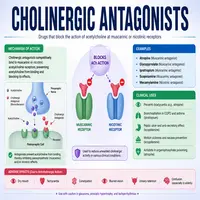
An agonist activates a receptor and produces a response. An antagonist blocks a receptor without activating it. Meanwhile, a partial agonist produces a weaker response than a full agonist. These distinctions matter greatly in drug design.
3. Dose-Response Relationship
As the dose increases, the effect usually increases too. However, this relationship is not endless. Eventually, the effect reaches a maximum point. Beyond that point, more drug will not produce more benefit.
4. Therapeutic Index
The therapeutic index measures the safety margin of a drug. It compares the dose that causes harm to the dose that produces benefit. A wide margin means a safer drug. A narrow margin means doctors must monitor the patient closely.
A Quick Look: Key Terms Table
| Term | Simple Meaning |
|---|---|
| Agonist | A substance that activates a receptor |
| Antagonist | A substance that blocks a receptor |
| Receptor | A protein target that a drug binds to |
| Efficacy | The maximum effect a drug can produce |
| Potency | The amount of drug needed to produce an effect |
| Therapeutic Index | The safety margin between effective and toxic doses |
This table offers a quick reference. Keep it handy while studying or working in clinical settings.
How Drug Action Unfolds: A Simple Flowchart
Below is a simplified path showing how a drug produces its effect in the body.
Drug Enters the Body
        |
        v
Drug Reaches Target Site
        |
        v
Drug Binds to Receptor / Enzyme / Channel
        |
        v
Biological Signal Is Triggered
        |
        v
Cellular Response Occurs
        |
        v
Observable Effect (e.g., pain relief, lower BP)
This flow shows a straightforward chain. Yet, in reality, many factors can speed up, slow down, or block this chain at any step.
Factors That Influence Drug Response
Several elements affect how strongly a drug acts. These factors explain why two people can take the same pill and feel different results.
- Age: Older adults often respond differently due to slower metabolism.
- Genetics: Genetic variations can change receptor sensitivity.
- Body weight: Larger body mass can dilute drug concentration.
- Existing health conditions: Liver or kidney disease can alter drug effects.
- Other medications: Drug interactions can boost or weaken effects.
Because of these variables, doctors often adjust doses for individual patients. Personalized medicine now uses genetic testing to predict drug response more accurately. This approach represents an exciting, modern shift in healthcare.
Common Examples in Everyday Medicine
Let’s look at a few real-world examples to make this topic more relatable.
- Painkillers (Opioids): These bind to opioid receptors in the brain and spinal cord. As a result, pain signals decrease.
- Beta-Blockers: These block beta receptors in the heart. Consequently, heart rate slows down.
- Antihistamines: These block histamine receptors. Therefore, allergy symptoms improve.
- Antibiotics: Some antibiotics target bacterial enzymes. This action stops bacteria from growing.
Each example shows a drug interacting with a specific target. This targeted action explains why medicines work so precisely.
The Role of Dose-Response Curves
A dose-response curve is a graph. It shows how effect changes as dose increases. At first, small doses produce small effects. Then, effects grow rapidly with moderate doses. Eventually, the curve flattens out near the maximum effect.
This curve helps researchers determine the best dose for a new drug. It also reveals potency differences between similar drugs. A drug that reaches its effect at a lower dose is considered more potent.
Pharmacodynamics vs Pharmacokinetics: A Simple Comparison
| Aspect | Pharmacodynamics | Pharmacokinetics |
|---|---|---|
| Main Question | What does the drug do to the body? | What does the body do to the drug? |
| Focus | Drug action, receptors, effects | Absorption, distribution, metabolism, excretion |
| Example | How a painkiller reduces pain | How fast a painkiller leaves the bloodstream |
Both fields work together. Neither one tells the full story alone. Consequently, clinicians study both to prescribe medications safely.
New Directions in This Field
Modern research keeps expanding this science. Scientists now study receptor biology at the molecular level. New imaging tools reveal how drugs bind to targets in real time. Meanwhile, artificial intelligence helps predict drug behavior before clinical trials even begin.
Furthermore, personalized medicine continues to grow. Genetic testing now guides dosing decisions for certain cancer drugs and psychiatric medications. This shift promises safer, more effective treatment for many patients in the coming years.
Conclusion
Pharmacodynamics gives us a window into how medicine truly works inside the body. It explains receptor binding, dose-response patterns, and individual differences in drug reaction. This knowledge guides safer prescribing and better patient outcomes every day.
As research advances, our understanding keeps getting sharper. Genetic testing, AI modeling, and improved imaging are shaping the future of this field. Whether you are a student, a healthcare worker, or simply a curious reader, grasping these basics helps you make sense of the medicines we rely on daily.
Frequently Asked Questions
It is the study of how a drug affects the body, including its mechanism and effects.
One studies the drug’s effect on the body. The other studies the body’s effect on the drug, such as absorption and elimination.
Genetics, age, weight, and existing health conditions all influence individual drug response.
It shows how the effect of a drug changes as the dose increases, helping determine the safest and most effective dose.
An agonist activates a receptor to produce a response. An antagonist blocks a receptor and prevents a response.