The Periodontium: A Complete Guide to Its Structure and Function
Every tooth relies on a support system to stay firmly in place. This support system carries a specific name in oral biology, and understanding it helps explain much of what dentists see in daily practice. Healthy gums, strong bone, and stable teeth all depend on this single structure working correctly.
This guide breaks down what makes up this structure, why each layer matters, and how disease affects it over time. We will also look at common conditions, diagnostic signs, and simple ways to keep this system healthy. By the end, you will have a clear picture of why this topic sits at the center of modern dentistry, from routine cleanings to complex gum surgery.
What Makes Up This Support System
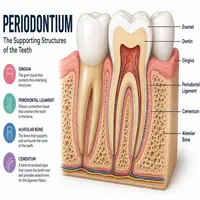
The periodontium refers to the group of tissues that surround and support each tooth. It includes four main components: the gingiva, periodontal ligament, cementum, and alveolar bone. Together, these parts anchor teeth firmly within the jaw.
Without this support system, teeth would simply fall out under normal chewing forces. So, its role goes far beyond appearance. It absorbs pressure, nourishes surrounding tissue, and protects deeper structures from bacterial invasion.
Dentists study this structure closely because most oral diseases eventually involve it. Cavities may start in enamel, but untreated infections often spread toward these deeper tissues. Consequently, understanding this system helps clinicians catch problems earlier and treat them more effectively.
The Four Main Components
Each part of this structure plays a distinct role. The table below breaks down what each component does.
| Component | Location | Main Function |
|---|---|---|
| Gingiva | Surrounds the tooth neck | Protects underlying bone and ligament |
| Periodontal Ligament | Between root and bone | Absorbs chewing forces, holds tooth in socket |
| Cementum | Covers the tooth root | Anchors ligament fibers to the root surface |
| Alveolar Bone | Jaw bone surrounding roots | Provides the socket that holds the tooth |
Gingiva forms the visible pink tissue most people associate with healthy gums. Meanwhile, the periodontal ligament works quietly beneath the surface, cushioning every bite and chew. Cementum bonds tightly to this ligament, while alveolar bone forms the actual socket, sometimes called the alveolus.
These four parts do not work in isolation. Instead, they function as one connected unit, sharing blood supply and nerve pathways. Damage to one component, therefore, often affects the others as well. A dentist examining inflamed gingiva, for instance, must also consider whether the ligament or bone beneath has already started to break down.
Why This Support System Matters
Healthy supporting tissue keeps teeth stable for a lifetime. However, disease can quietly damage these tissues long before a patient notices any pain. Early gum inflammation, for example, often shows no discomfort at all.
Additionally, this system also plays a role beyond just holding teeth steady. It senses pressure changes during chewing, sending signals that help protect against excessive force. Therefore, damage here does not just threaten tooth stability; it also disrupts normal sensory feedback during eating.
Bone loss around teeth represents one of the most serious outcomes of untreated disease. Once bone breaks down significantly, treatment becomes far more complex. So, early detection through regular dental visits remains the best defense against long-term damage.
Common Diseases Affecting This Structure
Several conditions can damage these supporting tissues over time. Understanding them helps patients recognize warning signs early.
- Gingivitis: Inflammation limited to the gum tissue, usually reversible with better hygiene.
- Periodontitis: Deeper infection that destroys ligament fibers and surrounding bone.
- Gingival recession: Gum tissue pulls back, exposing root surfaces to sensitivity and decay.
- Periodontal abscess: A localized infection that causes swelling, pain, and pus formation.
Gingivitis often responds well to improved brushing and flossing habits. Meanwhile, periodontitis usually requires professional intervention, since home care alone cannot reverse bone loss. Because these conditions progress gradually, many patients only notice symptoms once damage has already occurred.
A Simple Flowchart: How Gum Disease Progresses
Patients often ask how healthy gums turn into serious disease. This flowchart simplifies the typical progression.
                START
                  |
         Plaque builds up along
              the gumline
                  |
                  v
         Gums become inflamed
           (GINGIVITIS STAGE)
                  |
     ---------------------------
     |                         |
  Treated early           Left untreated
     |                         |
  Inflammation           Infection spreads
   resolves               below the gumline
                                |
                                v
                     Ligament and bone
                    begin breaking down
                    (PERIODONTITIS STAGE)
                                |
                                v
                      Tooth mobility and
                       possible tooth loss
This progression explains why dentists stress early treatment so strongly. Catching inflammation during the gingivitis stage prevents most long-term damage entirely.
Signs of a Healthy vs. Unhealthy System
Recognizing early warning signs helps patients act before damage becomes severe. This comparison highlights the key differences.
| Sign | Healthy Tissue | Diseased Tissue |
|---|---|---|
| Color | Pale pink | Red or purplish |
| Texture | Firm, stippled surface | Smooth, swollen surface |
| Bleeding | None during brushing | Bleeds easily when touched |
| Attachment | Tight around tooth | Loose, forming pockets |
| Tooth stability | Firm | Mobile in advanced cases |
Patients should watch for bleeding gums closely, since this is often the earliest visible sign of trouble. Similarly, persistent bad breath can signal bacterial buildup beneath the gumline that needs professional attention.
Diagnostic Steps Dentists Follow
A typical clinical assessment follows these steps consistently:
- Visual Examination: Check gum color, texture, and swelling.
- Probing: Measure pocket depth around each tooth with a periodontal probe.
- Bleeding Assessment: Note any bleeding on probing, a key inflammation marker.
- Radiographs: Evaluate bone levels through X-ray imaging.
- Mobility Testing: Check whether teeth move beyond normal limits.
- Documentation: Record findings to track changes over future visits.
Skipping any step risks missing early disease signs. For instance, probing depth alone cannot reveal bone loss, so radiographs remain essential for a complete picture. As a result, thorough exams combine multiple diagnostic tools rather than relying on just one method.
How This Support System Changes With Age
Aging naturally affects these tissues, even without disease present. Gum tissue can thin slightly over the decades, sometimes exposing more of the root surface. Bone density around teeth may also decrease gradually, particularly after menopause or with certain medical conditions.
However, age alone rarely causes severe damage. Most tissue breakdown seen in older patients actually stems from decades of accumulated plaque exposure, not aging itself. Therefore, consistent hygiene habits maintained throughout life matter far more than chronological age when predicting long-term tooth stability.
Certain medications also influence tissue health as patients get older. Some blood pressure drugs, for example, can cause gum overgrowth, while others may increase bleeding tendency during brushing. Patients on long-term medication should mention this during dental visits so clinicians can watch for related changes.
Simple Habits That Protect This Structure
Daily habits make a significant difference in long-term tissue health. Brushing twice daily removes plaque before it hardens into calculus. Flossing reaches areas a toothbrush cannot, particularly between tight contacts.
Additionally, routine dental cleanings remove buildup that home care alone cannot fully address. Smoking, meanwhile, significantly increases disease risk by reducing blood flow to gum tissue. Therefore, quitting smoking benefits far more than just lung health; it directly supports gum stability too.
Balanced nutrition also supports tissue repair and immune function. Vitamin C deficiency, for example, weakens collagen production, which affects gum strength directly. So, a healthy diet works alongside good hygiene as part of a complete prevention strategy.
Conclusion
The periodontium forms the quiet foundation beneath every healthy smile. Its four components, gingiva, periodontal ligament, cementum, and alveolar bone, work together to keep teeth firmly anchored and functional. When this system stays healthy, chewing feels effortless and teeth remain stable for decades.
However, disease can damage these tissues silently before symptoms ever appear. Regular dental visits, proper brushing, and healthy lifestyle choices all protect this delicate support system. Ultimately, prevention costs far less than treatment once bone loss sets in.
If you have not had a periodontal check-up recently, now is a good time to schedule one. Small gaps in daily care can lead to significant tissue damage over time.
Frequently Asked Questions
It is the group of tissues supporting each tooth, including the gingiva, periodontal ligament, cementum, and alveolar bone.
Mild gingivitis often reverses with better brushing and flossing. However, advanced periodontitis usually needs professional treatment to stop further damage.
Bleeding during brushing, gum redness, and mild swelling are common early signs. These symptoms often appear before any pain develops.
Most dentists recommend a check-up every six months. Patients with existing gum disease may need more frequent visits for monitoring.
Yes. Smoking reduces blood flow to gum tissue, which slows healing and significantly raises the risk of periodontal disease.