Autonomic nervous system
Think about everything your body does without asking your permission. For instance, your heart keeps beating, your stomach keeps digesting lunch, and your pupils shrink when you walk into bright sunlight. None of this needs conscious thought, and that’s the autonomic nervous system quietly doing its job.
For pharmacology students, this system is a goldmine of drug targets. In fact, nearly every major drug class touches it in some way, from asthma inhalers to blood pressure pills. This guide walks through the basics, the drug classes involved, and the practical reasons this topic matters so much in real clinical settings.
By the end, you’ll have a clear picture of how this hidden control system shapes modern medicine. Additionally, you’ll find a comparison table, a simple flowchart, and answers to common questions.
Two Branches, One System
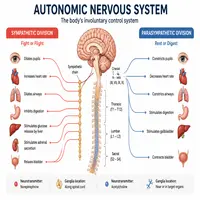
This system splits into two main branches: sympathetic and parasympathetic. Each branch has a job to do, and they usually work in opposite directions.
The sympathetic branch handles the “fight or flight” response. Specifically, it speeds up the heart, widens airways, and pushes blood toward muscles. In contrast, the parasympathetic branch does the reverse: it slows the heart, supports digestion, and helps the body rest and recover.
Here’s a quick side-by-side comparison:
| Feature | Sympathetic Branch | Parasympathetic Branch |
|---|---|---|
| Primary role | Fight or flight | Rest and digest |
| Heart rate effect | Increases | Decreases |
| Main neurotransmitter | Norepinephrine | Acetylcholine |
| Airway effect | Dilates | Constricts |
| Digestion effect | Slows down | Speeds up |
| Pupil effect | Dilates | Constricts |
Neurons in each branch release specific chemical messengers. For example, sympathetic neurons mostly release norepinephrine, while parasympathetic neurons release acetylcholine instead. These chemicals bind to receptors on target organs, and as a result, that binding triggers the physical response you actually feel, like a racing heart or a rumbling stomach.
How the Signal Travels: A Simple Flowchart
Understanding drug action gets much easier once you can picture the signal pathway. Here’s a simplified flow:
Brain/Spinal Cord Signal
        |
        v
   Preganglionic Neuron
        |
        v
    Autonomic Ganglion
        |
        v
  Postganglionic Neuron
        |
        v
Neurotransmitter Released
   (Norepinephrine or Acetylcholine)
        |
        v
   Receptor on Target Organ
        |
        v
  Physical Response (Heart Rate,
  Airway Size, Digestion, etc.)
Drugs can step into this pathway at almost any point. For instance, some drugs boost neurotransmitter release, while others block receptors completely. Overall, this flexibility is exactly why pharmacologists find this system so useful for treatment design.
How Drugs Target This System
Pharmacologic agents act at several points along these nerve pathways. Some stimulate receptors directly, while others block them entirely. Meanwhile, a few drugs affect neurotransmitter release or reuptake instead.
For example, a drug that mimics norepinephrine can raise blood pressure fast. Conversely, a drug that blocks that same receptor can lower it just as quickly. This flexibility explains why these medications show up in so many treatment guidelines across cardiology, pulmonology, and even eye care.
Receptor selectivity matters here too. Beta-1 receptors mainly affect the heart, whereas beta-2 receptors mainly affect the lungs and blood vessels. Therefore, a drug targeting only beta-2 receptors can open airways without significantly speeding up the heart. As a result, this selectivity reduces side effects and keeps patients safer.
Drug Classes at a Glance
The table below breaks down the four major drug categories tied to this system:
| Drug Class | Action | Common Example | Typical Use |
|---|---|---|---|
| Sympathomimetic | Mimics sympathetic activity | Albuterol | Asthma, allergic reactions |
| Sympatholytic | Blocks sympathetic activity | Metoprolol | Hypertension, arrhythmias |
| Parasympathomimetic | Mimics parasympathetic activity | Bethanechol | Urinary retention, glaucoma |
| Anticholinergic | Blocks parasympathetic activity | Atropine, Ipratropium | Bradycardia, COPD |
Epinephrine deserves a special mention. Notably, emergency teams reach for it during severe allergic reactions because it rapidly raises blood pressure and opens airways at the same time. In fact, few drugs act quite that fast.
On the flip side, beta-blockers like metoprolol slow the heart and lower blood pressure. As a result, doctors prescribe them for hypertension, arrhythmias, and even performance anxiety. Similarly, alpha-blockers such as prazosin relax blood vessels and help with conditions like an enlarged prostate.
Parasympathetic Drugs in Practice
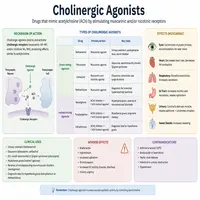
Parasympathomimetic drugs boost parasympathetic activity. For example, pilocarpine treats glaucoma by constricting the pupil and improving fluid drainage in the eye. Likewise, bethanechol helps patients with urinary retention by stimulating bladder contractions.
Anticholinergic drugs, on the other hand, block these same pathways instead. Atropine treats dangerously slow heart rates and reverses certain types of poisoning, while ipratropium relaxes airway muscles for patients with chronic obstructive pulmonary disease.
However, anticholinergic drugs carry real downsides. Dry mouth, blurred vision, and constipation are common complaints. Moreover, in older adults, these drugs can also trigger confusion or memory problems. Consequently, pharmacists often counsel patients about these effects before therapy begins, and that conversation can prevent an unnecessary trip to the hospital later.
Clinical Relevance in Everyday Medicine
These drugs appear across nearly every medical specialty you can name. For instance, anesthesiologists use them to manage blood pressure during surgery, cardiologists rely on beta-blockers for heart failure management, and ophthalmologists use pilocarpine-based drops for glaucoma treatment.
Even everyday allergy medications interact with this system in subtle ways. Antihistamines with anticholinergic properties, for example, can cause drowsiness and dry mouth. Similarly, decongestants often stimulate sympathetic receptors, which can raise blood pressure in sensitive patients. Therefore, pharmacists must weigh these interactions when reviewing a full medication list.
This is exactly why the autonomic nervous system remains a core topic in pharmacology education. Ultimately, students who grasp these receptor mechanisms can predict drug effects with real confidence. Furthermore, they can also spot side effects before they become serious problems, and that skill translates directly into safer patient care.
Common Side Effects Linked to These Drugs
Many drug side effects trace back to unintended receptor activity in this system. For example, some antidepressants block cholinergic receptors, causing dry mouth and constipation. Similarly, certain blood pressure medications can cause dizziness upon standing, simply because they reduce sympathetic tone too much.
Overdose situations reveal this system’s power in dramatic fashion. For instance, excess sympathomimetic exposure, from stimulant misuse, can trigger dangerously high blood pressure and irregular heart rhythms. Meanwhile, excess anticholinergic exposure can cause severe agitation, elevated body temperature, and even hallucinations. Indeed, emergency departments see these toxic presentations on a regular basis.
Recognizing these patterns helps healthcare providers respond fast. Additionally, it helps them choose safer alternatives for patients prone to these reactions. In particular, older adults and people with multiple chronic conditions often need extra caution when starting these medications, since their bodies may respond more strongly to standard doses.
Conclusion
This hidden control network runs your heart, lungs, eyes, and gut every single second, whether you notice it or not. Overall, pharmacology has built entire drug categories around influencing it safely, and the results touch nearly every corner of modern medicine.
Once you understand the sympathetic and parasympathetic branches, drug behavior starts making a lot more sense. For example, you can predict why a beta-blocker slows the heart, why an inhaler opens the airways, or why an old allergy pill leaves you with a dry mouth. Importantly, that kind of understanding isn’t just useful for exams. Instead, it shapes safer prescribing, smarter patient counseling, and better outcomes for real people. As new drugs continue targeting these pathways, in short, this knowledge will stay relevant for a long time to come.
Frequently Asked Questions
It controls involuntary functions like heart rate, digestion, breathing rate, and pupil size. Essentially, you don’t consciously manage any of these processes.
The sympathetic branch prepares the body for action, while the parasympathetic branch helps the body rest and recover. Generally, they balance each other out.
Beta-blockers reduce the physical symptoms of anxiety, like a racing heart and shaky hands, by blocking sympathetic receptors. However, they don’t change the emotional feeling of anxiety directly, though calming the body often helps.
They require caution. Specifically, older adults are more sensitive to side effects like confusion, dry mouth, and constipation, so doctors typically start with lower doses and monitor closely.
Yes, absolutely. In fact, exercise, stress, sleep, and even caffeine intake all influence the balance between these two branches, sometimes just as much as medication does.