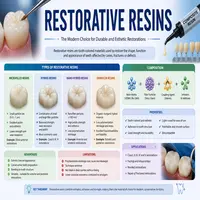
Restorative Resins: Types, Uses, and Modern Advances
Modern dentistry relies on strong, tooth-colored materials to repair damage. Cavities, chips, and worn edges all need a reliable fix. That’s where these materials step in.
This article explains how they work, their main types, and where dentists use them daily. We’ll also cover benefits, limitations, and answers to common questions.
Dental students often find this topic overwhelming at first glance. Once you understand the basic chemistry, though, the differences between products become much clearer.
What Are These Materials?
Restorative resins are tooth-colored materials dentists use to rebuild damaged tooth structure. They bond directly to enamel and dentin, unlike older metal fillings that simply sat in a prepared cavity.
These materials contain a resin matrix mixed with tiny filler particles. The resin provides flexibility and bonding strength. Meanwhile, the filler particles add hardness and wear resistance.
Therefore, the ratio between resin and filler shapes the final product’s performance. A higher filler content usually means better strength but sometimes reduces polishability. Manufacturers constantly adjust this balance to optimize both durability and appearance.
Additionally, a curing light hardens the material within seconds. This quick-set feature lets dentists complete fillings in a single visit. Patients no longer need to wait days for a lab-made restoration in most routine cases.
This chemistry also explains why color matching works so well. Because the resin starts as a soft paste, dentists can shade and shape it precisely before curing. The result blends naturally with surrounding teeth.
Classification and Major Types
Dental professionals sort restorative resins by filler particle size and composition. The table below summarizes the major categories.
| Type | Filler Size | Best Use | Key Advantage |
|---|---|---|---|
| Microfill composites | Very small (0.01–0.1 µm) | Front teeth, cosmetic edges | High polish, natural shine |
| Hybrid composites | Mixed sizes | General fillings | Balanced strength and finish |
| Nanofill composites | Nanoscale particles | Front and back teeth | Strength plus smooth polish |
| Flowable composites | Small, low viscosity | Small cavities, sealants | Easy placement, less shrinkage stress |
| Bulk-fill composites | Larger particles | Deep back-tooth cavities | Faster placement, deeper cure |
Consequently, this classification guides material selection. A dentist repairing a front tooth chip usually reaches for a microfill or nanofill option. On the other hand, a deep molar cavity often calls for a bulk-fill material to save chair time.
Similarly, patient-specific factors matter too. Heavy grinders need materials with higher wear resistance. Cosmetic cases demand better polish and shade-matching ability.
Cost also plays a role in material selection. Nanofill and hybrid composites tend to cost more than basic hybrid formulas, though the price difference often reflects better longevity. Consequently, many dentists discuss both performance and budget with patients before starting treatment.
How These Materials Bond to Teeth: A Simple Flowchart
Understanding the bonding process becomes easier with a step-by-step view.
Tooth surface prepared and cleaned
              |
              v
   Etching gel applied to enamel/dentin
              |
              v
   Microscopic surface roughened
              |
              v
      Bonding agent applied
              |
              v
   Resin flows into microscopic pores
        /            \
       v              v
  Light cured      Chemical bond forms
  (seconds)        (mechanical + chemical)
       |                    |
       v                    v
Hardened restoration   Strong, durable seal
This flow explains why proper technique matters so much. A skipped step, such as inadequate etching, weakens the final bond. Consequently, even the best material can fail if the bonding process gets rushed.
Notably, moisture control plays a huge role too. Saliva contamination during bonding can drastically reduce the strength of the final restoration. Dentists use isolation tools like rubber dams to keep the area dry.
Temperature and humidity in the treatment room can also affect curing quality. Most manufacturers recommend specific storage and handling conditions to keep the material’s properties consistent from batch to batch.
Clinical Uses of These Dental Materials
These materials treat a wide range of dental problems. Below is a quick overview.
- Cavity fillings: Both front and back teeth benefit from tooth-colored repairs.
- Chipped or fractured teeth: Dentists rebuild lost structure directly, often in one visit.
- Diastema closure: Small gaps between front teeth get closed without orthodontics.
- Tooth reshaping: Uneven or worn edges get smoothed and restored to natural contours.
- Sealants: Flowable versions protect molar grooves from early decay.
- Core buildups: Resins support teeth that need crowns after significant damage.
- Veneer touch-ups: Chipped porcelain veneers sometimes get patched with resin bonding.
Meanwhile, newer research continues to expand the applications of restorative resins. Some studies now explore bioactive fillers that release minerals to strengthen surrounding tooth structure. Other research focuses on reducing shrinkage stress during curing, which has long been a limitation of these materials.
Interestingly, some newer formulations even claim antibacterial properties. This research remains ongoing, and results vary across different product lines.
Advantages and Limitations
Every material carries strengths and weaknesses, so a balanced view helps.
Advantages:
- Natural, tooth-colored appearance
- Direct bonding preserves more healthy tooth structure than older methods
- Same-day placement in most cases
- Repairable without full replacement in many situations
Limitations:
- Can shrink slightly during curing, creating stress at the bond
- Wears faster than some ceramic or metal options under heavy chewing forces
- Sensitive to moisture during placement
- May discolor over time with certain foods or habits like smoking
Patients should follow good oral hygiene to extend the lifespan of any restoration. Regular checkups also help dentists catch early wear before it becomes a bigger problem.
Furthermore, patients with heavy staining habits should discuss options with their dentist beforehand. Certain resin types resist discoloration better than others, so this conversation matters before treatment begins.
Ultimately, no single material fits every situation. A thoughtful conversation between dentist and patient, covering budget, aesthetics, and durability, leads to the best long-term choice.
Conclusion
Restorative resins remain one of the most valuable tools in modern dentistry. They combine strength, natural appearance, and same-day convenience in a single material. From simple fillings to cosmetic reshaping, their versatility covers nearly every restorative need.
Still, success depends on proper technique and material selection for each case. A careful match between resin type and clinical situation leads to better outcomes and longer-lasting results. As research continues, these materials will likely become even stronger and more resistant to wear.
Frequently Asked Questions
Most last between five and ten years, depending on location and chewing forces. Regular dental checkups help extend their lifespan.
Yes, they are widely tested and considered safe. Dentists follow strict protocols to ensure proper bonding and minimal sensitivity.
Some staining can occur, especially with coffee, tea, or tobacco use. Polished, nanofill options resist staining better than older formulations.
Saliva contamination weakens the bond between the material and the tooth. Dentists use isolation tools to keep the area completely dry.
Not usually. Normal brushing, flossing, and regular dental visits keep them in good condition for years.