Adrenergic Agonists: Uses, Types, and Mechanism Explained
Your body reacts to stress in seconds. Heart rate climbs. Airways open. Blood flow shifts toward muscles. Behind this reaction sits a group of chemicals called catecholamines, and behind many modern medicines sits a class of drugs that mimics them.
This guide explains how these drugs work, why doctors prescribe them, and what makes each subtype different. You will also find simple tables, a quick flowchart, and answers to common questions students and patients often ask.
Let’s start with the basics.
What Are These Drugs?
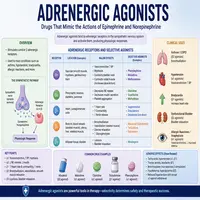
Adrenergic agonists are drugs that activate adrenergic receptors, the same receptors that respond to adrenaline and noradrenaline. Once activated, these receptors trigger effects similar to the body’s natural fight-or-flight response.
So, how does this actually happen at the cellular level? Essentially, the drug binds to a receptor on the cell surface. This binding activates a chain of internal signals. Depending on the receptor type, the cell responds by contracting, relaxing, or releasing hormones.
Meanwhile, the body has several receptor subtypes, each producing a different effect. Alpha-1, alpha-2, beta-1, beta-2, and beta-3 receptors all respond differently to stimulation. Therefore, choosing the right drug depends heavily on which receptor a doctor wants to target.
Main Receptor Types and Effects
The table below summarizes the major receptor subtypes.
| Receptor | Main Location | Primary Effect |
|---|---|---|
| Alpha-1 | Blood vessels, iris | Vasoconstriction, pupil dilation |
| Alpha-2 | Nerve terminals | Reduced norepinephrine release |
| Beta-1 | Heart | Increased heart rate and force |
| Beta-2 | Lungs, blood vessels | Bronchodilation, vasodilation |
| Beta-3 | Fat tissue, bladder | Lipolysis, bladder relaxation |
Clearly, each receptor serves a distinct purpose. This is exactly why pharmacologists design drugs that target one subtype selectively, rather than activating every receptor at once.
Classification of These Drugs
These drugs generally fall into three broad categories: direct-acting, indirect-acting, and mixed-acting agents.
Direct-acting drugs bind straight to the receptor itself. Epinephrine and phenylephrine are classic examples. Indirect-acting drugs work differently; instead of binding receptors, they increase the release of natural norepinephrine or block its reuptake. Amphetamine falls into this category.
Mixed-acting drugs do both jobs at once. Ephedrine, for instance, stimulates receptors directly while also boosting norepinephrine release. Consequently, its effects tend to last longer than purely direct-acting drugs.
Quick Comparison Table
| Category | Example Drug | Mechanism |
|---|---|---|
| Direct-acting | Epinephrine | Binds receptor directly |
| Indirect-acting | Amphetamine | Increases norepinephrine release |
| Mixed-acting | Ephedrine | Combines both mechanisms |
How These Drugs Work: A Simple Flowchart
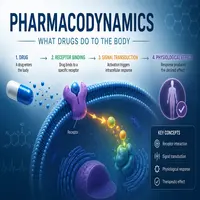
Understanding the pathway from drug administration to physical effect makes the pharmacology much easier to remember.
Drug Administered
        │
        ▼
   Binds Adrenergic Receptor
        │
        ▼
   Activates Internal Signaling
        │
        ▼
   Cellular Response Triggered
        │
        ▼
   Physiological Effect
   (e.g., faster heart rate, open airways)
This flow explains why response time can vary between drugs. Some agents act within seconds, while others need several minutes to reach full effect. Additionally, the route of administration, whether inhaled, injected, or taken orally, changes how quickly this chain of events unfolds.
Clinical Uses
Doctors use these medications across many specialties. In emergency medicine, epinephrine treats anaphylaxis and cardiac arrest. In respiratory care, beta-2 selective drugs like albuterol relieve asthma symptoms by relaxing airway muscles.
Furthermore, cardiologists use certain agents to support blood pressure during shock. Ophthalmologists apply alpha agonists to dilate pupils during eye examinations. Even cold medicines rely on this drug class, since decongestants like phenylephrine shrink swollen nasal blood vessels.
Nurses and paramedics also rely on this knowledge daily. They must recognize which effect a specific drug is meant to produce, since giving the wrong subtype-selective agent can worsen a patient’s condition instead of helping it.
Common Clinical Applications
| Condition | Drug Example | Receptor Targeted |
|---|---|---|
| Anaphylaxis | Epinephrine | Alpha-1, Beta-1, Beta-2 |
| Asthma | Albuterol | Beta-2 |
| Hypotension/shock | Norepinephrine | Alpha-1 |
| Nasal congestion | Phenylephrine | Alpha-1 |
| Pupil dilation | Phenylephrine | Alpha-1 |
Side Effects and Precautions
Like any medication, these drugs carry risks. Because they mimic the fight-or-flight response, common side effects include a rapid heartbeat, anxiety, tremors, and elevated blood pressure. Beta-1 stimulation especially raises concern in patients with existing heart conditions.
However, side effects vary based on receptor selectivity. A drug that targets beta-2 receptors mainly affects the lungs and blood vessels, causing fewer heart-related issues. On the other hand, non-selective agents affect multiple systems simultaneously, increasing the chance of unwanted reactions.
Therefore, doctors carefully match drug selection to each patient’s health profile. Someone with high blood pressure, for example, needs a very different approach than someone experiencing a severe allergic reaction. Age, existing medications, and underlying conditions all shape this decision.
Comparing Selective vs Non-Selective Drugs
Not every drug in this class behaves the same way once it enters the body. Selective agents target one specific receptor, leaving others largely untouched. Non-selective agents, by contrast, activate several receptor types at once, producing a broader but sometimes messier set of effects.
For instance, a beta-2 selective inhaler mainly relaxes airway muscles without significantly raising heart rate. A non-selective drug like epinephrine, however, stimulates alpha and beta receptors simultaneously. This broader action makes epinephrine incredibly useful during anaphylaxis, since it raises blood pressure, opens airways, and supports heart function all at once.
Still, this broad action comes with a tradeoff. Non-selective drugs tend to cause more side effects, since they affect tissues beyond the intended target. Selective agents, on the other hand, offer a cleaner therapeutic profile but may not work for emergencies requiring multiple simultaneous effects.
Selective vs Non-Selective at a Glance
| Property | Selective Agent | Non-Selective Agent |
|---|---|---|
| Target receptors | One subtype | Multiple subtypes |
| Example | Albuterol | Epinephrine |
| Side effect profile | Narrower | Broader |
| Best suited for | Chronic conditions like asthma | Emergencies like anaphylaxis |
Choosing between these two approaches always comes down to the clinical situation. A stable asthma patient benefits from a targeted, predictable drug. A patient in anaphylactic shock needs rapid, wide-reaching support instead.
Why This Matters in Practice
Understanding receptor selectivity is not just academic. It directly shapes how safely and effectively a drug performs in real patients. The right choice, guided by a solid grasp of adrenergic agonists, can save a life during anaphylaxis within minutes. A poorly chosen one can strain the heart or trigger dangerous blood pressure spikes.
Pharmacology students benefit from memorizing receptor locations alongside their physiological effects. Meanwhile, practicing clinicians rely on this same foundation every time they choose a bronchodilator, a vasopressor, or an emergency injection.
Ongoing research continues refining this drug class too. Newer agents aim for greater receptor selectivity, reducing side effects while preserving the desired therapeutic action. This shift toward precision represents one of the more exciting developments in modern pharmacology.
Conclusion
Adrenergic agonists play a central role in modern medicine, from emergency rooms to everyday asthma inhalers. These drugs work by activating specific receptors that mimic the body’s natural stress response, producing effects ranging from a faster heartbeat to open airways. Understanding receptor subtypes, drug classification, and clinical applications helps explain why one drug suits an asthma attack while another treats severe allergic shock.
Whether you are a student memorizing receptor charts or a patient curious about your inhaler, knowing how these medications work makes their role in healthcare much clearer. Precision, not power alone, defines good pharmacology, and that principle applies perfectly here.
Frequently Asked Questions
They treat a wide range of conditions, including severe allergic reactions, asthma, low blood pressure during shock, and nasal congestion. Each use depends on which receptor subtype the drug targets.
Not exactly. Some directly mimic adrenaline’s action on receptors, while others increase the body’s own adrenaline-like chemicals instead. Both approaches produce similar effects, but through different mechanisms.
It depends on receptor selectivity. Drugs that stimulate beta-1 receptors in the heart increase heart rate, while beta-2 selective drugs mainly act on the lungs and blood vessels instead.
No. Patients with heart disease, high blood pressure, or certain thyroid conditions need careful monitoring. Doctors always weigh the benefits against potential cardiovascular risks before prescribing.
It depends on the condition being treated. Inhaled options for asthma are often used long-term under medical supervision, while emergency injections are only meant for short-term, acute situations.