Water and Human Life: Why Your Body Needs It
Have you ever wondered why you can survive weeks without food but only days without a drink? The link between water and human life explains this difference clearly. Every cell, organ, and chemical reaction inside you depends on this simple molecule. This guide breaks down that relationship in plain terms. You will find tables, a flowchart, and answers to common questions below.
Why This Molecule Is So Essential
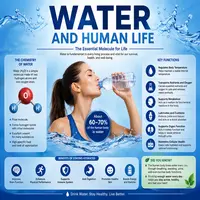
Roughly sixty percent of an adult’s body consists of this compound. It fills cells, cushions organs, and carries nutrients through the bloodstream. Meanwhile, it also removes waste products through urine and sweat.
Without enough of it, cells cannot function properly. Chemical reactions slow down, and organs struggle to perform basic tasks. Therefore, maintaining proper intake is not optional; it is essential for survival.
How the Body Uses It Daily
Every system in the body relies on steady hydration. Blood, for instance, is mostly liquid, allowing it to flow smoothly through vessels. Similarly, joints use fluid to stay lubricated and reduce friction during movement.
Digestion also depends heavily on adequate fluid levels. Saliva, stomach acid, and intestinal secretions all require it to break down food efficiently. Consequently, poor hydration often leads to digestive discomfort.
Below is a simple table showing major body systems and their reliance on fluid balance:
| Body System | Role of Fluid Balance |
|---|---|
| Circulatory | Transports blood and nutrients |
| Digestive | Breaks down and absorbs food |
| Renal | Filters waste, produces urine |
| Nervous | Supports electrical signal transmission |
| Skeletal | Cushions joints, supports cartilage |
As shown above, nearly every system depends on adequate fluid intake.
A Simple Flowchart of Hydration and Cellular Function
Understanding this cycle helps explain why dehydration affects the whole body so quickly. Here is a basic flowchart:
Fluid Intake Through Drinking and Food
        ↓
Absorption Into Bloodstream
        ↓
Distribution to Cells and Organs
        ↓
Cellular Reactions Supported and Regulated
        ↓
Waste Removed Through Kidneys and Skin
        ↓
Balance Maintained Through Thirst Signals
Each stage connects directly to the next one. However, disruption at any point can cause noticeable symptoms.
Signs of Poor Hydration
Recognizing early warning signs helps prevent serious complications. Common symptoms include the following:
- Fatigue – cells lack energy without proper fluid balance
- Headaches – reduced blood flow affects the brain
- Dry skin – tissue loses elasticity and moisture
- Dizziness – blood pressure can drop suddenly
- Dark urine – kidneys concentrate waste due to low fluid levels
Because these symptoms can appear gradually, many people ignore them at first. Nevertheless, addressing early signs prevents more serious problems later.
Daily Requirements and Influencing Factors
Daily needs vary based on age, activity level, and climate. Athletes and outdoor workers often require significantly more than sedentary individuals. Similarly, hot and humid environments increase fluid loss through sweat.
Below is a general guideline table for daily intake:
| Group | Approximate Daily Need |
|---|---|
| Adult Men | 3.0–3.7 liters |
| Adult Women | 2.2–2.7 liters |
| Children | 1.0–2.0 liters |
| Athletes | 3.0–6.0 liters, depending on activity |
These numbers include fluid from both drinks and food. Additionally, fruits and vegetables contribute a meaningful portion of daily intake.
Long-Term Effects on Health
Chronic dehydration can lead to serious long-term consequences. Kidney stones, urinary tract infections, and impaired cognitive function often link back to insufficient intake. Furthermore, athletic performance and concentration decline noticeably when hydration remains low over time.
On the other hand, consistent healthy intake supports clearer thinking, better digestion, and improved energy levels. As a result, many health professionals recommend tracking daily consumption, especially during illness or intense physical activity.
Simple Habits for Better Daily Intake
Building better habits does not require drastic changes. Carrying a reusable bottle throughout the day encourages regular sipping. Eating water-rich foods, such as cucumbers and watermelon, also boosts intake naturally.
Setting reminders on a phone can help people who often forget to drink enough. Meanwhile, monitoring urine color offers a quick, practical way to check hydration status at home.
Conclusion
This vital relationship touches every organ, cell, and chemical process in the body. From circulation to digestion, nothing functions properly without adequate hydration. Recognizing early signs of poor intake, understanding daily requirements, and building simple habits can significantly improve overall health. By paying closer attention to daily intake, you support your body’s most basic and essential need. Small, consistent changes often lead to noticeably better energy, focus, and long-term wellbeing.
Frequently Asked Questions
Most adult men need around 3 to 3.7 liters daily, while adult women typically need 2.2 to 2.7 liters, including fluid from food.
Yes, excessive intake in a short period can dilute sodium levels in the blood, leading to a rare but serious condition called hyponatremia.
Yes, moderate caffeinated beverages still contribute to overall fluid intake, despite their mild diuretic effect.
Thirst and dark-colored urine are usually the earliest and most noticeable signs.
Yes, foods like cucumbers, oranges, and watermelon contain high fluid content and support daily intake significantly.