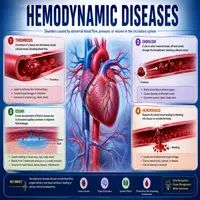
Hemodynamic Diseases: Causes, Types, and Clinical Importance
Blood must flow smoothly for tissues to survive. However, many conditions disturb this flow and damage organs over time. Doctors group these conditions under one broad term: hemodynamic diseases. This article explains what these disorders are, why they happen, and how pathologists classify them. We will also look at common examples, a summary table, and a simple flowchart. By the end, you will understand this topic clearly, even without a medical background.
What Do These Circulatory Disorders Mean?
Hemodynamic diseases affect the movement of blood and fluid within the body. They occur when vessels, the heart, or blood components fail to work together properly. As a result, tissues receive too little blood, too much blood, or blood that clots abnormally. These disorders often appear silently at first. Later, though, they cause visible swelling, organ damage, or sudden emergencies like stroke and heart attack.
Pathologists study these disorders because they explain many common illnesses. For instance, heart failure, kidney damage, and even certain cancers connect to poor blood flow. So, understanding these circulatory problems helps explain a huge range of medical conditions.
Moreover, hemodynamic balance depends on several working parts. The heart must pump with enough force. Vessel walls must stay smooth and flexible. Blood itself must clot only when truly needed. When any single part fails, the entire circulatory system suffers. Consequently, one small defect can trigger a chain of larger problems across multiple organs.
Main Causes of Hemodynamic Disorders

Several factors disturb normal circulation. In fact, below are the most frequent causes seen in clinical practice.
- Increased vascular pressure from hypertension
- Damage to blood vessel walls
- Abnormal clotting due to genetic or acquired conditions
- Heart pump failure
- Blockage from fat, air, or clot fragments
- Prolonged immobility after surgery or illness
Each cause disrupts blood flow differently. Consequently, the resulting disease pattern also differs. Some patients develop swelling, while others suffer sudden vessel blockage.
Types of Hemodynamic Disorders

Pathology divides these disorders into distinct categories. Each type has its own mechanism, symptoms, and outcome. Below, we walk through the seven classic patterns that pathologists recognize.
1. Edema
Edema means fluid buildup in tissue spaces. It happens when fluid leaves capillaries faster than lymphatics can drain it. Common causes include heart failure, liver disease, and kidney disorders. Patients often notice swelling in the legs, ankles, or abdomen. In severe cases, fluid may even collect around the lungs, which then affects breathing.
2. Hyperemia and Congestion
Hyperemia occurs when arteries actively bring extra blood into a tissue. In contrast, congestion happens when veins fail to drain blood properly. Notably, both conditions increase blood volume in an area, yet their causes are opposite. Congestion frequently affects the liver and lungs during heart failure.
3. Hemorrhage
Hemorrhage means blood escapes from vessels into surrounding tissue or outside the body. Trauma, ruptured vessels, and clotting disorders often cause this. Typically, small hemorrhages may look like bruises. Large ones, however, can be life-threatening.
4. Thrombosis
Thrombosis is the formation of a blood clot inside an intact vessel. Three factors drive this process: vessel wall injury, abnormal blood flow, and increased clotting tendency. Doctors call this trio “Virchow’s triad.” Deep vein thrombosis is a well-known example.
5. Embolism
An embolism happens when a clot, fat globule, or air bubble travels through the bloodstream and blocks a distant vessel. Pulmonary embolism, for example, occurs when a clot from a leg vein reaches the lungs. This condition can turn fatal within minutes if untreated.
6. Infarction
Infarction refers to tissue death caused by a sudden loss of blood supply. Heart attacks and strokes are classic examples. Because oxygen cannot reach the affected area, cells die quickly. Ultimately, permanent damage sets in within minutes to hours.
7. Shock
Shock is a severe drop in blood flow throughout the entire body. It reduces oxygen delivery to every organ. Causes include severe blood loss, infection, and heart failure. Consequently, without quick treatment, shock damages multiple organs at once.
Why These Disorders Matter in Everyday Medicine
Many common hospital admissions trace back to disturbed circulation. A patient with leg swelling may actually have early heart failure. Someone with sudden chest pain may face a blocked coronary artery. Even routine post-surgery recovery involves clot-prevention steps for this exact reason. Nurses, therefore, monitor circulation closely after any major operation. Additionally, primary care doctors screen for early warning signs during routine checkups. Recognizing these patterns early often changes a patient’s long-term outcome dramatically.
Summary Table of These Disorders
| Disease Type | Main Mechanism | Common Example |
|---|---|---|
| Edema | Fluid leaks into tissue | Leg swelling in heart failure |
| Hyperemia | Excess arterial blood inflow | Skin flushing during exercise |
| Congestion | Poor venous drainage | Liver congestion in heart failure |
| Hemorrhage | Blood escapes vessels | Bruising after injury |
| Thrombosis | Clot forms in a vessel | Deep vein thrombosis |
| Embolism | Traveling blockage | Pulmonary embolism |
| Infarction | Tissue death from ischemia | Heart attack, stroke |
| Shock | Body-wide poor perfusion | Septic shock |
This table gives a quick reference for students and clinicians alike. Notice how each mechanism connects directly to a familiar clinical event.
A Simple Flowchart: How These Disorders Develop
Below is a simplified flow showing how a single risk factor can lead to a serious hemodynamic event.
Risk Factor (e.g., prolonged bed rest)
        |
        v
Slow Blood Flow in Veins
        |
        v
Clot Formation (Thrombosis)
        |
        v
Clot Breaks Free (Embolus)
        |
        v
Travels Through Bloodstream
        |
        v
Blocks a Distant Vessel (Embolism)
        |
        v
Tissue Loses Blood Supply
        |
        v
Cell Death (Infarction)
This flow shows why doctors act early. Small, preventable risk factors can escalate into dangerous outcomes within hours or days.
Symptoms That Should Raise Concern

Certain warning signs suggest an underlying hemodynamic problem. People should seek medical attention if they notice:
- Sudden leg swelling with pain
- Unexplained shortness of breath
- Chest pain or pressure
- Sudden weakness on one side of the body
- Persistent dizziness or fainting
- Skin that turns pale, cold, or bluish
These symptoms often point toward clotting, poor circulation, or organ ischemia. Overall, early evaluation improves outcomes significantly.
Diagnosis and Testing
Doctors use several tools to detect hemodynamic problems. Blood tests check clotting factors and organ function. Imaging studies, such as ultrasound, CT scans, and echocardiography, reveal blocked or damaged vessels. Additionally, ECG readings help detect heart-related circulation issues.
Pathologists also examine tissue samples under a microscope. This step confirms infarction, hemorrhage, or vessel damage at the cellular level. Meanwhile, doctors correlate lab values with the patient’s symptoms and physical exam findings. Combining clinical history with laboratory and imaging data gives the clearest diagnosis. Overall, no single test tells the whole story; instead, a full picture emerges from multiple sources together.
Treatment Approaches
Treatment depends entirely on the specific disorder. Doctors may prescribe blood thinners for thrombosis and embolism. Meanwhile, diuretics often help reduce fluid buildup in edema. Surgery may become necessary for severe hemorrhage or large emboli. In emergencies, doctors sometimes restore blood flow through clot-removal procedures within a narrow time window.
Lifestyle changes also play a major role. Regular movement, proper hydration, and blood pressure control reduce risk substantially. Furthermore, managing underlying conditions like diabetes and heart disease lowers the chance of future complications. Overall, medication and lifestyle adjustments usually work best as a team, not as separate solutions.
Prevention Strategies
Prevention remains the most effective approach against hemodynamic diseases. Simple daily habits protect blood vessels and circulation over time.
- Stay physically active, especially after surgery or illness
- Maintain a healthy weight
- Control blood pressure and cholesterol levels
- Avoid smoking and excessive alcohol use
- Stay hydrated during long travel or bed rest
- Follow prescribed medication schedules closely
These steps sound simple, yet they prevent countless hospital admissions each year.
Conclusion
Hemodynamic diseases explain how disturbed blood flow leads to swelling, clotting, bleeding, and tissue death. From mild edema to life-threatening embolism, each condition follows a distinct but connected pathway. Understanding these mechanisms helps patients recognize warning signs early. It also helps clinicians choose the right diagnostic tools and treatments quickly. Ultimately, awareness and prevention remain the strongest defense against these disorders. Small lifestyle changes, combined with timely medical care, can prevent minor circulation problems from becoming major health crises.
Frequently Asked Questions
Poor blood flow, vessel damage, and abnormal clotting are the leading causes. Heart problems and prolonged immobility also contribute heavily.
No, they are different but related. Thrombosis forms a clot inside a vessel, while embolism happens when that clot, or another substance, travels and blocks a different vessel.
Yes, many cases are preventable. Regular movement, blood pressure control, and healthy lifestyle habits significantly lower the risk.
The heart, lungs, brain, and kidneys face the highest risk. These organs need constant, steady blood flow to function properly.
Sudden chest pain, breathing difficulty, one-sided weakness, or severe leg swelling all require immediate medical attention.