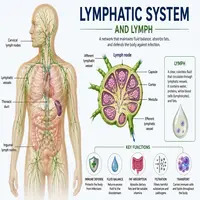
Lymphatic System and Lymph
Most people know about the heart, lungs, and blood vessels. Far fewer know about the body’s second circulatory network. Yet, without it, fluid would build up in your tissues within hours.
This network is the lymphatic system, and the fluid it carries is called lymph. Together, they drain excess fluid, fight infection, and absorb certain fats from the digestive tract.
The lymphatic system and lymph work quietly in the background. They rarely get attention unless something goes wrong, like swollen glands during an infection. In this guide, we’ll break down the anatomy, function, and importance of this often-overlooked system. Tables and a flowchart will make the process easy to follow.
What Is the Lymphatic System?
The lymphatic system is a network of vessels, nodes, and organs spread throughout the body. It runs alongside blood vessels but carries a clear fluid instead of blood.
Structurally, it includes lymphatic vessels, lymph nodes, the spleen, thymus, and tonsils. Each part plays a specific role. Vessels transport fluid, nodes filter it, and organs like the spleen support immune function.
Unlike the cardiovascular system, the lymphatic system has no central pump. Instead, it relies on muscle movement, breathing, and one-way valves to push fluid forward. This design means physical activity actually supports healthy lymph flow.
Interestingly, lymphatic vessels start as tiny, closed-ended capillaries in tissue spaces. These capillaries collect excess fluid before it can accumulate and cause swelling.
Main Components of the Lymphatic System
| Component | Location | Primary Role |
|---|---|---|
| Lymphatic capillaries | Throughout body tissues | Collect excess interstitial fluid |
| Lymphatic vessels | Alongside blood vessels | Transport lymph toward the heart |
| Lymph nodes | Neck, armpits, groin, abdomen | Filter lymph, trap pathogens |
| Spleen | Upper left abdomen | Filters blood, stores immune cells |
| Thymus | Upper chest | Matures T-cells for immunity |
| Tonsils | Throat | Trap pathogens entering through mouth |
What Is Lymph, and Where Does It Come From?
Lymph starts as plasma that leaks out of blood capillaries into surrounding tissue. This fluid, called interstitial fluid, bathes cells and delivers nutrients directly to them.
Most of this fluid returns to the bloodstream through venules. However, roughly ten percent doesn’t return this way. Instead, lymphatic capillaries absorb it, and once inside the lymphatic vessels, it officially becomes lymph.
Lymph carries white blood cells, particularly lymphocytes, along with proteins, fats, and waste products. Because of this composition, lymph plays a direct role in immune defense as it travels through the body.
In the small intestine, specialized lymphatic vessels called lacteals absorb dietary fats. As a result, lymph in this region often appears milky, thanks to its high fat content, and carries the name “chyle.”
How Lymph Moves Through the Body
Since the lymphatic system lacks a central pump, movement depends on external forces. Skeletal muscle contractions squeeze lymphatic vessels, pushing fluid forward. Meanwhile, breathing creates pressure changes that also assist flow.
One-way valves inside lymphatic vessels prevent backward flow. This valve system works much like the veins in your legs, ensuring fluid moves in a single direction, toward the chest.
Eventually, lymph drains into two major ducts: the thoracic duct and the right lymphatic duct. These ducts empty lymph back into the bloodstream near the subclavian veins, completing the circuit.
This entire process highlights why the lymphatic system and lymph depend so heavily on movement. Sitting still for long periods can slow lymph flow, sometimes contributing to mild swelling in the legs.
Lymph Flow Flowchart
     Fluid leaks from blood capillaries
                |
                v
        Becomes interstitial fluid
                |
                v
   Absorbed by lymphatic capillaries (becomes lymph)
                |
                v
      Moves through lymphatic vessels
                |
                v
        Filtered through lymph nodes
                |
                v
   Drains into thoracic or right lymphatic duct
                |
                v
       Returns to bloodstream (subclavian veins)
This cycle repeats continuously, helping maintain fluid balance throughout the entire body.
Functions of the Lymphatic System and Lymph
Fluid balance stands out as the first major function. By returning excess interstitial fluid to the bloodstream, the lymphatic system prevents tissue swelling, also known as edema.
Immunity comes second. Lymph nodes act as checkpoints, filtering lymph and trapping bacteria, viruses, and other pathogens. Immune cells inside the nodes then attack and destroy these threats before they spread further.
Fat absorption represents the third key function. Lacteals in the small intestine absorb fats and fat-soluble vitamins, transporting them through lymph before they eventually reach the bloodstream.
Together, these three functions show why the lymphatic system and lymph matter so much for overall health. Without proper lymphatic drainage, fluid buildup and weakened immunity would quickly follow.
What Happens When the Lymphatic System Malfunctions?
Lymphedema occurs when lymphatic vessels become blocked or damaged, often after surgery or radiation treatment. Fluid builds up in the affected limb, causing swelling and discomfort.
Infections can also overwhelm lymph nodes temporarily. Swollen glands in the neck during a cold happen because nodes are working overtime to filter out bacteria or viruses. Usually, this swelling resolves once the infection clears.
In rarer cases, cancers like lymphoma develop within lymphatic tissue itself. Additionally, cancer cells from other parts of the body can spread through lymphatic vessels, which is why doctors often check nearby lymph nodes during cancer staging.
Recognizing these conditions reinforces just how important healthy lymphatic function really is, both for daily comfort and long-term health.
Conclusion
The lymphatic system and lymph rarely receive credit for their constant work. Yet, they quietly maintain fluid balance, defend against infection, and support fat absorption every single day.
From tiny capillaries collecting excess fluid to lymph nodes filtering out harmful invaders, every part of this system plays a specific role. Movement, hydration, and overall health all influence how well lymph flows through the body.
Next time you notice swollen glands during a cold, remember that your lymphatic system is simply doing its job, protecting you one filtered drop of lymph at a time.
Frequently Asked Questions
The lymphatic system refers to the vessels, nodes, and organs involved in fluid drainage and immunity. Lymph is the clear fluid that flows through this system.
It relies on muscle contractions, breathing, and one-way valves instead. This design still moves lymph effectively, especially with regular physical activity.
infections trigger swollen lymph nodes because immune cells inside them multiply rapidly to fight off bacteria or viruses.
Lacteals in the small intestine absorb dietary fats and transport them through lymph before they enter the bloodstream.
Lymphedema is swelling caused by blocked or damaged lymphatic vessels, often occurring after surgery, injury, or radiation treatment.