Integration of Metabolism
Your body runs thousands of chemical reactions every single second. Somehow, none of this chaos causes a breakdown. Instead, everything works together smoothly, almost like a well-rehearsed orchestra.
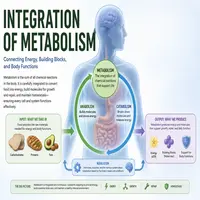
This coordination has a name in biochemistry. Scientists call it the integration of metabolism. It explains how different pathways communicate and adjust based on your body’s needs.
This guide breaks the concept into simple, digestible pieces. You will find a table, a flowchart, and answers to common questions. So, let’s explore how your body manages this constant balancing act.
What Does This Concept Actually Mean?
Metabolism includes hundreds of pathways working inside your cells. Some pathways build molecules, while others break them down. Without coordination, these pathways would compete instead of cooperate.
Therefore, your body needs a system to manage everything at once. This system links pathways so they respond together, not separately. As a result, energy production stays steady, even during stress or exercise.
Think of it like traffic lights controlling a busy intersection. Without signals, cars would crash into one another constantly. Similarly, without proper coordination, your metabolic pathways would clash and waste valuable resources.
Hormones, enzymes, and signaling molecules act as these traffic signals. They tell each pathway when to speed up or slow down. Consequently, your body adapts quickly to changing conditions like fasting, eating, or exercise.
The Major Players Involved
Several organs and molecules work together to maintain this balance. The liver plays a central role, since it processes nutrients from digestion. Muscles also contribute, especially during physical activity.
Hormones like insulin and glucagon send signals across the body. Insulin lowers blood sugar after meals, while glucagon raises it during fasting. Meanwhile, enzymes speed up or slow down specific reactions based on these signals.
The table below summarizes key players and their main roles.
| Component | Main Role | When It Activates |
|---|---|---|
| Liver | Stores and releases glucose | After meals and during fasting |
| Muscle tissue | Uses glucose for energy | During exercise |
| Insulin | Lowers blood glucose | After eating |
| Glucagon | Raises blood glucose | During fasting |
| Enzymes | Speed up reactions | Continuously, based on demand |
Notably, these components rarely work alone. Instead, they constantly exchange signals to keep energy levels stable throughout the day.
How Pathways Communicate With Each Other
Understanding this process becomes easier with a visual guide. Below is a simple flowchart showing how the body responds after a meal.
Food Intake
    │
    ▼
Blood Glucose Rises
    │
    ▼
Insulin Released
    │
    ▼
Glucose Enters Cells
    │
    ▼
Glycogen and Fat Stored
    │
    ▼
Energy Balance Restored
First, food enters the digestive system and breaks down into glucose. Next, blood sugar levels rise noticeably within minutes. Then, the pancreas releases insulin to manage this increase.
Afterward, cells absorb glucose for immediate energy or storage. Meanwhile, excess glucose converts into glycogen or fat for later use. Finally, the body returns to a stable, balanced state.
This entire sequence repeats constantly throughout the day. Consequently, your body maintains steady energy without extreme highs or lows.
Why This Balance Matters for Health
Without proper coordination, metabolic chaos would quickly follow. Blood sugar could spike dangerously high after meals. Alternatively, it could crash too low between meals, causing fatigue and dizziness.
This balance also protects against long-term disease. Poor coordination often leads to conditions like diabetes or obesity. Therefore, scientists study these pathways closely to develop better treatments.
Exercise depends heavily on this coordination too. Muscles need quick energy, so the body shifts resources rapidly during activity. Similarly, fasting requires the liver to release stored glucose efficiently.
In other words, the integration of metabolism supports nearly every function in your body. From thinking clearly to running a marathon, this coordination makes it all possible.
Real-Life Examples of This Process
Consider what happens during a long fast, such as overnight sleep. Blood sugar naturally drops as hours pass without food. Consequently, the liver releases stored glucose to keep the brain functioning properly.
Now consider intense exercise, like sprinting or lifting weights. Muscles demand energy immediately, faster than digestion can supply it. As a result, stored glycogen breaks down quickly to meet this sudden demand.
Both examples show the same underlying principle. Different pathways activate based on immediate needs, not random chance. Ultimately, this flexibility keeps your body functioning under wildly different conditions.
Common Misunderstandings About This Topic
Many people assume metabolism only means “burning calories.” However, this view misses the bigger picture entirely. Metabolism actually involves building, breaking down, and balancing countless molecules together.
Others believe faster metabolism always means better health. This is not necessarily true, since balance matters more than speed. Overactive pathways can cause just as many problems as sluggish ones.
Additionally, some assume hormones work independently of each other. In reality, hormones constantly interact and adjust based on feedback. This interconnected system is exactly why coordination remains so important.
Conclusion
The integration of metabolism keeps your body running smoothly, even during constant change. Organs, hormones, and enzymes work together like a coordinated team, adjusting instantly to new demands. Without this balance, energy production would become unpredictable and unreliable.
Understanding this concept helps explain why lifestyle choices matter so much. Diet, exercise, and rest all influence how well these pathways cooperate. Ultimately, appreciating this hidden coordination gives you a deeper respect for your body’s daily work.
Frequently Asked Questions
It refers to how different metabolic pathways communicate and work together. This coordination keeps energy production stable and efficient.
Without it, pathways would compete instead of cooperate. This could lead to unstable blood sugar and wasted energy.
The liver and muscles play major roles in this system. Both organs store, release, and use energy based on the body’s needs.
Hormones like insulin and glucagon send signals across the body. These signals tell pathways when to activate or slow down.
Yes, imbalances often contribute to conditions like diabetes and obesity. Therefore, maintaining healthy habits supports better metabolic coordination.