Why Root Canal Treatment Works: The Rationale of Endodontic Treatment
Many patients hear “root canal” and feel a wave of dread. Yet this procedure ranks among the best ways to save a natural tooth. It removes damaged tissue from inside the tooth. It seals the space. It stops the infection from spreading. And it keeps your tooth working for years.
This article breaks down the rationale of endodontic treatment in plain terms. We’ll cover what happens inside a damaged tooth, why dentists choose this treatment so often, and what makes it succeed. You’ll also find a comparison table, a simple flowchart, and answers to common questions.
What Happens Inside a Tooth Before Treatment
Every tooth holds a soft inner tissue called the pulp. This tissue carries nerves and blood vessels. It nourishes the tooth as it develops. It also gives you the ability to feel hot, cold, and pressure.
Problems start when decay, cracks, or trauma reach this inner layer. Bacteria slip in. Inflammation follows. Sometimes the pulp cannot heal itself, and the damage becomes permanent.
As the infection grows, pressure builds inside the tooth. Pain often follows, along with swelling and sharp sensitivity to temperature. Bacteria can travel down the tiny canals toward the root tip. An abscess may form in the bone below. Left untreated, this rarely gets better on its own. It can spread to nearby teeth or deeper into the jaw.
The Core Rationale of Endodontic Treatment
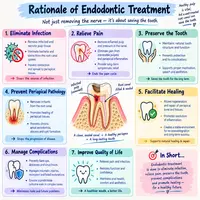
The goal here is simple: clear out the infection and keep the tooth intact. Your dentist opens a small access point in the tooth. They remove the damaged pulp tissue. Next, they clean and shape the tiny canals inside the root. Finally, they fill the space with a biocompatible material and seal it tight.
This method treats the actual cause, not just the symptoms. Because the outer tooth structure usually stays intact, you keep your natural bite and chewing power. Your jawbone also keeps its support from the root. Compare that to extraction, which removes the whole tooth. That often means extra work later, like an implant or a bridge, just to fill the gap.
Comparing Root Canal Treatment and Extraction
The table below shows why dentists often prefer saving a tooth over pulling it.
| Factor | Root Canal Treatment | Tooth Extraction |
|---|---|---|
| Natural tooth structure | Stays intact | Removed entirely |
| Jawbone stimulation | Continues through the root | Often fades over time |
| Chewing function | Close to normal | Needs replacement (implant, bridge) |
| Treatment time | Usually one to two visits | Quick, but often followed by more procedures |
| Long-term cost | Often lower overall | May require costly restoration later |
| Aesthetic result | Looks natural | Depends on the replacement chosen |
So, when a tooth has enough healthy structure left, root canal treatment usually offers the smarter, more conservative path forward.
Biological Reasons Behind the Procedure’s Success
This treatment works because it removes what bacteria need to survive. Once your dentist clears out the infected pulp and cleans the canal thoroughly, bacteria lose their food source. The sealing material then blocks new bacteria from getting back in.
Here’s something interesting: a treated tooth can last for decades, even without living pulp tissue inside it. Why does this work? The surrounding gum, bone, and ligament keep nourishing the tooth from the outside. So even though the inside of the tooth becomes “non-vital,” it still functions like any other tooth in your bite, as long as you restore it properly afterward.
The Endodontic Treatment Process: A Visual Flowchart
Here’s how the logic above plays out step by step during an actual visit.
Tooth Pain, Swelling, or Deep Decay Identified
                |
                v
      Diagnostic Exam & X-Ray
                |
                v
     Infected or Damaged Pulp Confirmed
                |
                v
        Local Anesthesia Applied
                |
                v
     Small Access Opening Created
                |
                v
   Infected Pulp Removed; Canals Cleaned,
        Shaped, and Disinfected
                |
                v
     Canals Filled & Sealed
   (Biocompatible Material)
                |
                v
   Tooth Restored (Filling or Crown)
                |
                v
   Function Restored, Infection Gone
Each step builds on the last one. Together, they clear the infection and protect the tooth from reinfection.
When Endodontic Treatment Is Recommended
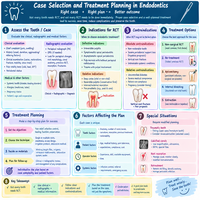
Not every damaged tooth needs this treatment. Your dentist checks several signs first. Persistent pain often points to trouble inside the tooth. So does lingering sensitivity to hot or cold. Swelling near the gums is another red flag. A tooth that has darkened over time can also signal internal damage.
A deep cavity or a cracked tooth raises the risk too. So does a tooth that has already been treated more than once. Still, the tooth needs enough healthy structure to make treatment worthwhile. If too much has been lost to decay or fracture, extraction might make more sense instead. A thorough exam, plus imaging, helps your dentist decide the right path.
Conclusion
The rationale of endodontic treatment comes down to one simple idea: save the tooth whenever you can. By clearing out infected pulp, disinfecting the canal, and sealing it properly, this treatment removes pain at its source. It also keeps your natural tooth working and looking the way it should. As we’ve seen, the benefits stack up quickly. You keep your jawbone support. You avoid a costlier replacement down the road. You keep your natural smile intact. Done at the right time, with the right follow-up care, this treatment offers a dependable, long-term fix that helps your smile last.
Frequently Asked Questions
Most patients say it feels similar to getting a filling. Local anesthesia numbs the area first. Any soreness afterward is usually mild and eases with basic pain relief.
With a proper crown and good oral hygiene, a treated tooth can last for many years. Often, it lasts a lifetime.
Extraction removes the whole tooth. That often leads to bone loss and shifting teeth nearby. You may also need a costly replacement, like an implant or bridge. Saving the natural tooth is usually the simpler, more affordable route.
Reinfection is rare when the procedure is done correctly and the tooth is sealed and restored properly. Poor hygiene or new decay can occasionally let bacteria back in.
Most cases wrap up in one or two visits. It depends on how complex the canal system is and whether you need extra restorative work afterward.