Isolation in Endodontic Treatment: Why It Matters
A successful root canal depends on more than skilled hands. It also depends on keeping the treatment area completely clean. Proper isolation in endodontic treatment makes that possible. In this guide, we explore why this step matters. We also cover how dentists achieve it. You will find two tables, a simple flowchart, and five common questions answered. Think of isolation as building a protective bubble around the tooth being treated.
What Isolation Actually Means
Isolation refers to separating the treated tooth from the rest of the mouth. Saliva, blood, and bacteria all pose risks during root canal treatment. Without a barrier, these contaminants can easily reach the open canal system. That contamination can undermine the entire procedure.
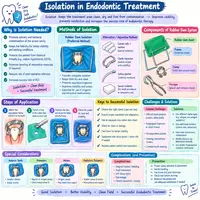
Most dentists achieve isolation using a rubber dam. This thin sheet clamps around the tooth, creating a sealed working field. Only the treated tooth remains exposed through a small opening. Meanwhile, the rest of the mouth stays safely covered and protected.
Isolation is not simply a convenience; it is a clinical necessity. Professional guidelines consider it a standard of care during root canal treatment. Skipping this step raises real risks for both the tooth and the patient. Understanding why helps explain its central role in treatment.
Why Saliva and Bacteria Threaten Treatment Success
Your mouth naturally hosts countless bacteria. While mostly harmless on intact tissue, these bacteria become dangerous inside an open tooth. Saliva alone carries enough microorganisms to reintroduce infection. Even a brief exposure can compromise a carefully cleaned canal.
Once contamination occurs, it becomes difficult to reverse. Bacteria can settle into tiny grooves within the canal system. These hidden pockets resist even thorough rinsing and disinfection. Consequently, prevention matters far more than attempting to fix contamination afterward.
Research consistently supports this concern. Studies comparing isolated and non-isolated treatments show clear differences in outcomes. Teeth treated without proper isolation face higher reinfection rates over time. This evidence strongly supports isolation as a non-negotiable step in treatment.
Preparing the Tooth Before Isolation
A few steps happen before the rubber dam goes on. Your dentist first confirms the correct tooth and treatment plan. Local anesthesia follows, ensuring your comfort throughout the procedure. Numbing typically takes just a few minutes to take full effect.
Next, the dentist examines the tooth’s shape and condition closely. This assessment determines the right clamp size and placement technique. Badly broken-down teeth sometimes need a temporary band first. This band gives the clamp something stable to grip during treatment.
Once everything is confirmed, the actual isolation process begins. Careful preparation at this stage prevents complications once the dam goes on. Skipping these early steps often leads to a poor, unstable seal later.
The Rubber Dam: The Gold Standard Tool
The rubber dam remains the most reliable isolation method available. Made from latex or non-latex material, it clamps securely around the tooth. A metal frame holds the sheet taut, creating a stable working field. This setup keeps saliva and debris completely away from the canal.
Placing a rubber dam takes just a few minutes. Your dentist selects the right clamp size for your specific tooth. They stretch the material over the clamp and secure it in place. Once positioned, the dam stays secure throughout the entire procedure.
Beyond infection control, the rubber dam offers practical safety benefits too. It prevents patients from accidentally swallowing small instruments or irrigation solutions. Beyond that, it protects soft tissue from accidental injury. The table below summarizes the key benefits this tool provides.
| Benefit | Why It Matters |
|---|---|
| Blocks saliva contamination | Keeps bacteria away from the open canal |
| Prevents swallowing instruments | Protects the airway during treatment |
| Shields soft tissue | Reduces risk of accidental injury |
| Improves visibility | Creates a clear, dry working field |
| Protects against irrigants | Keeps chemical solutions away from oral tissue |
Alternative Isolation Methods
While the rubber dam remains the preferred choice, alternatives exist for specific situations. Cotton roll isolation uses absorbent rolls placed near the treatment area. This method offers minimal protection compared to a rubber dam, though. Dentists typically reserve it for very limited circumstances.
Isolation systems using suction and flexible shields have also emerged recently. These devices combine saliva ejection with a barrier component. They can help patients who struggle with traditional rubber dam placement. However, most clinicians still consider them a secondary option.
Local anesthesia alone never substitutes for physical isolation. Even with a numb tooth, saliva can still reach the canal system. For this reason, dentists generally avoid treating a tooth without proper isolation whenever possible. The table below compares these isolation approaches.
| Method | Protection Level | Typical Use Case |
|---|---|---|
| Rubber dam | High | Standard choice for most root canal treatments |
| Isolation systems (suction-based) | Moderate | Patients who cannot tolerate a traditional dam |
| Cotton roll isolation | Low | Very limited, short procedures only |
| No isolation | Minimal | Strongly discouraged for root canal treatment |
Managing Challenging Cases
Not every patient finds rubber dam placement easy at first. Some experience mild anxiety about the sensation. Others have teeth that make clamp placement more difficult. Fortunately, dentists have strategies to manage these challenges effectively.
Communication helps tremendously here. Explaining the process beforehand often eases patient anxiety considerably. Dentists can also adjust clamp selection for unusual tooth shapes. Sometimes, a slightly different technique accommodates a particularly short or broken-down tooth.
Patients with a strong gag reflex present another common challenge. Positioning adjustments and distraction techniques often help significantly. In rare cases, sedation may support successful isolation and treatment. Regardless of the challenge, dentists prioritize finding a solution rather than skipping isolation altogether.
The Isolation Workflow: A Simple Flowchart
Here is how isolation typically fits into the broader treatment sequence.
      Tooth diagnosed and treatment planned
                     |
                     v
         Local anesthesia administered
                     |
                     v
      Appropriate clamp size selected
                     |
                     v
       Rubber dam placed and secured
                     |
                     v
    Tooth and dam surface disinfected
                     |
                     v
   Canal accessed within an isolated field
                     |
                     v
   Cleaning, shaping, and irrigation performed
                     |
                     v
      Canal filled and sealed safely
                     |
                     v
         Rubber dam removed carefully
Training Behind Proper Isolation
Placing a rubber dam correctly takes real skill. Dental schools teach this technique early in clinical training. Students practice clamp selection, placement, and troubleshooting extensively before treating patients. This foundation ensures consistent, reliable results in daily practice.
Experienced dentists develop efficient routines over time. They can often place a dam in under a minute. Smooth, confident placement also reassures anxious patients considerably. A rushed or clumsy attempt, by contrast, can increase patient discomfort and anxiety.
Continuing education keeps these skills sharp throughout a dentist’s career. New materials and techniques occasionally improve comfort and efficiency further. Staying current with best practices benefits every patient who sits in the chair.
What This Means for Patient Outcomes
Proper isolation directly influences treatment success rates. Studies show that isolated procedures achieve better long-term results overall. Fewer bacteria entering the canal translates into fewer reinfections down the road. That means fewer follow-up visits and less discomfort for patients.
Patients also benefit from a smoother, more comfortable experience. The rubber dam keeps water and debris away from the throat. Many patients report feeling calmer once the dam is in place. Clear visibility also allows dentists to work more efficiently and precisely.
Choosing a dental practice that prioritizes isolation reflects strong clinical standards. Patients should feel comfortable asking about isolation techniques before treatment begins. A confident, informative answer signals a practice committed to thorough, evidence-based care.
Conclusion
Isolation in endodontic treatment forms a quiet but essential foundation for success. The rubber dam blocks saliva and bacteria from the open canal. This protects every subsequent step of treatment. As we have seen, alternatives exist, but none match its reliability and safety. Challenging cases call for creative solutions, not skipped precautions. Ultimately, this simple barrier plays an outsized role. It shapes whether your root canal heals and lasts for years.
Frequently Asked Questions
Most patients adjust quickly and find it comfortable once placed. Breathing through the nose feels natural within a few minutes.
It is strongly discouraged. Without isolation, saliva and bacteria can contaminate the canal. This raises the risk of treatment failure.
Dentists can adjust positioning or use distraction techniques. In some cases, sedation helps you tolerate isolation comfortably.
Rarely, severe tooth damage or anatomical challenges require alternative methods. These options generally offer less protection, though.
Yes. Studies show properly isolated procedures succeed more often. They also carry lower reinfection risk over the long term.