Smooth Muscles: Structure, Function, and Key Facts
The human body depends on different muscle types to keep organs working smoothly. One of these types operates without conscious effort. This tissue is smooth muscle. It lines organs, blood vessels, and airways, quietly powering functions we rarely notice.
In this guide, we explore the structure, location, and physiology of this tissue. We also cover contraction mechanisms, related disorders, and common questions. Whether you are a student, healthcare worker, or curious reader, this article simplifies complex physiology into clear sections.
What Are Smooth Muscles?
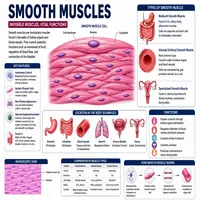
Smooth muscle is a type of involuntary muscle tissue. Unlike skeletal muscle, it lacks visible striations under a microscope. Instead, it appears smooth and spindle-shaped.
This tissue lines the walls of many internal organs. Examples include the stomach, intestines, bladder, uterus, and blood vessels. Additionally, it forms part of the respiratory airways and the iris of the eye.
Because it works involuntarily, the nervous system controls it automatically. Therefore, people cannot consciously start or stop its contractions, unlike movements of the arms or legs.
Structure of Smooth Muscle Cells

Smooth muscle cells are small, spindle-shaped, and uninucleated. Each cell contains a single nucleus located centrally. Moreover, these cells lack the organized sarcomere pattern seen in skeletal muscle.
Instead, actin and myosin filaments arrange diagonally across the cell. This arrangement allows the cell to contract in multiple directions. Consequently, smooth muscle can squeeze and shorten more flexibly than skeletal muscle.
Dense bodies anchor these filaments within the cell. These structures function similarly to Z-discs in skeletal muscle. As a result, they help transmit force during contraction.
Types of Smooth Muscle
There are two main categories of this tissue: single-unit and multi-unit smooth muscle. Each type differs in structure and how it responds to stimulation.
| Type | Location | Key Feature | Contraction Pattern |
|---|---|---|---|
| Single-unit | Intestines, uterus, blood vessels | Connected by gap junctions | Contracts as one unit |
| Multi-unit | Iris, airways, large arteries | Independent cells | Contracts individually |
Single-unit muscle cells connect through gap junctions. Consequently, electrical signals spread quickly between cells, allowing coordinated contraction. Multi-unit muscle, however, receives separate nerve signals for each fiber, allowing finer control.
How Smooth Muscle Contracts

Contraction begins when calcium ions enter the cell. This calcium binds to a protein called calmodulin. Then, this complex activates an enzyme called myosin light-chain kinase.
Next, this enzyme phosphorylates myosin, enabling it to bind actin. Subsequently, the filaments slide past each other, shortening the cell. This process is slower than skeletal muscle contraction but uses less energy.
Furthermore, smooth muscle can sustain contractions for long periods without fatigue. This ability suits organs like the bladder and intestines, which must maintain tone continuously.
Concept Map: Smooth Muscle Contraction Pathway
STIMULUS (Nerve signal, hormone, or stretch)
        ↓
Calcium Ions Enter Cell
        ↓
Calcium Binds Calmodulin
        ↓
Myosin Light-Chain Kinase Activated
        ↓
Myosin Head Binds Actin
        ↓
Filaments Slide → Muscle Contracts
        ↓
Calcium Removed → Muscle Relaxes
This cycle repeats continuously in organs requiring steady tone. Similarly, it explains why smooth muscle can maintain partial contraction, known as tonic activity, over long durations.
Functions in the Body
Smooth muscle performs several essential roles throughout the body. First, it moves food through the digestive tract via peristalsis. Second, it regulates blood vessel diameter, controlling blood pressure and flow.
Third, it controls airflow by adjusting bronchiole diameter in the lungs. Fourth, it manages bladder emptying and uterine contractions during childbirth. Therefore, this tissue supports digestion, circulation, respiration, and reproduction simultaneously.
Additionally, the iris uses smooth muscle to control pupil size. This adjustment helps regulate how much light enters the eye, protecting the retina from damage.
Nervous and Hormonal Control
The autonomic nervous system controls this tissue through sympathetic and parasympathetic pathways. Meanwhile, hormones like epinephrine and oxytocin also influence its activity.
For example, epinephrine relaxes airway smooth muscle during stress, improving airflow. Conversely, oxytocin stimulates uterine contractions during labor. Consequently, this tissue responds to both nerve signals and circulating hormones.
This dual control system allows flexible responses to different situations. For instance, digestion slows during stress, while blood vessels constrict to prioritize essential organs.
Common Disorders

Several conditions can disrupt normal smooth muscle function. Below is a quick reference table.
| Condition | Affected Area | Common Symptoms |
|---|---|---|
| Asthma | Airway smooth muscle | Wheezing, breathlessness |
| Irritable Bowel Syndrome | Intestinal muscle | Cramping, bloating |
| Hypertension | Blood vessel muscle | High blood pressure |
| Achalasia | Esophageal muscle | Difficulty swallowing |
| Preterm Labor | Uterine muscle | Early contractions |
Early diagnosis often improves treatment outcomes. Consequently, doctors recommend prompt evaluation whenever symptoms like chest tightness or digestive discomfort appear.
Maintaining Smooth Muscle Health
Healthy habits support proper smooth muscle function throughout life. Regular exercise improves blood vessel flexibility and circulation. Meanwhile, a balanced diet supports digestive muscle activity and reduces inflammation.
Equally important, managing stress helps regulate hormone levels that affect muscle tone. Avoiding smoking also protects airway smooth muscle from long-term damage.
In addition, staying hydrated supports intestinal motility and prevents constipation. Consequently, simple lifestyle choices contribute significantly to long-term physiological health.
Conclusion
Smooth muscle plays a quiet but vital role in nearly every internal organ system. It moves food, regulates blood flow, controls breathing, and supports reproduction, all without conscious effort. Its unique structure allows flexible, sustained contractions unlike any other muscle type.
Understanding how this tissue contracts and responds to nerve and hormone signals reveals why it matters so much for daily health. Ultimately, protecting this tissue through healthy habits ensures smoother, more efficient body function over time.
Frequently Asked Questions
It controls involuntary movements in organs like the intestines, blood vessels, and bladder.
It lacks striations, works involuntarily, and contracts more slowly while resisting fatigue better.
Calcium influx activates calmodulin, which then triggers myosin to bind actin and shorten the cell.
It lines the digestive tract, blood vessels, airways, bladder, uterus, and the eye’s iris.
Yes, many conditions like asthma or hypertension respond well to medication and lifestyle changes.